Why Toenail Fungus Keeps Coming Back, and How to Break the Cycle
Toenail fungus recurrence isn't bad luck. Here's the research-backed explanation for why it returns, and what actually breaks the cycle.



 On This Page:
Anyone who’s dealt with toenail fungus knows the demoralizing part isn’t getting it. It’s getting it again. You treat it for months, the nail slowly grows out clearer, and then, sometimes a season later, it’s back.
This isn’t bad luck or a personal failing. Recurrence is one of the most consistently documented features of onychomycosis in the medical literature, and it happens for specific, understandable reasons. Better still: understanding those reasons points directly at what actually works to prevent it. Here’s what the research says, with every claim linked to its source.
Why Toenail Fungus Comes Back:
1. The Nail Keeps Treatments Out, and Keeps a Little Fungus In
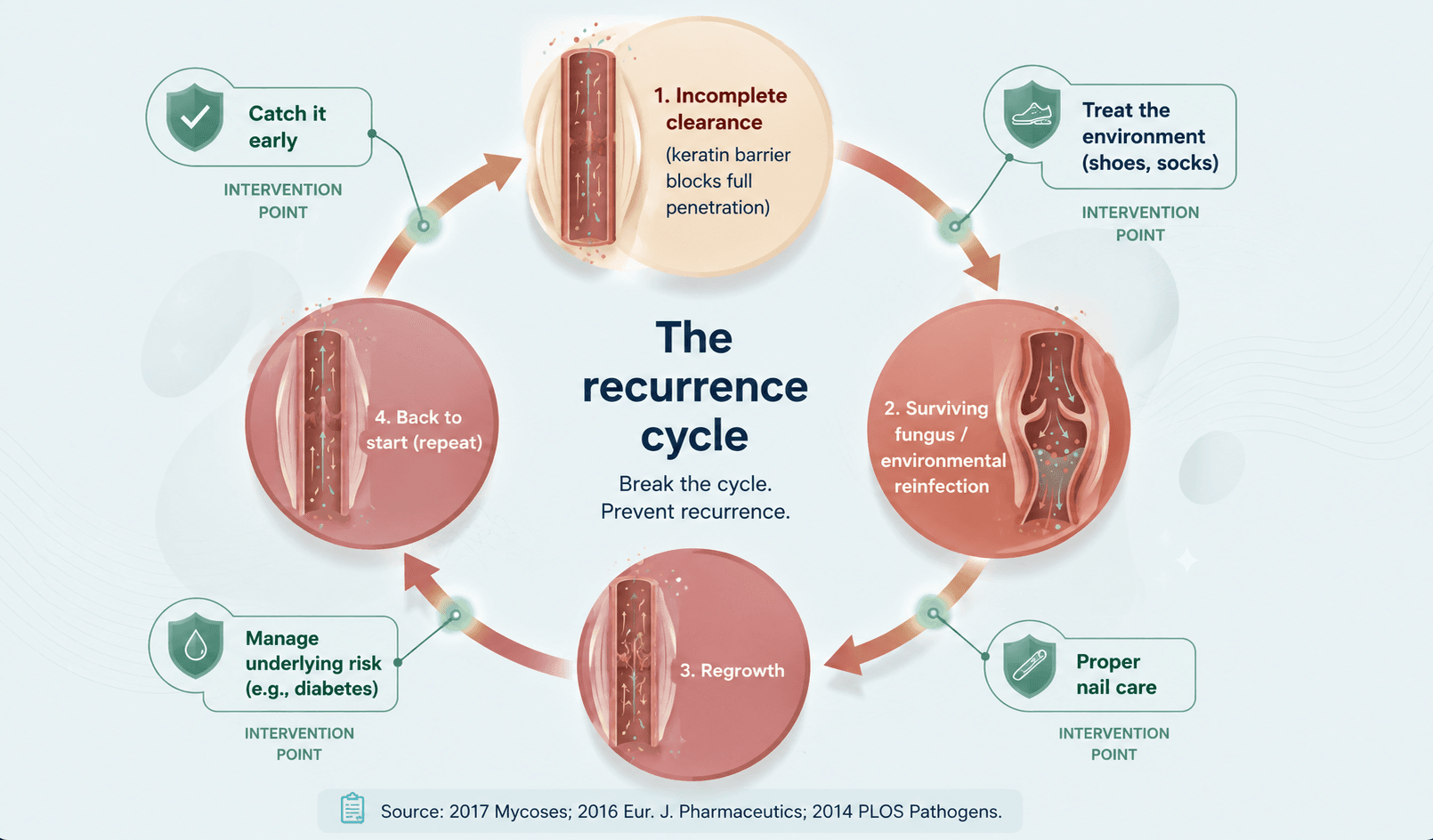
The single biggest reason nail fungus relapses is the nail itself. A 2017 review in Mycoses describes the nail plate as a “formidable” dense keratin barrier that makes it genuinely difficult for treatments to reach the infection living underneath and within the nail.
That has a direct consequence for recurrence: if a treatment can’t fully penetrate to eliminate every trace of fungus, small amounts can survive and regrow once treatment stops. Worse, a 2016 study in the European Journal of Pharmaceutics found the infection itself alters the nail plate in ways that further impede drug penetration, the fungus effectively fortifies its own hiding place.
A 2014 “Challenges and Solutions” review names this plainly: poor nail penetration, long treatment courses, and relapse are the defining challenges of treating this condition. And the 2014 PLOS Pathogens review framed the whole condition as “a never-ending story” precisely because it’s so persistent and prone to return.
2. Reinfection From Your Environment
Even if a treatment clears the nail completely, the fungus that caused it doesn’t necessarily leave your world. The organisms responsible, chiefly dermatophytes, along with yeasts and molds, live in shoes, socks, bathroom floors, and communal damp spaces. A cleared nail exposed to the same environment can simply get reinfected.
This is why treating the nail without addressing footwear, socks and the damp environments where fungi thrive tends to lead straight back to where you started.
3. Underlying Susceptibility
Some people are simply more prone. Age-related nail changes make older nails more susceptible, and conditions like type 2 diabetes raise both risk and burden. When the underlying susceptibility persists, so does the tendency to recur.
Breaking The Cycle of Toenail Fungus:
The good news hidden in all of this: the same research that explains recurrence points straight at how to prevent it.
Catch It Early, This Is The Biggest Lever
The most powerful advantage you can have is time. A small, new, thin infection is far easier for any treatment to penetrate and clear than a thick, established, months-old one, a direct consequence of the nail-barrier problem. Because the nail’s density is what defeats treatment, catching an infection before it becomes deeply established meaningfully changes the odds.
This is also why the research repeatedly stresses confirming the diagnosis rather than waiting to see if a suspicious nail gets worse. A 2015 study found fungi can even be present in normal-looking nails, so early signs are worth taking seriously, not dismissing.
Attack The Environment, Not Just The Nail
Since reinfection comes from footwear and damp communal spaces, prevention that ignores the environment is incomplete. The evidence-aligned habits:
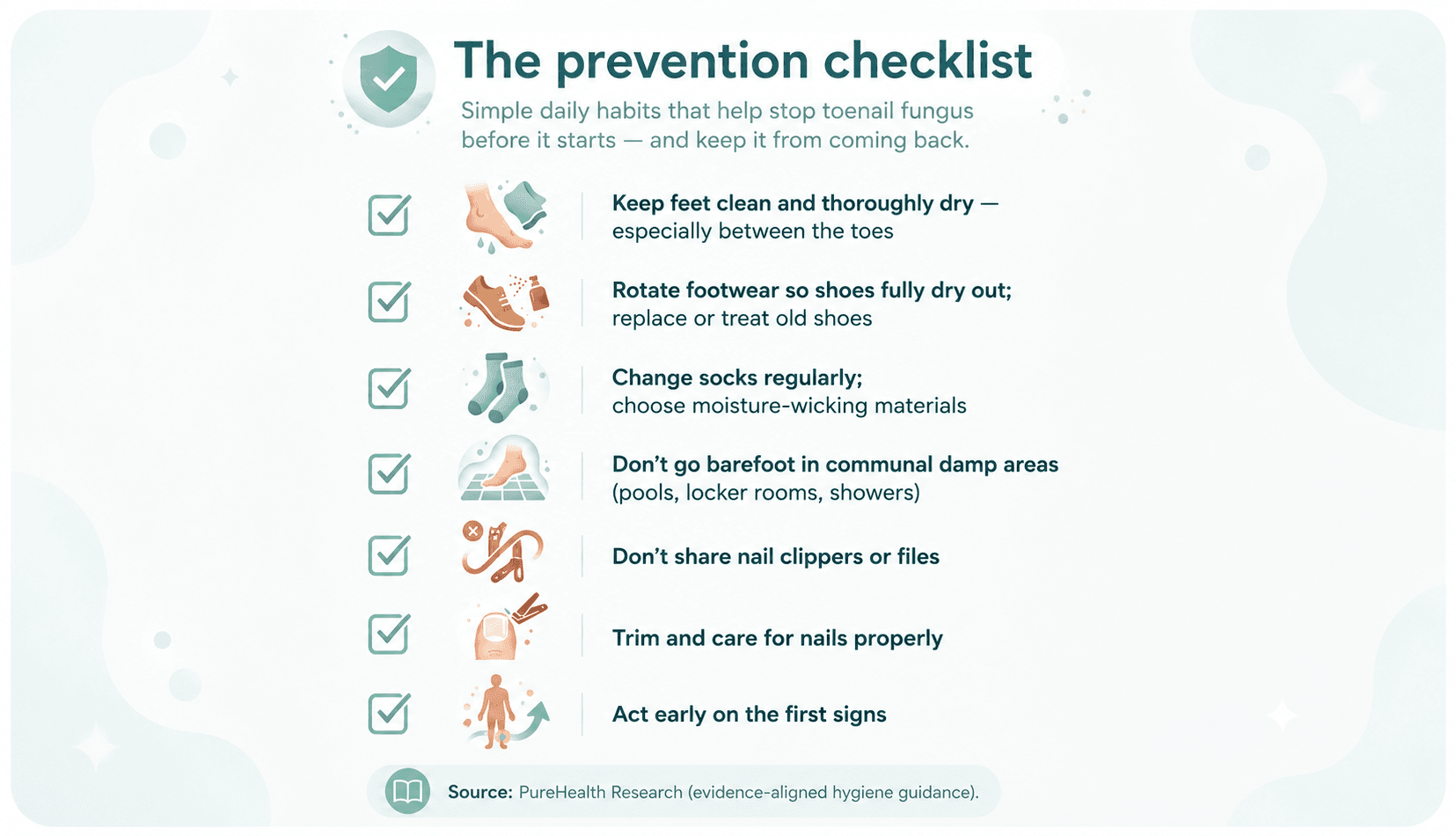
- Keep feet clean and thoroughly dry, especially between the toes, fungi need moisture.
- Rotate footwear so shoes fully dry out between wearings, and consider replacing or treating old shoes that may harbor fungi.
- Change socks regularly, and choose moisture-wicking materials over damp-trapping ones.
- Don’t go barefoot in communal damp areas, pool decks, locker rooms, shared showers.
- Don’t share nail clippers or files, which can transfer fungi between nails and people.
Trim And Care For Nails Properly
Proper nail trimming and general foot-nail care reduce the trauma and thickening that give fungi an easier foothold, and make any topical treatment’s job easier. Age-related nail changes can’t be reversed, but good routine care works with the nail rather than against it.
Manage The Underlying Risk
For people with diabetes or circulation and immune conditions, fungal nail infection carries added significance and a higher tendency to persist. In these groups, prevention and prompt medical attention matter more, not less.
Realistic Treatment Expectations
Understanding recurrence also means being realistic about treatment. The Cochrane review of topical antifungals documents modest cure rates for nail infections, and even successful treatment is a months-long commitment because you’re essentially waiting for a clear nail to grow out. Newer device-based options like laser are being studied but the evidence is still developing.
And on natural remedies specifically: an in-vitro study in Phytotherapy Research showed essential-oil compounds can inhibit nail-fungus pathogens in a lab dish, which is a legitimate research starting point, but not evidence that applying an oil clears or prevents an established infection in a real nail. Preventing recurrence is about the barrier and the environment, not a single miracle ingredient.
Supporting Foot and Nail Wellness Day To Day
The through-line of the research is that this condition rewards consistency: dry feet, breathable footwear, sensible communal-space habits, proper nail care, and acting early on the first signs rather than waiting.
Some people incorporate nutritional and topical care products into that daily foot-and-nail routine. PureHealth Research’s Supplements for Toenail Fungus offer products intended to support everyday nail and foot wellness alongside good hygiene, as part of a maintenance routine, not as a substitute for diagnosing or treating a confirmed infection. For a nail that’s clearly infected, spreading or painful, and for anyone with diabetes or a circulation condition, the research points firmly to professional care first.
Conclusion
Toenail fungus recurs because the nail keeps treatments out while the environment keeps reintroducing the fungus, a two-part trap that no single product fully solves on its own. But the same facts that explain the frustration also hand you the strategy: catch it early while it’s still shallow, treat the environment and not just the nail, care for your feet consistently, and manage any underlying risk. Breaking the cycle is less about finding a magic cure than about denying the fungus the conditions it needs to come back.
Three main reasons: the nail’s dense keratin barrier makes it hard for treatments to eliminate every trace of fungus, cleared nails get reinfected from footwear and damp environments, and underlying susceptibility (age, diabetes) persists. One major review called the condition “a never-ending story” because of this.
Catching it early. A small, new infection is far easier to penetrate and clear than a thick, established one, because the nail’s density is exactly what defeats treatment. Acting on the first signs rather than waiting makes a real difference.
Yes. The fungi that cause nail infection can live in shoes, socks and damp communal spaces. Rotating footwear so shoes dry out, changing socks, and avoiding barefoot exposure in pools and locker rooms all reduce reinfection risk.
Months, because you’re essentially waiting for a clear nail to grow out while treatment works. Topical cure rates for nail infections are modest, which is part of why prevention and early action matter so much.
Lab studies show certain essential-oil compounds can inhibit fungal pathogens in a dish, but that’s not evidence they clear or prevent an established infection in a real nail. Prevention depends on the nail barrier and the environment, not a single ingredient.
Yes. In people with diabetes, fungal nail infection carries added significance and a higher tendency to persist, so it should be treated as a medical priority with prompt professional attention rather than self-managed.

Advertisement. This site offers health, wellness, fitness and nutritional information and is designed for educational purposes only. You should not rely on this information as a substitute for, nor does it replace, professional medical advice, diagnosis, or treatment. If you have any concerns or questions about your health, you should always consult with a physician or other health-care professional. Do not disregard, avoid or delay obtaining medical or health related advice from your health-care professional because of something you may have read on this site. The use of any information provided on this site is solely at your own risk.
Related Articles
Toenail Fungus by the Numbers: What the Research Actually Shows
Written by Laura Kraujalyte | July 29, 2026

What Causes Toenail Fungus? Full Guide
Written by Gabriele Slimaite | April 30, 2026
Nail Mold vs Fungus: Differences and Treatment
Written by Gabriele Slimaite | April 30, 2026
How to Get Rid of Toenail Fungus: The Complete Guide to Fast Relief
Written by Gabriele Slimaite | April 23, 2026
How to Get Rid of Green Nail Fungus: The Complete Step-by-Step Guide
Written by Gabriele Slimaite | April 22, 2026
Bleach for Toenail Fungus: Why It’s Dangerous
Written by Gabriele Slimaite | April 22, 2026