Toenail Fungus by the Numbers: What the Research Actually Shows
How common is toenail fungus, really? Peer-reviewed data on prevalence, causes, risk factors, and why the nail itself blocks treatment.



 On This Page:
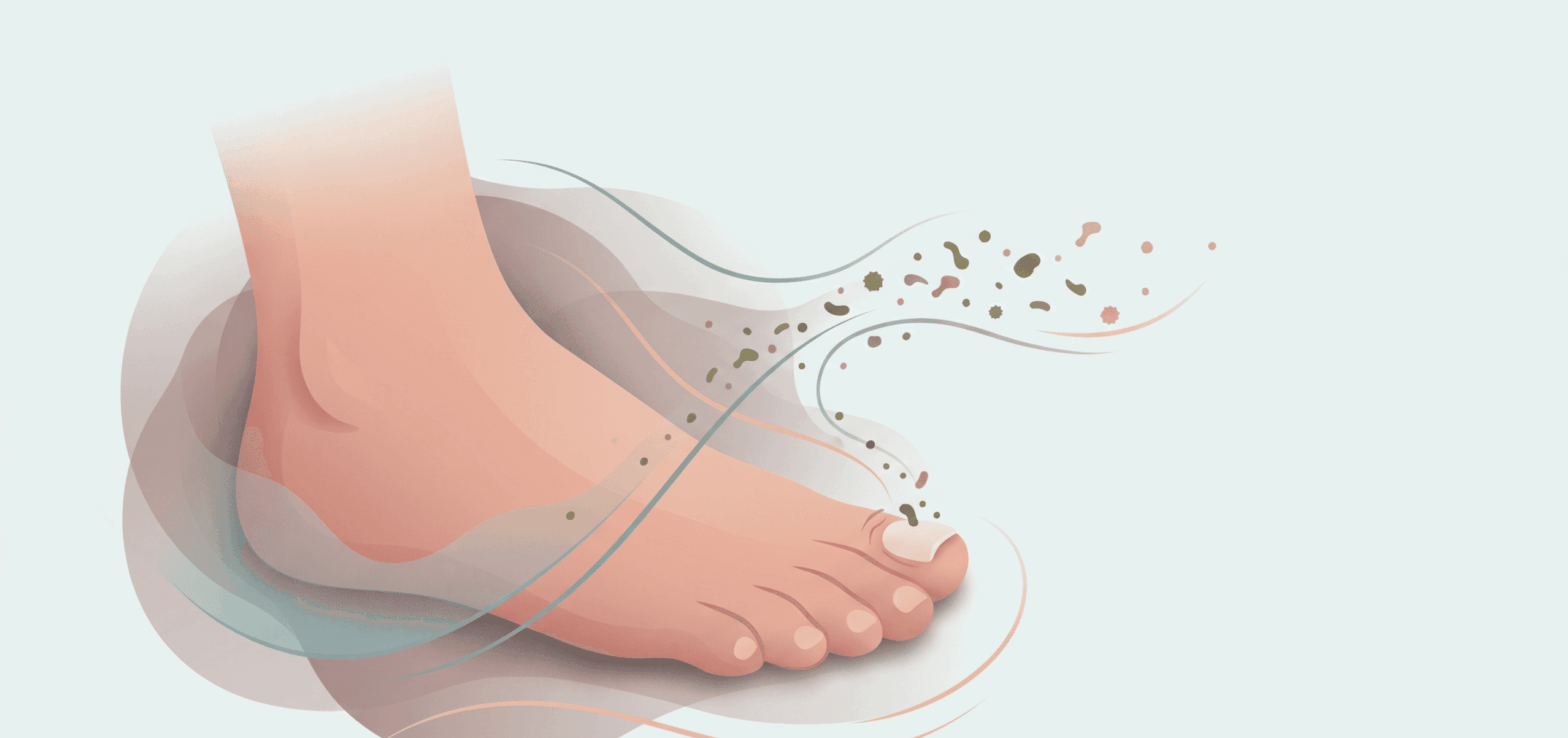
Toenail fungus is the health problem people are most likely to hide and least likely to understand. It’s common, it’s remarkably persistent, and the reason it’s so hard to get rid of has a specific, physical explanation that most advice skips right over.
Here’s what the peer-reviewed literature says: how common onychomycosis actually is, which organisms cause it, why the nail itself is the real obstacle to treatment, who’s most at risk, and what the evidence shows about getting rid of it. Every figure links to its original source.
How Common Is Toenail Fungus?
Toenail fungus is one of the most common nail conditions in the world, but “my nail looks bad” and “my nail has a fungal infection” are not the same statement, and the research is careful about the difference.
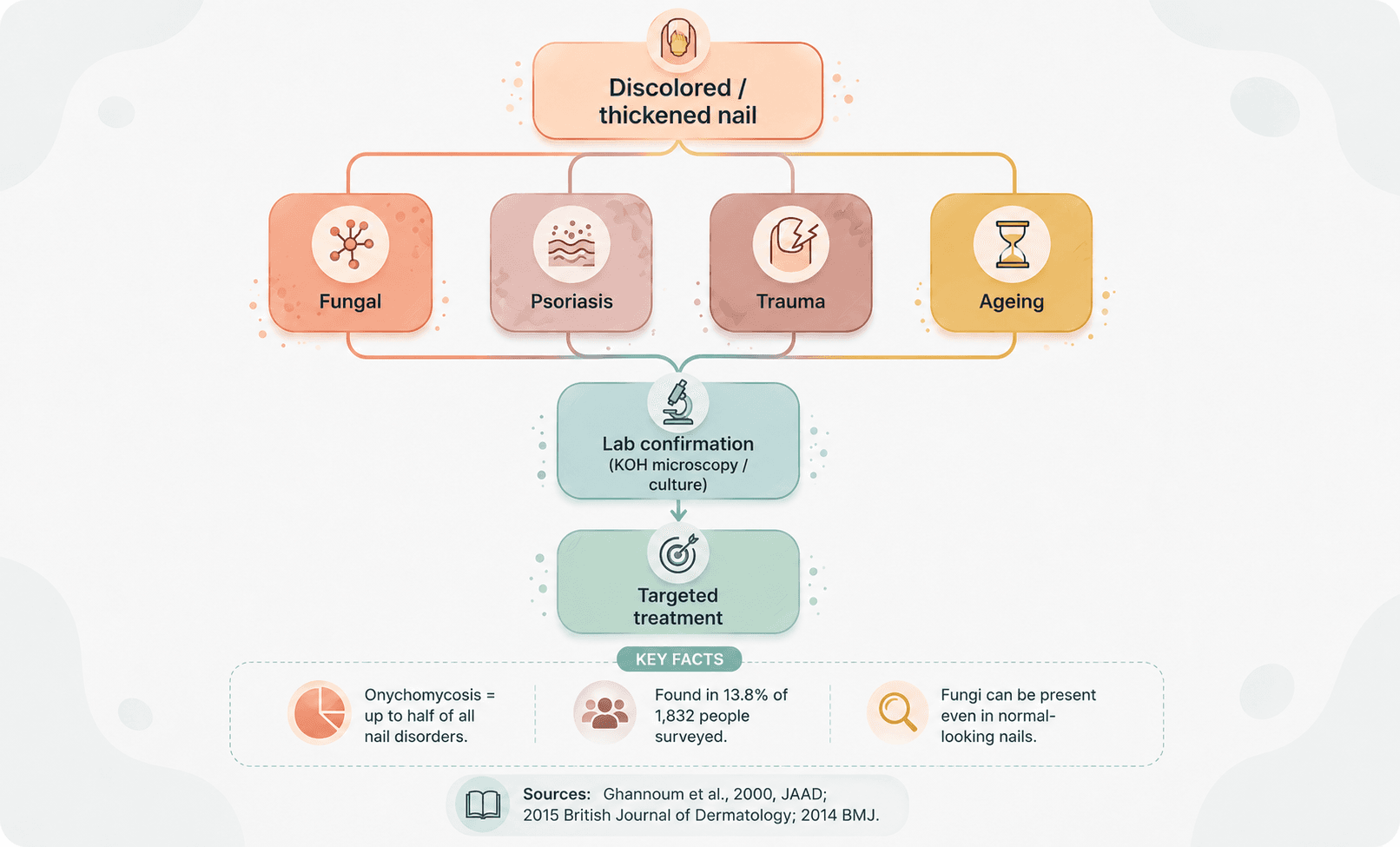
A landmark 12-center North American survey published in the Journal of the American Academy of Dermatology in 2000 examined 1,832 subjects and found onychomycosis in 13.8% of them, and reported that fungal infection accounts for up to half of all nail disorders. The typical patient profile: median age 57, and 58% male.
That age skew isn’t random. A 2011 review in Clinics in Dermatology on nails in older adults explains why: age-related changes make older nails more susceptible to fungal infection and other nail disorders.
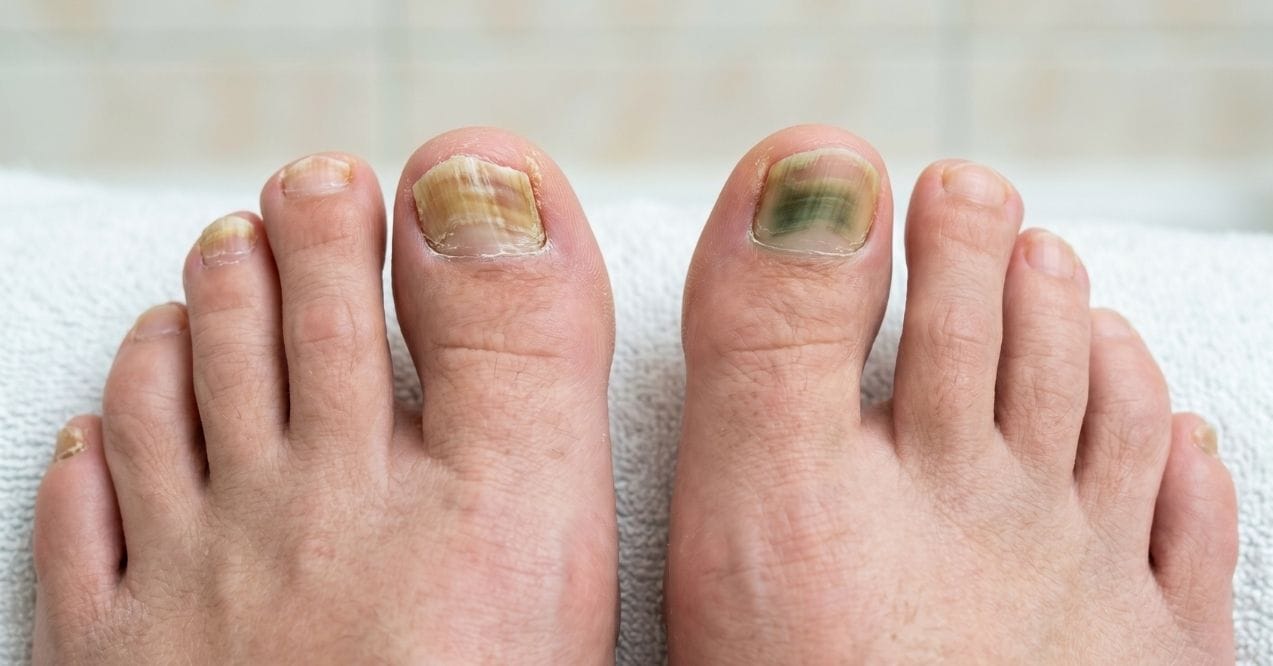
Here’s the twist that complicates everything. A 2015 cross-sectional study in the British Journal of Dermatology found fungi could be detected in normal-looking nails, raising a genuine diagnostic question about when a positive test actually means disease. This is why clinical guidance, such as the 2014 BMJ review, stresses laboratory confirmation before starting treatment rather than treating on appearance alone.
The practical point: a discolored or thickened nail isn’t automatically fungal. Getting it confirmed matters, because the treatments differ.
Why Nail Fungus Is So Stubborn?
This is the section that explains everything else, and it’s the part almost no consumer advice includes.
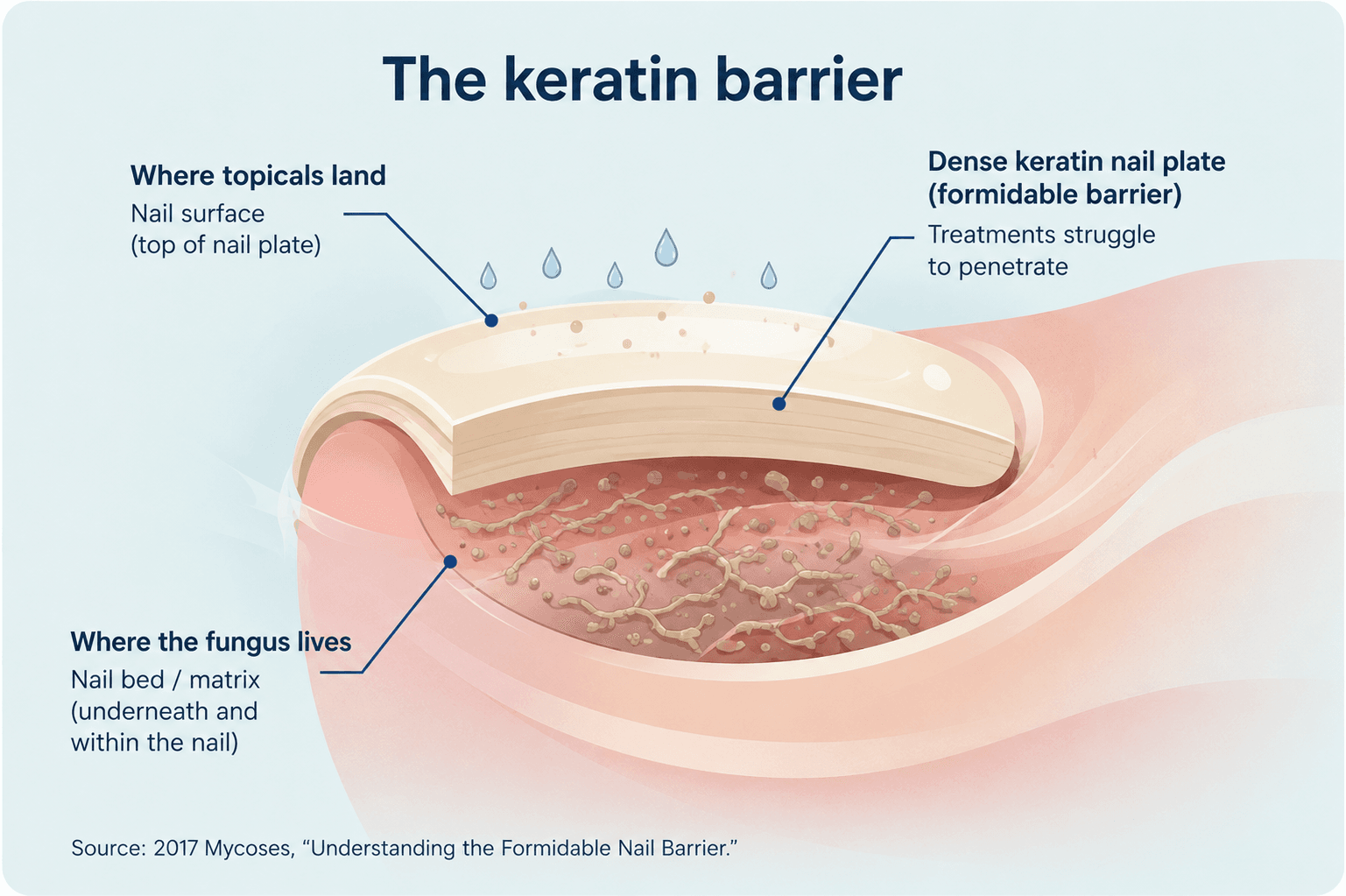
The nail plate is a formidable barrier. A 2017 review in Mycoses titled, aptly, “Understanding the Formidable Nail Barrier,” describes the nail plate as a dense keratin structure that makes it extremely difficult for treatments to penetrate to where the infection actually lives, underneath and within the nail.
That single fact drives the whole frustrating experience of treating nail fungus. A topical applied to the nail surface has to get through that keratin barrier to reach the fungus, and mostly it can’t. A 1999 systematic review in the BMJ and the corresponding Cochrane review of topical antifungals document the modest cure rates that result.
It gets more complicated. A 2016 study in the European Journal of Pharmaceutics found that fungal infection itselfchanges the nail plate in ways that further affect how drugs penetrate, the infection actively works against its own treatment. And an ex vivo study n Mycoses (2025) showed that factors including the specific organism, nail polish, and nail age all influence penetration.
The reason nail fungus takes months to treat and comes back so often isn’t that treatments don’t work, it’s that the nail is engineered, biologically, to keep things out.
What Actually Causes Nail Fungus?
Not all nail fungus is the same organism, and it matters for treatment.
A 2008 review in the Journal of the American Academy of Dermatology on the mycology of nail disorders lays out the three culprit groups: dermatophytes (the leading cause), yeasts such as Candida, and non-dermatophyte molds. Dermatophytes dominate in toenails; a 1988 evaluation in the British Journal of Dermatology examined how often Candida is truly the cause versus dermatophytes, an important distinction because the right drug depends on the right organism.
There are also under-recognized players. A 2011 study in Mycoses flagged black yeast-like fungi as under-appreciated causes of skin and nail infection that can complicate diagnosis and treatment.
This organism diversity is exactly why the research keeps returning to one point: confirm before you treat. Diagnostic methods, KOH microscopy, culture, and in difficult cases histology or electron microscopy, exist because guessing wrong wastes months of treatment.
Who’s Most At Risk
Some risk is about age and exposure; some is about underlying health.
The clearest high-risk group in the literature is people with diabetes. A 2005 study in Mycoses documented a higher burden of fungal nail infection in people with type 2 diabetes and examined why the condition raises risk. This isn’t a minor footnote, in people with diabetes, nail and foot fungal infection carries added significance because of the broader risks to foot health, which is why medical guidance treats it more seriously in that group.
Beyond diabetes, the established risk factors across the epidemiology, including the Denmark general-practice study, include older age, male sex, and the nail changes that come with ageing. Communal damp environments (pools, locker rooms, shared showers) and footwear that keeps feet warm and moist provide the conditions fungi favor.
If you have diabetes or any circulation or immune condition, treat a suspected fungal nail as a medical issue and see a healthcare provider rather than self-managing.
What The Evidence Says About Getting Rid Of It
The honest summary: treatment works, but it’s slow, imperfect, and prone to relapse, and framing matters enormously here.
A 2014 PLOS Pathogens review titled “A Never-Ending Story?” captures the clinical reality: onychomycosis is persistent and hard to cure, with recurrence common. A 2014 “Challenges and Solutions” review catalogs why, poor nail penetration, long treatment courses, and relapse.
On the treatments themselves, the Cochrane review of topical antifungals documents their cure rates, which are modest for nail (better for athlete’s foot). Newer options, including device-based approaches such as laser therapy, are reviewed in the 2014 Expert Review of Anti-Infective Therapy, promising, but with evidence still developing.
What about natural approaches? An in vitro study in Phytotherapy Research (2003) found that plant-derived monoterpenes, the aromatic compounds in essential oils, could inhibit nail-fungus pathogens in the lab. This is a genuine finding, and it’s also a laboratory result, not a clinical cure. In-vitro activity against a fungus in a dish is the beginning of investigating a compound, not evidence that applying an oil clears an established nail infection. Anyone presenting essential oils as a proven cure is overstating what this evidence shows.
The realistic framing: nail fungus is treatable, treatment is a months-long commitment, relapse is common, and the strongest lever most people have is catching it early and preventing recurrence, because a small, new infection is far easier to address than a thick, established one.
Supporting Foot And Nail Wellness Day To Day
Because the nail barrier makes established infections so stubborn, the research effectively rewards prevention. The habits that follow from it: keep feet clean and dry, change socks and rotate footwear, avoid going barefoot in communal damp areas, don’t share nail tools, trim nails properly, and act early rather than waiting for a nail to thicken and discolor over months.
Some people also incorporate nutritional and topical care products as part of a foot-and-nail hygiene routine. PureHealth Research’s Supplements for Toenail Fungus offer products intended to support everyday nail and foot wellness alongside good hygiene, not as a replacement for medical diagnosis or treatment of a confirmed infection. For a nail that’s clearly infected, painful, spreading, or if you have diabetes or a circulation condition, the evidence points to professional assessment first.
Conclusion
Toenail fungus is common, caused by several different organisms, and stubborn for one overriding reason: the nail is a keratin fortress that keeps treatments out. That single fact explains why cure takes months, why relapse is frequent, and why the most powerful thing you can do is catch it early and prevent it coming back. It’s treatable, it’s just rarely quick, and it rewards attention before the infection digs in.
A large North American survey found onychomycosis in 13.8% of nearly 1,832 subjects, and reported that fungal infection accounts for up to half of all nail disorders. Risk rises with age.
The nail plate is a dense keratin barrier that treatments struggle to penetrate to reach the infection underneath. Research shows the infection itself further changes the nail in ways that hinder drug penetration, which is why cure takes months and relapse is common.
No. Thickening and discoloration can come from psoriasis, injury, ageing and other causes, and fungi can even be found in normal-looking nails. Clinical guidance recommends laboratory confirmation before treatment.
Three groups of organisms: dermatophytes (the leading cause in toenails), yeasts such as Candida, and non-dermatophyte molds. Identifying the specific organism matters because treatment differs.
People with type 2 diabetes carry a higher burden and risk. Other established factors include older age, male sex, age-related nail changes, and exposure in communal damp environments.
Laboratory studies show certain essential-oil compounds (monoterpenes) can inhibit fungal pathogens in a dish, but in-vitro activity is not proof that applying an oil clears an established nail infection. Evidence for natural remedies as cures remains preliminary.
If the nail is clearly infected, painful, spreading, not improving, or if you have diabetes or a circulation or immune condition. In those cases fungal nail infection is a medical issue, not a cosmetic one.

Advertisement. This site offers health, wellness, fitness and nutritional information and is designed for educational purposes only. You should not rely on this information as a substitute for, nor does it replace, professional medical advice, diagnosis, or treatment. If you have any concerns or questions about your health, you should always consult with a physician or other health-care professional. Do not disregard, avoid or delay obtaining medical or health related advice from your health-care professional because of something you may have read on this site. The use of any information provided on this site is solely at your own risk.
Related Articles
Why Toenail Fungus Keeps Coming Back, and How to Break the Cycle
Written by Laura Kraujalyte | July 29, 2026

What Causes Toenail Fungus? Full Guide
Written by Gabriele Slimaite | April 30, 2026
Nail Mold vs Fungus: Differences and Treatment
Written by Gabriele Slimaite | April 30, 2026
How to Get Rid of Toenail Fungus: The Complete Guide to Fast Relief
Written by Gabriele Slimaite | April 23, 2026

How to Get Rid of Green Nail Fungus: The Complete Step-by-Step Guide
Written by Gabriele Slimaite | April 22, 2026
Bleach for Toenail Fungus: Why It’s Dangerous
Written by Gabriele Slimaite | April 22, 2026