What Foods Have Peptides? Bioactive Sources Explained
Wondering what foods have peptides? Some of the best natural sources include bone broth, eggs, fermented dairy, and legumes, which provide natural peptides that may support skin, gut, and metabolic wellness.



 On This Page:
Peptides have moved from research labs into everyday wellness conversations, and many people now ask what foods have peptides before reaching for powders or capsules. The short answer is that plenty of whole foods contain them naturally, from bone broth and kefir to eggs, salmon, and tempeh.
This guide separates the hype from the science. You will see which foods contain functional peptides, which foods may help your body make its own, and how to work both into a realistic daily routine. Start with the key points below.
What Foods Have Peptides?
Bioactive peptides are short chains of amino acids that may influence specific body functions beyond basic nutrition. A review in Nutrients describes them as protein fragments that can act on body processes once they are released from a larger parent protein. Many sit inactive inside whole proteins until digestion, fermentation, aging, or slow cooking frees them.
That is why foods with peptides tend to be protein foods that have been broken down in some way. When people ask what foods have peptides, the most studied answers fall into five groups:
- Collagen-rich animal parts, best known through bone broth
- Fermented dairy such as kefir, yogurt, and aged cheese
- Eggs and seafood
- Lean meats
- Soy and legumes
Bone Broth and Collagen-Rich Cuts
Bone broth is one of the best-known foods high in peptides because slow-simmering bones, skin, and cartilage draws collagen into the liquid as gelatin and smaller fragments. These supply glycine, proline, and hydroxyproline, which the body uses to build and maintain skin, joints, and the gut lining, and this guide to the best peptides for skin compares related options. One laboratory analysis found that these amino acid levels varied widely between broth recipes, so the amount in each cup is hard to predict.
Kefir, Yogurt, and Aged Cheese
Kefir, yogurt, and aged cheeses contain lactotripeptides, tiny three-amino-acid chains that form when bacteria break down milk proteins such as casein. The two most studied are called IPP and VPP. A meta-analysis of randomized controlled trials found small average changes in blood pressure readings with these peptides, though results varied between studies. The findings suggest fermented dairy may support healthy circulation and heart health as part of a balanced diet.
Eggs, Fish, and Seafood
Eggs, salmon, sardines, and shellfish provide highly digestible protein that releases a range of peptides as your body breaks it down. Egg white and fish proteins are common starting points in peptide research, although most of that work tests isolated fragments in the lab rather than whole meals.
Eaten regularly, these foods may support normal tissue repair and a healthy inflammatory response, and fish adds omega-3 fats as well.
Beef, Chicken, and Pork
Beef, chicken, and pork are natural sources of carnosine and anserine, two small peptides, each made of just two amino acids, found mostly in muscle. Researchers have studied them for antioxidant activity, for their role in buffering acid that builds up in working muscles, and for possible links to healthy cellular aging.
Plant foods contain little to none, so meat and fish are the main dietary sources. Much of the research uses supplemental doses, which may differ from a typical serving.
Soy, Beans, and Lentils
If you eat mostly plants, soy and legumes are your most useful peptide rich foods. Tempeh, edamame, tofu, and miso contain soy peptides such as lunasin, which have been studied for roles in metabolic balance and healthy blood pressure, mainly in lab and animal research so far.
Beans, lentils, and chickpeas add their own peptides plus fermentable fiber, which feeds gut bacteria and may support digestive comfort.
Peptide-Rich Foods at a Glance
| Food Source | Type of Peptide/Compound | Potential Wellness Benefit |
| Bone broth | Collagen fragments and gelatin | May support skin, joint, and gut lining structure |
| Kefir, yogurt, aged cheese | Lactotripeptides (IPP, VPP) | May support healthy circulation |
| Eggs | Egg white protein peptides | May support normal tissue repair |
| Salmon, sardines, shellfish | Fish protein peptides | May support muscle maintenance and a healthy inflammatory response |
| Beef, chicken, pork | Carnosine and anserine | Antioxidant activity and muscle recovery support |
| Tempeh, edamame, tofu | Soy peptides such as lunasin | May support metabolic balance |
| Beans, lentils, chickpeas | Legume peptides plus fermentable fiber | May support gut health and digestive comfort |
Eating Peptides vs. Helping Your Body Make Them
Food can raise peptide activity in two different ways. Some foods hand you ready-made peptides, while others prompt your gut to release peptides it already knows how to make.
If you have searched “what is bioactive peptides,” the simplest answer is a protein fragment with a job beyond basic nutrition. Collagen fragments from broth and carnosine from meat are examples you eat directly. GLP-1 works differently because it is a peptide hormone made by cells in your gut lining, so food can only signal its release.
Knowing which group a food belongs to helps you set realistic expectations. Direct sources depend on how much of each peptide survives digestion, while signaling foods depend on what is on your plate and how regularly you eat it.
Foods That Contain Peptides Directly
Bone broth, fermented dairy, meats, eggs, and fish physically contain peptide chains or release them as they are digested. Your enzymes break most of these down into single amino acids, which the body then uses for general protein needs. A smaller share may resist full breakdown and stay intact long enough to interact with the gut lining or enter circulation, where they may have more specific effects.
Foods That Help Your Body Make Peptides
GLP-1 and PYY are metabolic peptides that cells in the lower gut release after meals, and they help signal fullness. You cannot eat GLP-1 itself, but quality protein and fermentable fiber from beans, oats, and barley may prompt your gut to produce more of it; this guide to what foods increase GLP-1 lists more options. In one human study, delivering propionate, a product of fiber fermentation, to the colon raised post-meal GLP-1 and PYY levels.
Do Food Peptides Survive Digestion?
Most dietary protein, and many of the peptides in foods, does not survive digestion intact. Stomach acid and enzymes in the small intestine split proteins into single amino acids and very short fragments, which are absorbed and reused throughout the body.
Some peptides are an exception. Small chains of two or three amino acids, especially those containing proline or hydroxyproline, have bonds that resist enzymes better than most, so they may cross the intestinal wall intact or act directly on cells in the gut lining. You can read more about how oral peptides are absorbed and what affects them.
In a human study, researchers detected collagen-derived dipeptides such as prolyl-hydroxyproline in blood after participants consumed gelatin hydrolysate. Absorption still varies with the food, the amount, and the person, and detection in blood does not by itself confirm a specific benefit. That is one reason regular intake tends to matter more than any single serving.
Simple Ways to Get More Peptides From Food
Small kitchen choices can raise both the amount and the variety of peptides in your meals. How you prepare and pair foods that contain peptides may matter as much as which ones end up in your cart, and none of these steps requires special equipment.
Pair Collagen-Rich Foods with Vitamin C
Vitamin C is an essential helper nutrient for building collagen, because the enzymes that make collagen strong and stable cannot work without it. Healthy skin also holds high levels of this vitamin. Pairing collagen-rich foods with a vitamin C source is an easy habit to start:
- Bone broth soup with red bell peppers or tomatoes
- Slow-braised meat served with leafy greens
- Citrus or berries after a gelatin-rich meal
Add a Peptide Supplement
A whole-food diet comes first, yet getting steady amounts of specific peptides from food alone can be difficult. Broth strength, fermentation time, and portion sizes all vary, and food labels rarely list peptide content, which makes a measured supplement a practical way to fill the gaps.
The PureHealth Research peptide supplements collection complements your dietary intake with hydrolyzed collagen peptides, broken into small fragments chosen for easier absorption. Each formula is matched to a structural goal, so you can choose the support that fits your focus.
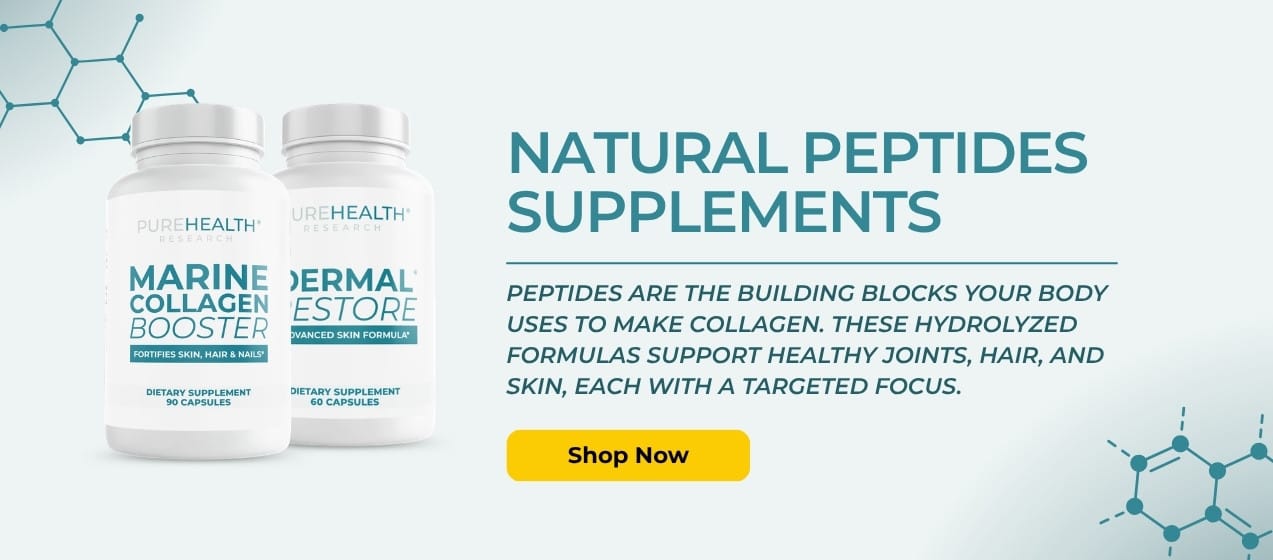
Type II collagen from chicken cartilage is designed to support joint structure and comfortable movement, while hydrolyzed bovine collagen helps maintain healthy hair and skin. Marine Collagen Booster features Morikol® marine collagen tripeptides, short three-amino-acid chains chosen to support skin hydration and elasticity. Pair your pick with a peptide-rich plate for well-rounded daily support.
Eat More Fermented Foods
Fermentation lets bacteria and their enzymes pre-digest proteins, so yogurt, kefir, aged cheese, tempeh, miso, and natto may contain bioactive peptides before you take the first bite.
Longer fermentation and aging generally release more of these fragments, and plain, unsweetened versions keep added sugar low. For more on this topic, see how peptides for gut health fit a digestive routine, or simply stir miso into soup or blend kefir into a morning smoothie.
Conclusion
You can get peptides from everyday meals, whether that means sipping bone broth for collagen, choosing lean meats for carnosine, or eating beans and oats that prompt your gut to release its own metabolic messengers. Once you know what foods have peptides, consistency becomes the real priority. Build your plate around these whole foods, try one new peptide-rich recipe this week, and consider a peptide supplement if steady intake is hard to maintain.
Proteins are long chains of hundreds of amino acids folded into complex shapes. Peptides are much shorter chains, and some short sequences may have specific effects in the body that whole proteins do not.
Both can be useful. Animal sources such as dairy, fish, and broth have more human research so far, while most soy and legume peptide studies are still early. A varied diet covers both.
Cooking does not simply destroy peptides. Slow, gentle methods such as simmering broth can release them, while very high heat or charring may alter some fragments. Fermentation and aging also add peptides.
It varies by person and goal. Human studies on food-derived peptides and collagen often run for several weeks to a few months, so steady intake over time matters more than quick results.

Advertisement. This site offers health, wellness, fitness and nutritional information and is designed for educational purposes only. You should not rely on this information as a substitute for, nor does it replace, professional medical advice, diagnosis, or treatment. If you have any concerns or questions about your health, you should always consult with a physician or other health-care professional. Do not disregard, avoid or delay obtaining medical or health related advice from your health-care professional because of something you may have read on this site. The use of any information provided on this site is solely at your own risk.
Related Articles
Oral vs Injectable Peptides: Risks and Trade-Offs
Written by Laura Kraujalyte | October 12, 2026

Do Peptides for Gut Health Actually Work?
Written by Laura Kraujalyte | October 9, 2026

What Are the Best Peptides for Skin?
Written by Laura Kraujalyte | September 30, 2026

Do Peptides for Weight Loss Work?
Written by Laura Kraujalyte | September 16, 2026

Peptides by the Numbers: What the Research Actually Shows
Written by Laura Kraujalyte | July 29, 2026

How to Evaluate a Collagen Peptide Supplement (Using the Science)
Written by Laura Kraujalyte | July 29, 2026