Do Peptides for Gut Health Actually Work?
Certain peptides may support digestion and gut lining integrity, but the most practical approach focuses on dietary sources and the body's own peptide production rather than experimental synthetics.


 On This Page:
Peptides for gut health have moved from research journals into everyday wellness talk, and the short answer is yes: peptides play a real part in how the digestive tract works. Not all peptides are the same, though. Some people turn to trendy, lab-made compounds, while the body already relies on peptides from food and on messengers it makes in the gut itself.
This guide explains how these compounds work, where the evidence is strong or still thin, and which daily choices may help your body make and use its own gut-friendly peptides.
How Peptides for Gut Health Work
Peptides support gut health mainly by carrying messages between cells. A peptide is a short chain of amino acids, smaller than a full protein. Many act as signals that tell cells when to release digestive enzymes, slow digestion, or replace worn-out tissue.
In the digestive tract, gut health peptides take part in three connected jobs:
- Maintaining the gut barrier, the single layer of cells that lines the intestine
- Regulating tight junctions, the protein seals that control what passes between those cells
- Helping gut bacteria and the intestinal wall communicate
These jobs overlap, so a change in one area may affect the others. That is why researchers tend to study gut peptides as a connected system rather than one compound at a time.
How Peptides Help the Gut Lining
The intestinal lining replaces its cells every few days, and peptides help coordinate that turnover. Some signaling peptides prompt new cells to form, while others help maintain tight junction function so the barrier stays selective.
Researchers measure this selectivity as intestinal permeability, which can shift with diet, stress, alcohol, and other daily factors. Barrier function and inflammation are closely linked, and our guide to peptides for inflammation covers that side in more detail.
Peptides Your Body Makes vs. Peptides From Food
Some peptides are made inside your body. Special cells in the gut lining release GLP-1 and GLP-2 after meals, and GLP-2 in particular has been studied for its role in supporting growth of the intestinal lining and nutrient absorption.
Other peptides come from food. Digestion breaks proteins from collagen, dairy, eggs, and fish into amino acids and small peptide pieces. The intestine absorbs them, and the body puts them to work.
Types of Peptides and Where They Come From
| Peptide Category | Common Examples | How It Supports the Gut | Safety/Accessibility Profile |
| Dietary/Food-Based | Collagen peptides, bone broth, peptides from dairy, eggs, and fish | Supplies amino acids used to build and maintain the gut lining | Widely available in everyday foods and standard supplements |
| Endogenous/Naturally Produced | GLP-1, GLP-2, peptide YY | Helps regulate digestive pace, fullness signals, and lining turnover | Made by the body; release is influenced by fiber, protein, and gut bacteria |
| Experimental/Synthetic | BPC-157, KPV | Studied mainly in animal and lab models for tissue support | Not approved for human use; little human safety data; often sold without quality checks |
Food-Based Peptides vs. Lab-Made Peptides
Food-based peptides are the more practical choice for daily wellness because they come from familiar foods with a long record of safe use. Lab-made peptides belong to a different category. They are studied mostly in animals and are often sold online as “research chemicals” without the quality checks that apply to foods and supplements.
When people search for peptides for gut health, much of what they find presents early animal findings as settled human science. Synthetic peptides may still prove useful one day, but for now the research has not caught up with the marketing. Food-based peptides offer known sources, human research on digestion, and an easy fit with regular meals, which makes them the more reliable starting point.
Food-Based Peptides for Stomach Issues
Many people looking for peptides for stomach issues want help with bloating or occasional digestive discomfort. Collagen peptides are among the better-studied options. In a small, uncontrolled study, healthy women who took 20 grams of collagen peptides daily for eight weeks reported less bloating, although the trial had no placebo group and was industry funded.
L-glutamine, an amino acid that intestinal cells use for energy, has been studied in lab models for its role in maintaining tight junctions. Bone broth offers collagen-based amino acids in food form.
Where BPC-157 Stands Today
BPC-157 is a lab-made peptide based on a piece of a protein found in stomach juice. Interest in bpc 157 gut health has grown quickly online, but the evidence is still early. A 2025 systematic review found that 35 of its 36 included studies were done in animals or labs, and no human safety data were available.
BPC-157 is not FDA-approved for human use and is not considered a lawful dietary supplement ingredient. Food-based peptides and the ones your body makes remain the more dependable focus.
How Your Gut Makes Its Own Peptides
Your gut makes many of its most useful peptides on its own. Special hormone-making cells spread through the intestinal lining sense nutrients and bacterial byproducts after a meal. They respond by releasing peptides such as GLP-1, GLP-2, and peptide YY.
This system responds to what you eat. Meals with fiber, protein, and plant compounds give these cells more signals to work with. Gut bacteria play a central role by turning fiber into compounds the hormone-making cells can detect.
That makes daily food choices one of the most accessible approaches to peptides for gut health. Rather than adding an outside compound, you support a process your body already runs every day. The sections below cover the best-studied example, GLP-1, and the nutrients that may encourage its release.
How GLP-1 Slows Digestion
GLP-1 is best known as a metabolic hormone, but it is also one of the body’s key digestion peptides. Released from cells in the small intestine and colon after eating, it slows the rate at which the stomach empties into the small intestine.
This slower pace gives the gut more time to absorb nutrients and sends fullness signals to the brain. For many people, a steady digestive pace may also mean a more comfortable feeling after meals.
Nutrients That Help Your Gut Make Peptides
Gut bacteria ferment dietary fiber into short-chain fatty acids (SCFAs) such as acetate, propionate, and butyrate. These compounds switch on receptors on hormone-making gut cells, which may encourage the release of GLP-1 and peptide YY.
Polyphenols, the plant compounds in berries, green tea, cocoa, and olive oil, may also support a more diverse microbiome. Our guide to foods that increase GLP-1 turns these nutrients into a simple shopping list.
Plant Ingredients That May Support GLP-1
Lab-made options are not the only way to work with GLP-1. Certain plant ingredients have been studied for their role in metabolic signaling, and early research suggests some may help the body maintain its natural GLP-1 response after meals.
Berberine and the chlorogenic acids in green coffee are two of the most discussed examples. Because much of this research is still developing, these ingredients fit best as one part of a fiber-rich, balanced routine.
Natural GLP-1 Supplements for Daily Use
For readers who want extra help alongside a gut-friendly diet, our natural GLP-1 supplements bring clinically studied botanicals together in easy daily formulas. FullSwitch, the collection’s most complete option, combines nine ingredients, including berberine, green coffee extract, and African mango, chosen for their role in the body’s native metabolic function.
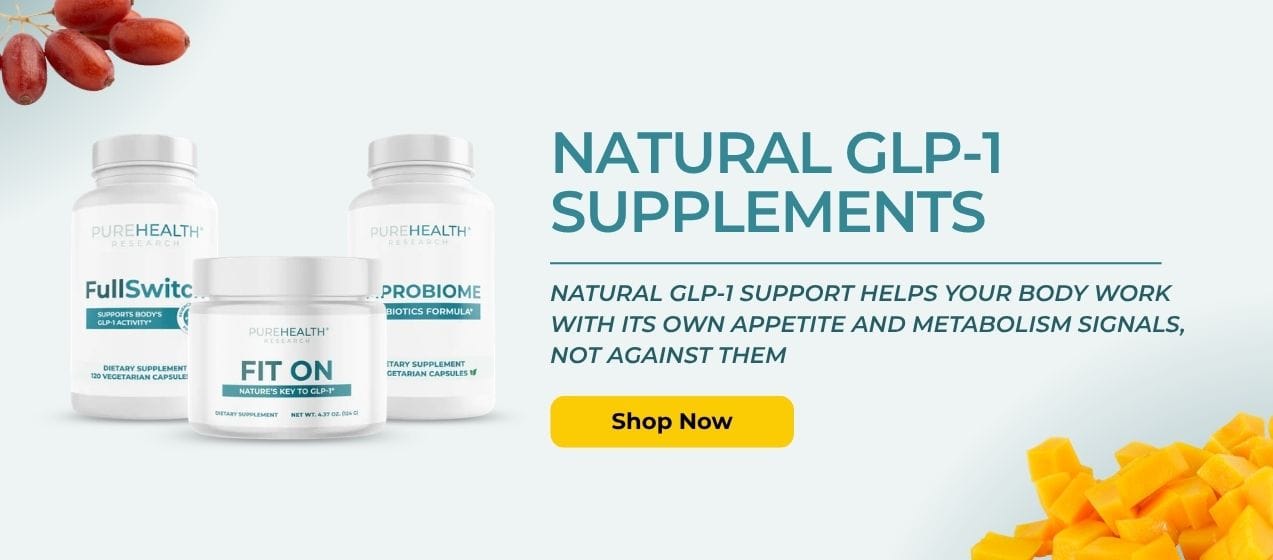
The collection also includes formulas with prebiotic fibers that feed the bacteria involved in SCFA production. Each one is designed to go with your meals and help support natural fullness and a healthy digestive pace. Browse the collection to find the format that fits your routine.
Daily Habits to Support Natural Gut Healing Peptides
Daily habits shape how well your body makes and uses gut healing peptides, the internal messengers involved in lining turnover and barrier upkeep. No single food or supplement does this work alone, and steady habits tend to matter more than occasional changes.
A few habits may make the biggest difference, and the first two have the most direct link to your body’s natural peptide activity:
- Include protein at most meals to supply amino acids for tissue upkeep.
- Rotate a variety of fiber sources across the week.
- Add fermented foods such as yogurt, kefir, or sauerkraut a few times a week.
- Keep regular sleep and meal times, since gut hormone release may follow daily rhythms.
- Manage stress with walking, breathing exercises, or other routines you enjoy.
Eat Protein-Rich Foods
The gut lining is built largely from proteins, so a steady supply of amino acids helps keep it in good repair. Fish, eggs, poultry, Greek yogurt, beans, lentils, and tofu all provide high-quality protein.
Bone broth and slow-cooked, collagen-rich cuts add glycine and proline, two amino acids common in collagen. Spreading protein across the day, rather than saving most of it for dinner, may give your body a more steady supply.
Feed Your Gut Bacteria with Prebiotics
Prebiotics are fibers that friendly gut bacteria ferment, and that process produces the SCFAs linked to natural peptide release. Garlic, onions, leeks, asparagus, bananas, and legumes are among the richest food sources.
Adding them slowly may help reduce the gas that can come with a sudden jump in fiber. Our article on how to naturally increase GLP-1 shows how to combine these foods into simple, everyday meals.
Conclusion
Lab-made peptides get plenty of online attention, but the most practical way to use peptides for gut health starts with your plate. Protein-rich foods supply the amino acids your gut lining depends on, while fiber, prebiotics, and plant compounds help your gut bacteria encourage the release of your own peptides, including GLP-1. Start with one or two gut-friendly changes this week, and consider botanical support for extra help with natural fullness and a steady digestive pace.
Collagen peptides, peptides from dairy, eggs, and fish, and the body’s own GLP-1 and GLP-2 are among the most studied. Protein-rich foods and fiber that helps your body release its own peptides are the easiest starting points.
Most do not survive whole. Stomach acid and enzymes break proteins into amino acids and very short peptides, which the small intestine absorbs through dedicated carriers. Some short pieces, including certain collagen peptides, resist full breakdown.
Gut bacteria ferment fiber into SCFAs. These compounds attach to receptors called FFAR2 and FFAR3 on hormone-making cells in the intestinal lining, which may prompt the release of GLP-1 and peptide YY.
Its safety in humans is unknown. Research is mostly limited to animal and lab studies, it is not approved for human use, and products sold online are not checked for purity. Food-based peptides are the more dependable daily choice.
Intestinal cells turn over within days, but diet-related changes in gut bacteria and digestive comfort often take several weeks. Many nutrition studies run four to 12 weeks, so consistency matters more than speed.

Advertisement. This site offers health, wellness, fitness and nutritional information and is designed for educational purposes only. You should not rely on this information as a substitute for, nor does it replace, professional medical advice, diagnosis, or treatment. If you have any concerns or questions about your health, you should always consult with a physician or other health-care professional. Do not disregard, avoid or delay obtaining medical or health related advice from your health-care professional because of something you may have read on this site. The use of any information provided on this site is solely at your own risk.
Related Articles
What Are the Best Peptides for Skin?
Written by Laura Kraujalyte | September 30, 2026
Do Peptides for Weight Loss Work?
Written by Laura Kraujalyte | September 16, 2026
Peptides by the Numbers: What the Research Actually Shows
Written by Laura Kraujalyte | July 29, 2026
How to Evaluate a Collagen Peptide Supplement (Using the Science)
Written by Laura Kraujalyte | July 29, 2026

Are Peptides for Testosterone Worth Considering?
Written by Martynas Steponavicius | June 19, 2026

Peptides for Women: Are They Right for You?
Written by Karolina Rutkute | June 15, 2026