Peptides for Hair Growth: What’s Proven, What Isn’t
Peptides may support a healthy scalp environment and supply building blocks for stronger hair, but they work best as part of a long-term wellness routine, not as an overnight solution.



 On This Page:
Peptides for hair growth have moved from niche skincare labels to one of the most searched topics in hair care. Peptides may support thicker-looking hair and a balanced scalp, but they work through nourishment and cell signaling rather than overnight change. Some act on the scalp when applied as serums, while others supply amino acids when taken as supplements.
The research is promising in places and thin in others, and that gap is where most marketing claims live. This guide explains how hair growth peptides work, how topical and oral forms differ, and what current studies do and do not show.
How Hair Growth Peptides Work in the Body
Hair growth peptides work in two main ways: some act as signals that influence scalp cells, and others supply the amino acids hair is built from. Peptides are short chains of amino acids, and the body already makes many of them for routine cell communication.
Each follicle moves through a repeating cycle. The anagen phase is the active growth stage, followed by catagen, a short transition, and telogen, a resting stage that ends in shedding. Stress, nutrition, sleep, and local inflammation can all shift how many follicles sit in each phase.
The visible strand is made mostly of keratin, a tough structural protein. Peptides are studied for how they may support both parts of this process: the follicle’s growth phase and the strength of the strand it produces.
Cell Signaling and Scalp Health
Some peptides act as signaling molecules. When applied to the scalp, certain signal peptides may help support healthy circulation and a balanced environment around the follicle.
This matters because blood flow delivers the oxygen and nutrients that active follicles rely on. Most of this evidence comes from lab and early human studies, so these peptides are best viewed as supportive ingredients that may help keep conditions favorable for the growth phase.
Structural Support for Stronger Strands
Hair is made mostly of keratin, a protein rich in the amino acid cysteine. Peptides may support the strand by supplying amino acids or by encouraging keratin production inside the follicle.
In a 2024 lab study on donated human hair follicles, collagen peptides were associated with higher expression of several hair keratins and changes linked to elasticity. Stronger, more flexible strands may break less often, which can help hair look fuller over time.
Topical vs. Oral Peptides at a Glance
Peptides reach the hair through two different routes, and each route suits a different goal.
| Delivery Method | Common Peptide Types | Main Mechanism | Best Used For |
| Topical (serums, scalp treatments) | Copper peptides (GHK-Cu), acetyl tetrapeptide-3, biotinoyl tripeptide-1 | Send signals to scalp cells and the tissue around the follicle | Supporting scalp health and a balanced scalp environment |
| Oral (capsules, powders, gummies) | Collagen peptides, keratin peptides | Supply amino acids and small peptides through digestion | Promoting hair strength and supporting skin structure |
Because the routes differ, a study on a topical serum does not show how a supplement will perform, and the reverse is also true.
The Best Peptides for Hair Growth and How to Choose
The best peptides for hair growth depend on your goal and on how you plan to use them. People looking for scalp support usually encounter topical signal peptides, while those focused on strand strength often turn to oral collagen or keratin peptides. Research quality also varies widely from one ingredient to the next.
So what peptide helps with hair growth the most? Copper peptides and a few biomimetic peptides have the most hair-specific research, while collagen peptides are best known as a nutritional building block. Each type is covered below, followed by tips for reading a label.
Copper Peptides (GHK-Cu)
Copper peptides, listed on labels as GHK-Cu or copper tripeptide-1, are among the most widely studied peptides for topical use. GHK occurs naturally in the body and binds copper, and lab research suggests it may influence genes tied to tissue repair, antioxidant activity, and a healthy inflammatory response.
On the scalp, it may support blood flow and a balanced follicle environment. Copper peptides can be unstable in some formulas, so product quality matters.
Collagen Peptides
Collagen peptides are usually taken as a powder or capsule. They do not force new hair to sprout, but they provide amino acids such as proline and glycine that the body may use to maintain the dermis, the skin layer that holds hair roots.
Our guide on hydrolyzed collagen vs. collagen peptides explains how these common forms compare. Most products come from marine or bovine sources.
Keratin Peptides
Keratin peptides are newer to the market and come in both oral and topical forms. Topical versions, often listed as hydrolyzed keratin, can coat the cuticle and may help reduce the look of split ends and surface damage.
Oral keratin peptides are designed to supply cysteine-rich building blocks for the hair’s natural structure. Human research on oral keratin is still limited, and many studies are funded by ingredient makers.
Biomimetic and Signal Peptides (Acetyl Tetrapeptide-3 & Biotinoyl Tripeptide-1)
Biomimetic peptides are short amino acid sequences, synthetic or naturally derived, that mimic the body’s own signals. Acetyl tetrapeptide-3 is studied for supporting the extracellular matrix, the protein network that helps anchor the hair bulb.
In a small 4-month placebo-controlled study of 30 adults, a topical blend of acetyl tetrapeptide-3 and red clover extract was associated with more hairs in the growth phase. Biotinoyl tripeptide-1 is marketed to support follicle anchoring and may help reduce premature shedding, though most of its data comes from manufacturers.
How to Read a Peptide Label
A few label details can help separate thoughtful formulas from trend-driven ones:
- Named peptides: Look for specific names such as GHK-Cu or hydrolyzed collagen rather than a vague “peptide complex.”
- Amount per serving: Proprietary blends may not show how much of each peptide you actually get.
- Source: Marine collagen may not suit people who avoid fish, while bovine collagen comes from cattle.
- Third-party testing: Independent testing may help confirm purity and label accuracy.
Are Peptides Good for Hair When Taken Orally?
Are peptides good for hair when taken by mouth? They may be, but the route works differently than a topical serum. During digestion, enzymes break most protein into individual amino acids, although some collagen fragments survive as small di- and tripeptides.
In a human study, peptides such as prolyl-hydroxyproline appeared in the blood within one to two hours after volunteers consumed collagen hydrolysates. From there, the body directs amino acids and peptides to tissues according to its own needs, which can include the skin and hair follicles.
This means oral peptides to grow hair are best described as nutritional support. They supply raw materials and may send mild signals, while the body decides where those resources go.
Nourishing the Follicle from Within
Oral supplements offer systemic support rather than surface care. The follicle sits deep in the dermis, so it relies on nutrients carried through the bloodstream.
In a 2024 lab study, collagen peptides digested in a way that mimics the gut appeared to help maintain stem cell activity in human hair follicles kept alive outside the body. You can read more about how oral peptides are absorbed in our dedicated guide. Human trials on hair outcomes are still needed.
Choosing a Peptide Supplement
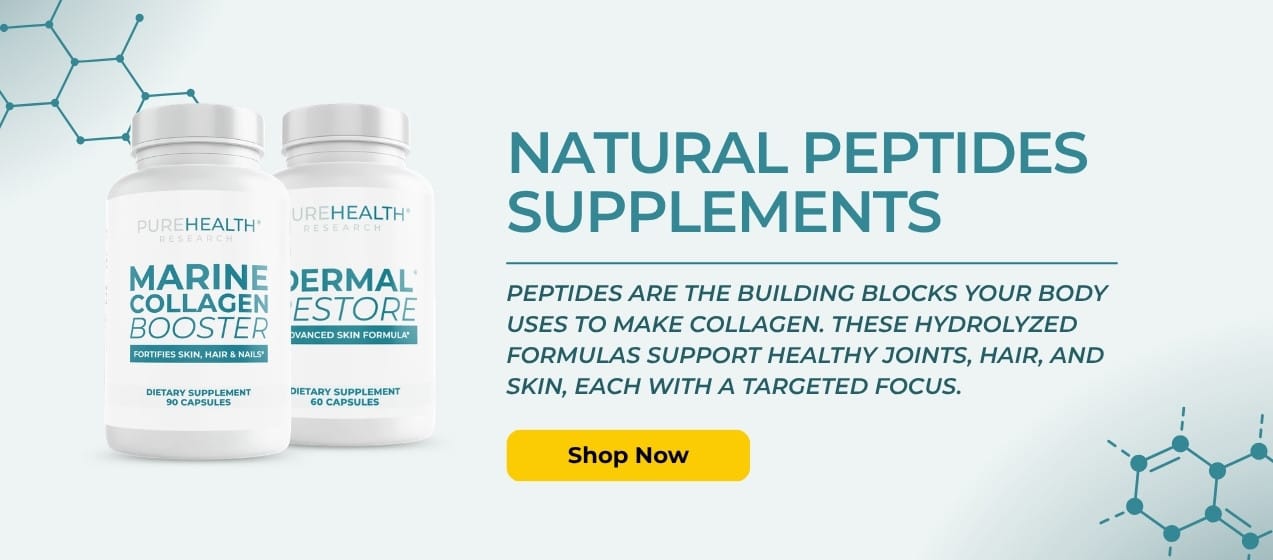
If you are looking to support your body’s structural proteins from the inside out, exploring high-quality dietary supplements can be a great addition to your daily routine. Browse our natural peptide supplements collection to find formulas designed to help maintain healthy skin, hair resilience, and overall wellness.
Look for clearly labeled peptide sources and amounts, then take your formula consistently, since the hair cycle needs several months to show change. Pairing a supplement with balanced meals and gentle scalp care may help you get the most from your routine.
What Science Says: What Peptides Can and Cannot Do
Research on peptides for hair growth is real but uneven, and much of it sits at early stages of science. Each type of study answers a different question, so it helps to know which kind stands behind a claim.
| Evidence Level | What It Can Show | Where Hair Peptides Stand |
| Lab studies (cells, donated follicles) | How a peptide may act at the cellular level | Fairly common for copper, collagen, and signal peptides |
| Animal studies | Effects inside a living system | Available for some collagen peptides |
| Small human trials | Short-term outcomes such as shedding or density | Limited, often funded by ingredient makers |
| Large independent human trials | The most reliable real-world results | Still rare for hair peptides |
Most claims you see online draw on the first two levels. That does not make peptides ineffective, but it does mean results may vary from person to person.
What Is Proven to Help
“Proven” is a strong word in this field, but current research suggests peptides may offer a few realistic benefits:
- Better moisture retention along the strand and scalp
- Less shedding caused by breakage
- A fuller, thicker-looking appearance
- Support for the hair’s natural elasticity
These effects focus on keeping and strengthening the hair you already have, which can make a visible difference over time.
Where Expectations Need Managing
Peptides cannot rewrite genetics. Thinning driven by inherited patterns or by male hormone activity follows its own biology, and in those cases peptides are a supportive tool rather than a standalone solution. Sudden shedding, patchy thinning, or scalp discomfort deserve a visit to a qualified healthcare professional, since these signs may point to an underlying issue worth checking.
Daily Habits That Support a Healthy Hair Cycle
Peptides tend to work best when the rest of your routine supports a steady hair cycle. Growing follicles are highly active, so they respond to changes in sleep, diet, stress, and daily handling.
A practical routine may include:
- Eating protein at each meal so the body has amino acids for keratin
- Aiming for regular, restful sleep
- Limiting high heat and tight hairstyles that strain the strand
- Giving any new product or supplement at least three months before judging results
None of these steps is dramatic on its own. Together, they shape the environment where every new hair grows.
Nutritional Synergies
Hair needs more than peptides. Iron, zinc, vitamin D, and several B vitamins play roles in normal follicle function, and low levels of some nutrients have been linked to increased shedding. Biotin gets plenty of attention, yet shortfalls are uncommon in people who eat a varied diet.
Whole foods such as eggs, fish, legumes, and dairy also contain naturally occurring peptides. Our article on what foods have peptides lists simple options to add to your plate. A colorful mix of fruits and vegetables helps round out the nutrients hair relies on.
Managing Stress and Scalp Care
Chronic stress may push more follicles into the resting phase earlier than usual. In a mouse study, researchers found that a stress hormone kept follicle stem cells in an extended resting state. Short walks, breathing exercises, and steady sleep may help keep stress in check.
On the scalp, gentle care counts. Wash with a mild shampoo, massage with your fingertips rather than your nails, and skip harsh scrubs that can irritate the skin around follicles.
Conclusion
Peptides for hair growth are a promising, research-supported tool for maintaining a healthy scalp and stronger hair fibers, whether applied topically to support the scalp environment or taken orally to supply building blocks. The science is still developing, so results may vary from person to person. Choose clearly labeled products, pair them with balanced nutrition and gentle care, and give your routine several months of consistent use, since steady habits shape healthier-looking hair.
They may help. Research suggests certain peptides can support scalp health, strand strength, and the appearance of fuller hair. Most evidence comes from lab and small human studies, so peptides work best within a broader routine.
Copper peptides (GHK-Cu) have the most hair-specific research for topical use. For oral support, collagen peptides are the most widely studied option. The right choice depends on whether you want scalp support or stronger strands.
Because of the natural hair cycle, most people need at least three months of consistent use before noticing changes. Less breakage often appears before visible fullness, and individual timelines may vary.
Topical peptides are generally well tolerated, though some people notice mild redness or itching, so a patch test is wise. Marine collagen may not suit people who avoid fish. Check with a healthcare professional if unsure.

Advertisement. This site offers health, wellness, fitness and nutritional information and is designed for educational purposes only. You should not rely on this information as a substitute for, nor does it replace, professional medical advice, diagnosis, or treatment. If you have any concerns or questions about your health, you should always consult with a physician or other health-care professional. Do not disregard, avoid or delay obtaining medical or health related advice from your health-care professional because of something you may have read on this site. The use of any information provided on this site is solely at your own risk.
Related Articles
What Foods Have Peptides? Bioactive Sources Explained
Written by Laura Kraujalyte | October 16, 2026

Oral vs Injectable Peptides: Risks and Trade-Offs
Written by Laura Kraujalyte | October 12, 2026

Do Peptides for Gut Health Actually Work?
Written by Laura Kraujalyte | October 9, 2026

What Are the Best Peptides for Skin?
Written by Laura Kraujalyte | September 30, 2026
Do Peptides for Weight Loss Work?
Written by Laura Kraujalyte | September 16, 2026

Peptides by the Numbers: What the Research Actually Shows
Written by Laura Kraujalyte | July 29, 2026