10 Exercises to Improve Circulation (No Equipment)
Heavy or cold legs after a long day? These simple, no-equipment exercises to improve circulation may support healthy blood flow whether you are seated, standing, or resting in bed.


 On This Page:
You do not need a gym membership or heavy equipment to try exercises to improve circulation, because simple leg and foot movements can get blood moving from almost anywhere. Long stretches of sitting or standing often leave legs feeling heavy, feet feeling cold, and the whole body feeling sluggish by late afternoon.
This guide covers 10 accessible movements grouped by mobility level: seated, standing, and lying down. Each one takes only a few minutes, and most fit easily into a workday, a long drive, or a quiet evening at home. You will also find a quick table for matching a movement to your situation.
Why Simple Exercises to Improve Circulation Work So Well
Simple exercises to improve circulation work because they give your leg muscles a job the heart cannot do alone. With each beat, the heart pushes oxygen-rich blood out through the arteries, and that pressure carries it all the way down to your feet.
The return trip is harder. Veins in the lower legs must move blood upward against gravity, so they rely on one-way valves and nearby muscle activity to keep it flowing. When you sit or stand still for hours, that muscle activity drops and blood tends to collect in the lower legs, which is why gentle, repeated movement helps.
The “Second Heart” Muscle Pump
The calf muscles are often called the “second heart” because of their role in venous return, the flow of blood from the legs back to the heart. Each time the calf contracts, it squeezes the deep veins running through it and pushes blood upward, while the valves keep it from sliding back down.
Less calf activity may be one reason legs feel heavy after a long day of sitting, a topic covered in our guide on why your legs feel heavy and weak. Ankle, foot, and calf movements put this pump to work directly.
How Movement Helps Blood Vessels Relax
Movement also affects the inner lining of your blood vessels, called the endothelium. As blood flows faster during activity, it brushes along this lining, and the endothelium responds by releasing nitric oxide, a compound that signals vessels to relax and widen.
A large review of human studies found that regular exercise exposes vessels to this faster flow again and again, which may help them work better over time. That makes regular, moderate movement a more sensible goal than occasional hard workouts.
Seated Exercises to Help Circulation at Your Desk
Seated movements are the easiest place to start if you work at a desk, travel often, or move with some limitations. When you sit without moving your legs for long periods, calf activity drops and blood flow through the leg vessels slows.
In a small randomized crossover study of 12 healthy young men, three hours of uninterrupted sitting reduced a common measure of blood vessel function in the leg. When participants took a five-minute walk roughly once an hour, that measure stayed steady.
The study was short and its group was small, but the takeaway is simple: break up long sitting periods with the three moves below.
1. Ankle Pumps and Circles
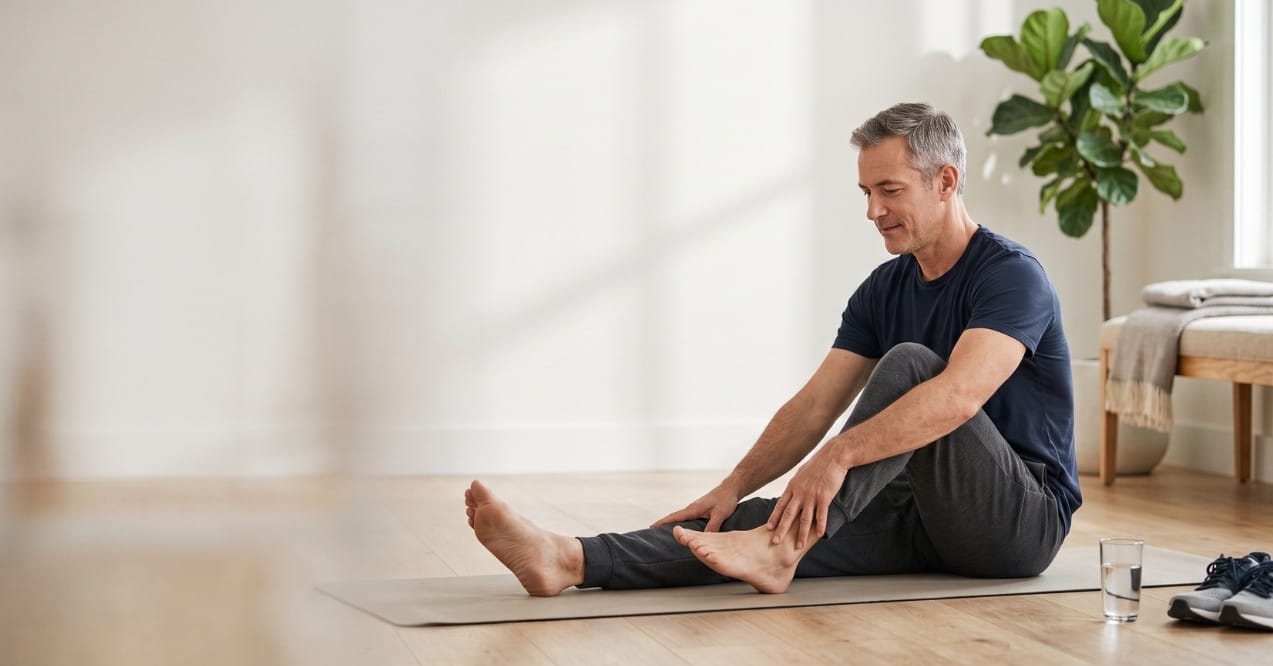
Ankle pumps are the simplest seated movement and one of the most studied. Sit with your feet flat, then point your toes away from you and pull them back toward your shins, about 15 to 20 times. Follow with slow ankle circles in each direction.
In a small ultrasound study of healthy adults, active ankle movements increased blood flow speed in the leg veins more than passive ones, and combining several directions produced the largest increase.
The study had only 20 participants, but it supports doing pumps and circles together rather than one alone.
2. Seated Calf Raises
Seated calf raises work the same lower leg muscles as the standing version without any balance demands. They suit long car rides, flights, and desk work.
- Sit near the front of your chair with your feet flat and hip-width apart.
- Press through the balls of your feet to lift both heels as high as is comfortable.
- Hold for two seconds, then lower slowly.
Aim for 10 to 15 repetitions. Pressing down on your knees with your hands adds light resistance once the movement starts to feel easy.
3. Knee Extensions
Knee extensions shift the focus from the calves to the front of the thigh. Sit tall, then straighten one leg until it is level with your hip, flexing your foot so your toes point toward the ceiling.
Hold for three to five seconds, lower the leg slowly, and switch sides for 10 rounds per leg. Contracting the large thigh muscles raises their need for oxygen, which may draw more blood into the area while you move.
Low-Impact Standing and Blood Flow Exercises
Standing exercises add your body weight to the work, which gives the leg muscles a stronger reason to contract. These three options raise your heart rate slightly without jumping or pounding, so they stay gentle on the knees and hips.
Keep a sturdy chair or kitchen counter nearby for balance, start with a few minutes, and build up as each move begins to feel easier. If you spend much of the day seated, a short standing set every hour or two pairs well with the desk moves above and gives your legs a change in position as well as activity.
4. Brisk Walking (or Marching in Place)
Walking is the most practical baseline for leg circulation because every step contracts the calf and foot muscles in a steady rhythm. A brisk pace, where you can talk but not sing, also nudges your heart rate up.
When space or weather gets in the way, march in place instead. Lift your knees to a comfortable height and swing your arms for two to five minutes, and spread several short bouts across the day.
5. Standing Heel Lifts
Standing heel lifts may be the best exercise for leg circulation when time is short, because they target the calf pump directly. Stand behind a chair with your hands resting lightly on the back.
Rise onto the balls of your feet, pause for a second at the top, and lower slowly to the floor. Start with 10 repetitions and work up to two or three sets, keeping the lowering phase slow to give the calves a little more work.
6. Gentle Bodyweight Squats
Shallow squats engage the glutes, hamstrings, and quadriceps together, three of the largest muscle groups in the body. Stand with your feet hip-width apart and a chair behind you, then push your hips back and lower only as far as feels comfortable.
Breathe out as you rise back up. Working these muscles raises their need for oxygen, so more blood moves through the lower body during each set, and eight to 12 slow repetitions is a reasonable start.
Lying Down and Gentle Leg Circulation Exercises
Lying-down leg circulation exercises suit slow mornings, the last few minutes before sleep, or days when standing for long feels like too much. A bed, sofa, or carpeted floor works for all four.
With your legs level with or above your heart, gravity takes on part of the job, so these movements focus on light muscle activity rather than effort. Move slowly, stay within a comfortable range, and combine them with the seated set if you spend long periods resting.
7. Leg Elevations
Leg elevation uses gravity to help blood in the lower legs travel back toward the heart. Lie on your back and rest your calves on two firm pillows, or scoot close to a wall and rest your legs against it so your feet sit above heart level.
Stay there for 10 to 15 minutes while breathing slowly. This position may help reduce mild puffiness in the feet and ankles after a long day on your feet.
8. Glute Squeezes
Glute squeezes are an isometric exercise, which means the muscle works without the joint moving. Lie flat with your legs straight, squeeze your buttocks firmly together, and hold for five slow counts before releasing fully.
Repeat 10 to 20 times. Activating these large muscles near the hips may support blood flow through the pelvis and upper legs, and the move stays comfortable on days when other exercises are not.
9. Point-and-Flex Toe Curls
Toe curls work the small muscles inside the foot, an area that often feels cold first. Curl your toes tightly toward the soles of your feet, hold for three seconds, then spread them as wide as you can.
Alternate with pointing and flexing the whole foot for 10 rounds. This gentle activity may encourage local blood flow, and if cold feet are a regular concern, our guide on why your feet are so cold covers other common reasons. Keep the movements slow to avoid cramping.
10. Knee-to-Chest Stretches
Knee-to-chest stretches loosen the lower back and hips while gently moving the legs. Lie on your back, bend one knee, and draw it toward your chest with both hands placed behind the thigh.
Hold for 15 to 20 seconds while breathing slowly, then lower the leg and switch sides, three times per leg. Releasing and moving each leg in turn may encourage flow through the hips and thighs.
Match Your Situation to the Best Circulation Movement
Use this table to pick a starting point based on where you are and how your legs feel. Each row points back to the full instructions above by number.
| Your Current Situation | Common Symptom | Best Movement to Try | Why It Helps |
| Long hours at a desk | Heavy, restless legs | Ankle pumps and circles (#1) | Puts the calf pump to work without leaving your chair |
| Long car ride or flight | Stiff ankles, puffy feet | Seated calf raises (#2) | Works the lower legs in a tight space |
| Short on time | General sluggishness | Standing heel lifts (#5) | Targets the calf pump in under two minutes |
| Small living space | Low energy | Marching in place (#4) | Raises heart rate without room to walk |
| After a long day standing | Mild ankle puffiness | Leg elevations (#7) | Lets gravity assist blood returning from the legs |
| Cold feet in bed | Chilly toes | Point-and-flex toe curls (#9) | Engages small foot muscles before sleep |
| Limited mobility | Tight hips, little activity | Glute squeezes (#8) | Works large muscles with no joint movement |
Daily Habits That Support Circulation Boosting Exercises
Exercise moves blood mechanically, but the blood itself and the vessels it travels through also need daily support. Fluid intake and diet both affect how easily blood moves, so a few small habits can add to what your movement routine does.
None of these habits replaces regular activity. Each one fits into an ordinary day and works best alongside the exercises to improve circulation above.
Drink Enough Water
Blood is mostly water, so your fluid intake directly affects its volume. A broad review of hydration research describes how tightly the body regulates water balance and how even modest shortfalls can affect physical function.
When you drink too little, blood volume can drop, and the heart and vessels have to work harder to keep it moving. Keep a glass or bottle within reach during the day, and take a few sips before and after each exercise session.
Supplements That Support Healthy Blood Flow
Some people add a supplement to their daily movement and diet. The right nutrients may help keep blood vessels flexible and support healthy blood flow.
The PureHealth Research circulation supplements collection brings together formulas built for different parts of that goal. VenEase features butcher’s broom extract, designed to support healthy vein tone in the legs. Complete Omega-3 provides EPA and DHA to support heart and blood vessel health, while Olive Leaf offers plant compounds with antioxidant activity.
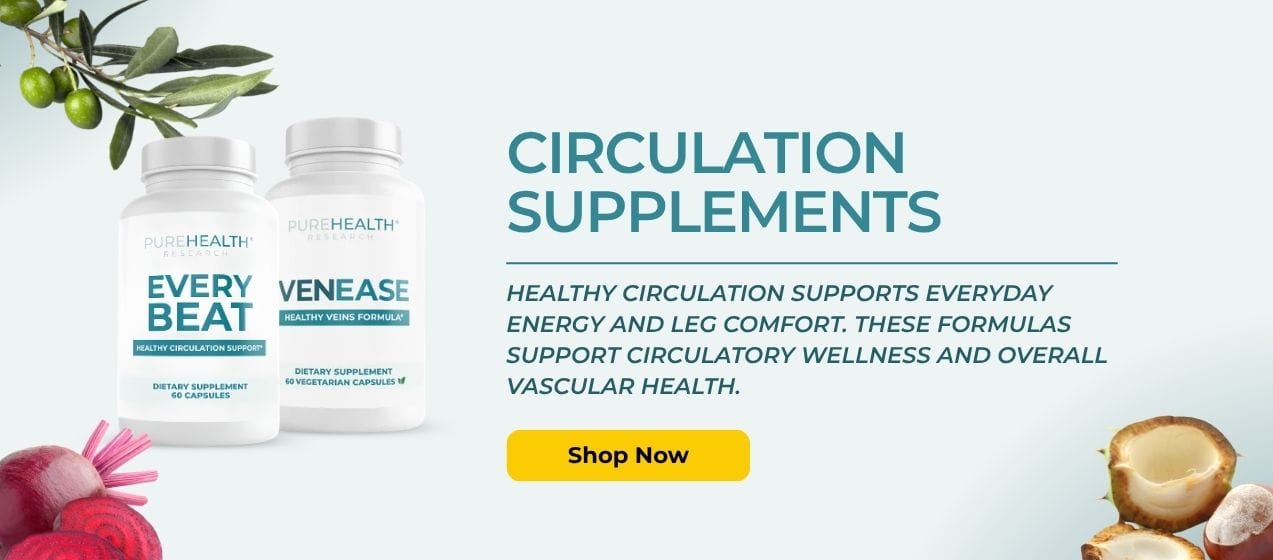
These formulas are made to go with regular movement, not replace it, and to support healthy blood vessel tone and steady blood flow. Browse the collection to find the formula that fits your routine.
Pair Movement with Circulation-Supporting Foods
What you eat can support the same goals as your exercise routine. Beets, spinach, arugula, and other leafy greens are rich in dietary nitrate, which the body can convert into nitric oxide, the same compound blood vessels release during activity.
A review of human studies reported that dietary nitrate may support healthy vessel function, though results vary between people and study designs. For more ideas, see our list of foods that increase blood flow. Berries, citrus fruits, and cocoa also add antioxidants to the mix.
Conclusion
You do not need a gym to support healthy blood flow, only consistent, gentle movement that fits your day. Ankle pumps at your desk, heel lifts in the kitchen, and leg elevations before bed all give your calf pump regular work. Pairing these 10 exercises with steady hydration and a nitrate-rich diet may help your legs feel lighter, and our guide on how to improve circulation in feet offers more ways to build on this routine.
General activity guidelines suggest at least 150 minutes of moderate activity each week, such as 30 minutes on five days. During long sitting periods, a few minutes of movement every hour is a sensible addition.
Stretching may encourage some blood flow and ease stiffness, but movements that repeatedly contract the leg muscles, such as walking or heel lifts, put the calf pump to work more directly. A mix of both works well.
Blood flow rises in working muscles as soon as you start moving. Longer-term changes in blood vessel function tend to develop gradually with regular activity over weeks, and results vary from person to person.
Often, yes. Seated and lying-down options such as ankle pumps, glute squeezes, and leg elevations put little load on the joints. Stay within a comfortable range, and check with a qualified health professional if movement causes sharp discomfort.

Advertisement. This site offers health, wellness, fitness and nutritional information and is designed for educational purposes only. You should not rely on this information as a substitute for, nor does it replace, professional medical advice, diagnosis, or treatment. If you have any concerns or questions about your health, you should always consult with a physician or other health-care professional. Do not disregard, avoid or delay obtaining medical or health related advice from your health-care professional because of something you may have read on this site. The use of any information provided on this site is solely at your own risk.
Related Articles
12 Foods That Improve Blood Flow
Written by Laura Kraujalyte | September 14, 2026

9 Herbs for Circulation Worth Actually Trying
Written by Laura Kraujalyte | September 11, 2026
Why Are My Feet So Cold? When It’s Normal, When It’s Not
Written by Laura Kraujalyte | September 7, 2026
How to Improve Circulation in Feet: Complete 9-Step Guide
Written by Donatas Leikas | August 30, 2026
Does Ashwagandha Lower Blood Pressure?
Written by Laura Kraujalyte | May 11, 2026
A Complete Guide to the Best Vitamins for Blood Flow
Written by Donatas Leikas | September 16, 2025