Why Are My Feet So Cold? When It’s Normal, When It’s Not
Cold feet are usually just your body preserving core heat. However, if they stay cold in warm rooms or feel numb, it may indicate restricted micro-circulation or nerve signaling.


 On This Page:
Why are my feet so cold is one of the most common questions people ask about circulation, and the answer usually comes down to basic physiology. When the body senses cool air or stress, it narrows the small vessels in the hands and feet to hold warmth near the vital organs.
Your feet sit farthest from the heart, so they cool first and warm last. Most of the time that response is normal and temporary. Sometimes it signals that blood flow to the extremities could use more support. This article helps you tell those two situations apart.
Common Everyday Causes of Coldness in Feet
Most causes of coldness in feet have nothing to do with anything serious. Room temperature, long stretches of sitting, tight footwear, low fluid intake, and everyday stress all reduce how much warm blood reaches the toes.
These factors are temporary and usually reverse within minutes of moving, warming up, or loosening what is restricting the foot. A useful signal is how quickly your feet recover once conditions change.
Environmental Temperature and Vasoconstriction
When air cools, the body protects its core first. Small vessels near the skin narrow in a process called vasoconstriction, redirecting warm blood inward and away from the surface.
Fingers and toes have a high surface area relative to their size, so they lose heat quickly and are the first areas to feel it. This is a normal function, not a malfunction.
Prolonged Sitting and Inactivity
Sitting still for hours slows lower-body circulation. Calf muscles act as a pump that pushes blood back toward the heart, and without contraction that pump goes quiet while gravity keeps blood pooled in the lower legs.
Research has observed reduced vascular function in the legs after just a few hours of uninterrupted sitting. Standing or walking briefly may restore normal flow.
Restrictive Footwear
Shoes with a narrow toe box, tightly laced boots, or socks with firm elastic cuffs can compress vessels at the ankle and forefoot. Less warm blood arrives, and the toes feel cold even indoors. Marks left on your skin after removing socks are a practical clue that the fit is too tight.
When Cold Feet and Legs Point to a Circulation Concern
Cold feet and legs that stay cold in a warm room tell a different story. When coldness persists regardless of environment, it often reflects how efficiently blood is reaching the farthest points of the body rather than how cold the room is. Duration and pattern matter more than intensity.
Coldness that lasts most of the day, affects one side noticeably more than the other, or arrives alongside numbness, tingling, or color changes is worth discussing with a qualified health professional.
Poor Micro-Circulation
Warmth arrives through capillaries so narrow that red blood cells pass through nearly single file. These vessels deliver oxygen and heat to skin and nerve endings in the toes. When flow through them is sluggish, the feet may feel persistently icy even though larger arteries higher up the leg are working normally.
Stress and Hormones
Stress hormones such as adrenaline and cortisol trigger the same vessel-narrowing reflex that cold air does, which is why anxious moments often bring cold hands and feet together.
Hormonal shifts that slow overall metabolic rate may also lower baseline body heat. Both effects are usually reversible once the underlying pattern changes.
Harmless Cold Feet vs. Signs of a Circulation Issue
| Symptom or Scenario | Likely Explanation | What to Consider Next |
| Feet cold outdoors, warm within minutes indoors | Normal vasoconstriction protecting core heat | No action needed beyond warmer socks |
| Cold after two hours at a desk | Reduced muscle pump activity from stillness | Stand and move every 30 to 45 minutes |
| Feet feel cold but are warm to the touch | Altered nerve signaling rather than temperature loss | Track how often it happens and seek professional input |
| Cold in a warm room, most days | Micro-circulation may not be reaching the toes efficiently | Review daily movement, hydration, and nutrition habits |
| One foot noticeably colder than the other | Asymmetry is not typical of environmental cooling | Have it assessed by a qualified health professional |
| Numbness, tingling, or bluish or pale toes | Reduced flow or nerve involvement | Seek a professional evaluation rather than self-managing |
Why Are My Feet So Cold Even With Socks On?
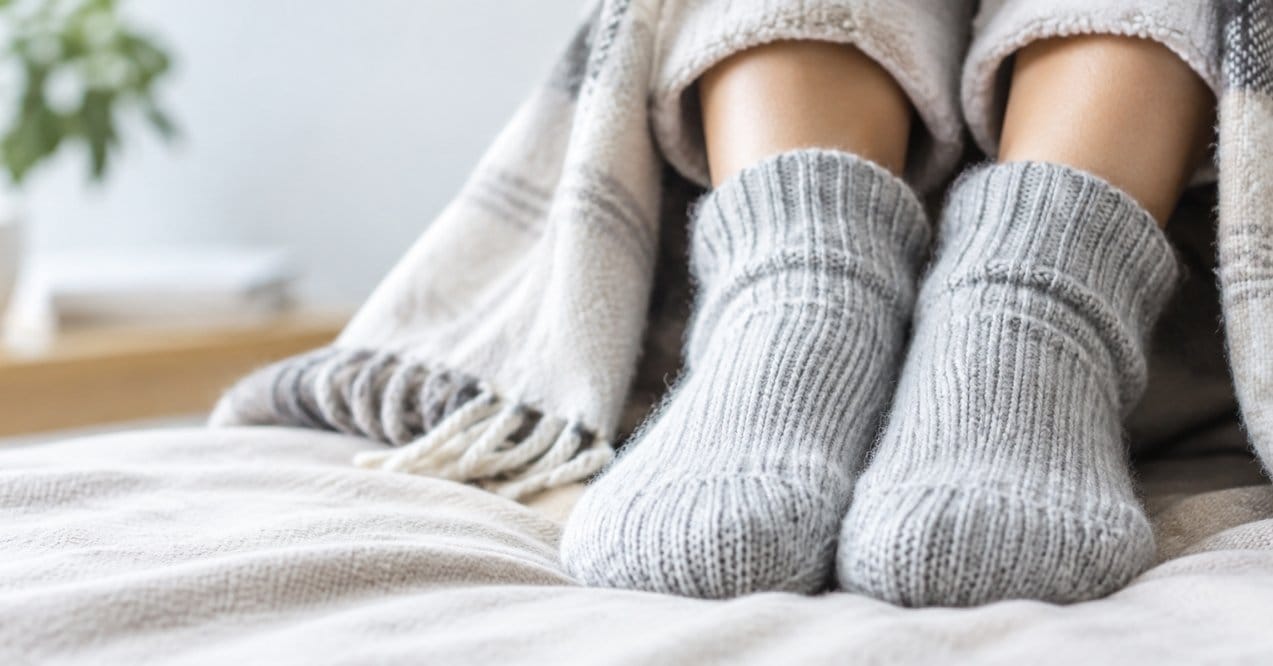
If you always have cold feet despite thick socks, the issue is likely supply rather than insulation. Socks work by trapping heat your body has already delivered to the skin. When little warm blood is arriving at the toes, there is not much heat there to hold, so adding layers changes very little. Sock material matters too, since trapped moisture can pull warmth away faster than the fabric retains it.
The Difference Between Insulation and Circulation
Insulation slows heat loss. Circulation supplies the heat in the first place. A wool sock on a well-perfused foot stays warm for hours, while the same sock on a poorly perfused foot may feel cool within minutes. This is why layering alone rarely solves the problem for people whose feet run cold year round.
Moisture and Breathability
Feet produce sweat continuously, even in winter. Non-breathable synthetic socks hold that moisture against the skin, and evaporation actively cools the foot. Merino wool and moisture-wicking blends move sweat away from the skin, which may keep feet warmer than a thicker cotton sock that stays damp.
Practical Cold Feet Treatment and Daily Circulation Support
Most practical cold feet treatment starts with habits rather than products. Movement, fluid intake, footwear that fits, and nutrients that support normal vascular function all influence how easily blood reaches the toes. None of these work overnight, and results vary from person to person. Consistency across several weeks tends to matter more than any single change.
Movement Snacks for the Lower Body
Short bursts of activity reactivate the calf pump. Try 20 calf raises, 15 ankle circles in each direction, or a five-minute brisk walk every hour or two. Seated versions work at a desk, and this guide on how to improve circulation in feet covers additional options for less mobile days.
Hydration and Blood Volume
Fluid intake affects blood volume, and lower volume may make it harder to maintain flow through the smallest vessels. Warm water and herbal teas add fluid while providing gentle internal warmth. Spreading intake across the day works better than large amounts at once.
Targeted Nutritional Support
Several nutrients participate in the pathways behind vessel flexibility and nitric oxide production, the signal that allows vessels to widen. Magnesium contributes to normal blood vessel function, citrulline is a precursor the body uses to make nitric oxide, and ginger has been studied for its antioxidant properties. Food sources come first: leafy greens, nuts, seeds, watermelon, and beets.
Where a Supplement Routine Fits
Daily habits do the heavy lifting, and a formula can complement them. The PureHealth Research circulation supplements collection brings together ingredients selected to support healthy micro-circulation and help maintain normal vascular function.

Rather than a single isolated nutrient, the formulas combine plant compounds and minerals involved in nitric oxide pathways and vessel flexibility, in capsule and powder formats that fit into a morning routine without much effort. They are designed to work alongside movement, hydration, and sensible footwear, not in place of them. Browse the collection to compare formats and ingredient profiles.
Conclusion
Cold feet are usually your body doing exactly what it should, holding warmth where it matters most. Coldness that lingers in warm rooms, or that comes with numbness or color changes, is worth paying attention to rather than dismissing. Movement breaks, better-fitting shoes, steady hydration, and nutrition that supports normal blood flow are all within your control, and small consistent habits often make the biggest difference.
Your extremities are the first place the body reduces blood flow to conserve core heat. Stillness, stress, tight footwear, or sluggish micro-circulation can each keep the toes cool while your torso stays comfortable.
Yes. Stress hormones narrow small blood vessels as part of the body’s alert response, which may leave hands and feet noticeably cooler. The effect usually fades once the stress response settles.
Reduced blood flow may make toes look pale, bluish, or unusually red as they rewarm. Persistent or repeated color changes are not something to self-manage and should be assessed by a qualified health professional.
Sleeping in socks is generally fine and may help you fall asleep faster. Choose a loose, breathable pair such as merino wool, since tight cuffs can compress vessels and trap moisture overnight.

Advertisement. This site offers health, wellness, fitness and nutritional information and is designed for educational purposes only. You should not rely on this information as a substitute for, nor does it replace, professional medical advice, diagnosis, or treatment. If you have any concerns or questions about your health, you should always consult with a physician or other health-care professional. Do not disregard, avoid or delay obtaining medical or health related advice from your health-care professional because of something you may have read on this site. The use of any information provided on this site is solely at your own risk.
Related Articles
10 Exercises to Improve Circulation (No Equipment)
Written by Laura Kraujalyte | September 18, 2026
12 Foods That Improve Blood Flow
Written by Laura Kraujalyte | September 14, 2026

9 Herbs for Circulation Worth Actually Trying
Written by Laura Kraujalyte | September 11, 2026
How to Improve Circulation in Feet: Complete 9-Step Guide
Written by Donatas Leikas | August 30, 2026
Does Ashwagandha Lower Blood Pressure?
Written by Laura Kraujalyte | May 11, 2026
A Complete Guide to the Best Vitamins for Blood Flow
Written by Donatas Leikas | September 16, 2025