Does Ashwagandha Lower Blood Pressure?
Does ashwagandha lower blood pressure? Withania somnifera is not a treatment for high blood pressure, but may support a healthy stress response that indirectly helps maintain blood pressure already within a normal range. Read on to learn what the evidence actually shows.


 On This Page:
Ashwagandha is not a treatment for high blood pressure and should not be used to lower blood pressure. That said, published data suggests it may support a healthy stress response, which may indirectly help maintain blood pressure already within a normal range. What follows explores how ashwagandha interacts with the nervous system’s stress pathways, what peer-reviewed studies actually show across different population types, and how to safely incorporate it into a daily wellness routine.
How Does Ashwagandha Affect Blood Pressure Through Stress Pathways?
Asking how ashwagandha affects blood pressure naturally requires understanding what kind of herb it is. As a classified adaptogen, ashwagandha does not push vital signs in one direction the way a pharmaceutical agent would.
Instead, it works toward balance by operating across two interconnected pathways: modulation of the nervous system’s stress response and defense of vascular tissue at the cellular level. Both are relevant to circulatory wellness, and both are supported by the herb’s active constituents.
Calming the Sympathetic Nervous System and Cortisol Spikes
When emotional or environmental stressors activate the hypothalamic-pituitary-adrenal (HPA) axis, the adrenal glands release cortisol. This hormone temporarily constricts blood vessels and accelerates heart rate, a short-term response that becomes problematic when chronically sustained.
Ashwagandha has been shown to blunt this cascade by modulating adrenergic sensitivity, which may reduce the physical toll of persistent stress on vascular walls. For more on how this adaptogen supports the nervous system, see PureHealth Research’s overview of ashwagandha for anxiety and stress.
Antioxidants and Vascular Tissue Defense
Ashwagandha contains a class of active steroidal lactones called withanolides, as well as a specific compound called withaferin A. These act as antioxidants at the cellular level, neutralizing unstable molecules that can otherwise damage endothelial tissue and impair blood vessel function.
The flavonoid content also contributes to reducing markers related to vascular wellness. Together, these constituents give ashwagandha a secondary line of circulatory support beyond its stress-regulating role.
What Research Says About Ashwagandha, Stress, and Blood Pressure Wellness
The published literature on ashwagandha and stress-related blood pressure wellness does not deliver a single uniform verdict, and that distinction matters. Results differ meaningfully depending on whether participants were already experiencing stress-related tension or began the study with healthy baseline parameters. Reading the data without this context leads to either overstating or dismissing the herb’s potential.
Stress-Induced Tension vs. Healthy Baselines
A 2012 non-randomized controlled study by Kushwaha et al. examined 51 adults aged 40 to 70 who were experiencing elevated stress levels. In this limited study population, changes in blood pressure markers were observed over three months, with those taking ashwagandha root powder with milk showing a more pronounced shift in systolic values. The findings should be interpreted cautiously given the small sample size and non-randomized design.
By contrast, a 2021 randomized placebo-controlled trial by Verma et al. involving 80 healthy adults found no significant changes in blood pressure parameters after 8 weeks of supplementation with 300 mg of ashwagandha root extract twice daily.
This is not a contradictory finding. It suggests ashwagandha functions as a modulator for those under physiological stress, not as a blanket pressure-lowering agent across all populations.
| Participant Baseline Profile | Observed Clinical Outcome | Primary Mechanism Involved |
| Stress-oriented adults (Kushwaha 2012) | Changes in systolic and diastolic markers were observed in one small study population | Cortisol reduction and sympathetic calming |
| Healthy adults, normal baselines (Verma 2021) | Maintenance of stable, normal baseline parameters; no adverse changes | General adaptogenic balance |
The Role of Complementary Botanicals
A 2010 randomized controlled trial by Sandhu et al. compared ashwagandha and Terminalia arjuna individually and in combination in healthy young adults. Ashwagandha improved physical performance metrics, velocity and muscular endurance, while Terminalia arjuna was more directly studied for circulatory wellness outcomes in that population.
The combination showed improvements across multiple health markers. This positions ashwagandha as a systemic stabilizer that complements rather than replicates botanicals studied for circulatory wellness.
Can Daily Ashwagandha Support Healthy Blood Pressure Already Within Normal Range?
Can ashwagandha lower blood pressure through consistent, daily use? The more accurate framing is whether regular use may support the stress balance that indirectly relates to blood pressure already within a normal range.
Studies showing stress-response and general wellness observations all required a minimum of 8 to 12 weeks of uninterrupted supplementation. Sporadic use does not appear to generate meaningful shifts in cortisol patterns. The herb works cumulatively, not acutely.
Available delivery formats include:
- Capsules and tablets: the most common format for standardized dosing
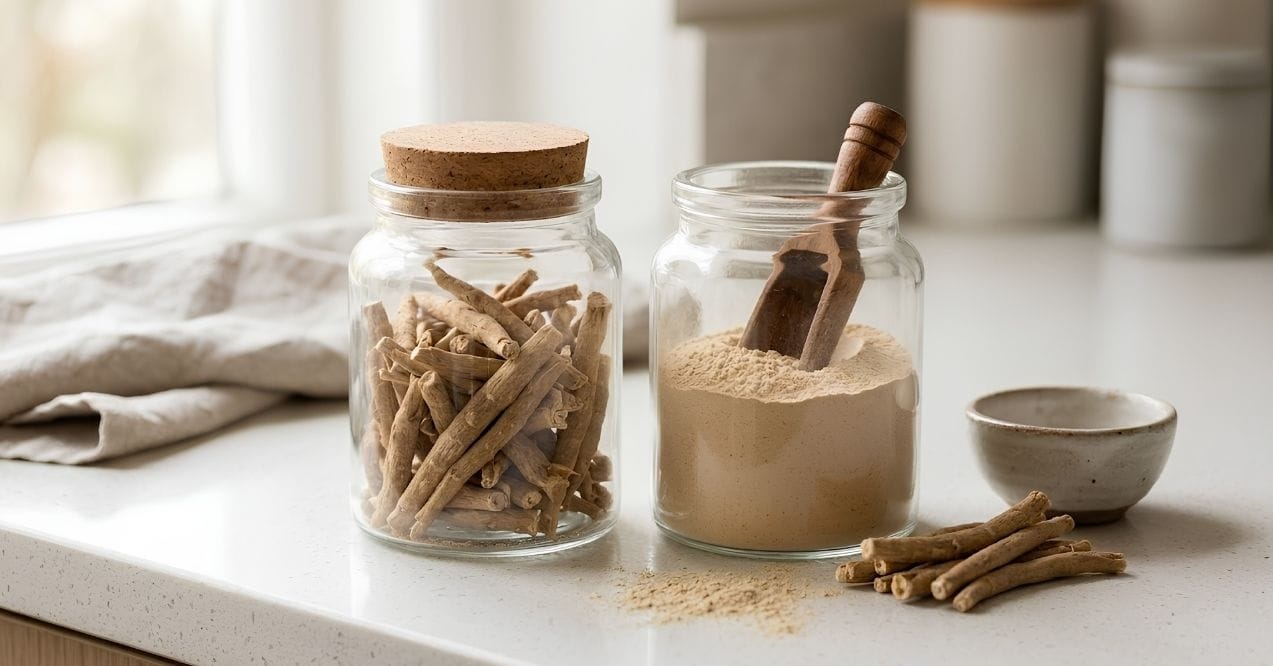
- Root powder: traditional preparation, often consumed with warm milk for improved absorption
- Liquid extracts: faster absorption but harder to dose consistently
- Teas: lower withanolide concentration, less suitable for precise daily use
Finding the Right Routine and Timing
Morning use may support daytime stress resilience by setting a calmer cortisol baseline before environmental demands accumulate. Evening use pairs well with a winding-down routine, particularly for those who notice that poor sleep affects how they feel the next day.
If you’re curious about that connection, PureHealth Research explores it in depth in this piece on whether ashwagandha makes you sleepy. Ultimately, the specific hour matters less than daily adherence, since consistency is the variable that drives outcomes.
Choosing a High-Quality Extract
Traditional Ayurvedic preparations often paired ashwagandha root with a lipid carrier, typically warm milk, to support absorption of its fat-soluble withanolides. Modern standardized extracts replicate this benefit without the preparation.
Specifically, KSM-66® is a full-spectrum root-only extract standardized to a minimum 5% withanolide concentration, obtained without solvents or chemicals. This level of standardization makes dosing predictable and the extract’s potency consistent between batches.
PureHealth Research’s ashwagandha supplement provides standardized KSM-66® ashwagandha root extract in a convenient daily capsule. It is designed for adults seeking support for everyday stress balance, relaxation, and general wellness.
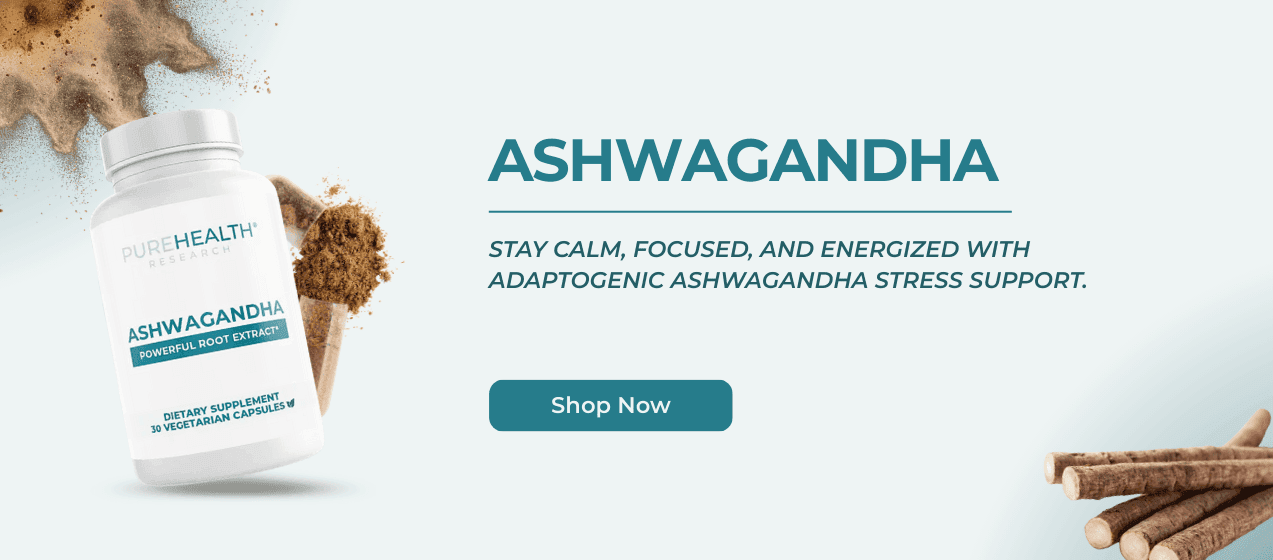
Each serving provides a consistent amount of standardized ashwagandha extract without unnecessary fillers. PureHealth Research’s manufacturing follows cGMP standards with third-party testing, so what is listed on the label reflects what is inside the capsule.
As with any supplement, individuals taking prescription medications or managing a health condition should consult a qualified healthcare provider before use.
Safety and Potential Supplement Interactions
Framing safety as an afterthought would underserve the reader. Ashwagandha has a well-established short-term safety profile, but several genuine considerations apply, and transparency about them is part of responsible supplementation.
Discussing Adaptogens with Your Care Provider
Anyone taking prescription medications, including those used for blood pressure, should consult their healthcare provider before adding ashwagandha to their routine. Because ashwagandha may influence cortisol and nervous system activity through its own pathways, combining it with certain medications warrants professional guidance.
Individuals with autoimmune conditions, thyroid sensitivities, or a history of liver concerns should also seek advice before beginning use, as ashwagandha has been associated with rare adverse hepatic events in case reports.
Combining Ashwagandha with Other Supplements
Ashwagandha pairs well with other wellness supplements. Magnesium, for example, shares several overlapping pathways related to nervous system balance and vascular tone. PureHealth Research covers this pairing in more depth in the ashwagandha and magnesium article.
What to avoid is stacking multiple calming adaptogens without an intentional plan, as layering herbs with overlapping sedative properties may produce disproportionate effects, particularly in the evening. A focused, well-considered approach to supplementation consistently outperforms accumulation for its own sake.
Conclusion
Ashwagandha may support healthy blood pressure levels already within a normal range by calming the cortisol-driven stress response that places persistent demand on the circulatory system, an effect most observed in those with stress-related tension rather than healthy baselines.
Whether does ashwagandha lower blood pressure applies to your situation depends on your individual physiology. Sustainable circulatory wellness rests on a foundation of consistent sleep, regular movement, effective stress management, and quality supplementation working in combination.
Ashwagandha may interact with certain prescription medications. Always consult a qualified healthcare provider before combining it with any existing regimen.
In one study of healthy adults with normal baseline markers, ashwagandha did not significantly change blood pressure parameters at the studied dose. Individual responses may vary, especially for people taking prescription medications.
Most studies showing meaningful stress and general wellness observations ran for 8 to 12 weeks. Consistent daily use over at least two months appears necessary for cumulative benefits to emerge.
Either timing may work. Morning use supports daytime resilience; evening use supports wind-down. Consistency matters more than timing.
Yes. Standardized root extracts, particularly KSM-66®, offer more reliable withanolide concentrations than raw powder or teas, making outcomes more predictable and consistent.

Advertisement. This site offers health, wellness, fitness and nutritional information and is designed for educational purposes only. You should not rely on this information as a substitute for, nor does it replace, professional medical advice, diagnosis, or treatment. If you have any concerns or questions about your health, you should always consult with a physician or other health-care professional. Do not disregard, avoid or delay obtaining medical or health related advice from your health-care professional because of something you may have read on this site. The use of any information provided on this site is solely at your own risk.
Related Articles
10 Exercises to Improve Circulation (No Equipment)
Written by Laura Kraujalyte | September 18, 2026

12 Foods That Improve Blood Flow
Written by Laura Kraujalyte | September 14, 2026

9 Herbs for Circulation Worth Actually Trying
Written by Laura Kraujalyte | September 11, 2026

Why Are My Feet So Cold? When It’s Normal, When It’s Not
Written by Laura Kraujalyte | September 7, 2026

How to Improve Circulation in Feet: Complete 9-Step Guide
Written by Donatas Leikas | August 30, 2026

A Complete Guide to the Best Vitamins for Blood Flow
Written by Donatas Leikas | September 16, 2025