Does Ashwagandha Make You Sleepy?
Does ashwagandha make you sleepy? Learn what research says about calm, drowsiness, and timing. Build a better sleep routine.



 On This Page:
Does ashwagandha make you sleepy? Not in the way a sedative does. Ashwagandha (Withania somnifera) is an adaptogen, a class of botanicals commonly studied for their role in supporting the body’s response to everyday stress.
Some people notice mild relaxation or occasional drowsiness after taking it; others feel no change in alertness at all. The response varies based on personal sensitivity, timing, serving size, and whether it is combined with other calming products. This guide covers how ashwagandha tends to feel, when to take it, how long results may take, and when extra caution makes sense.
Does Ashwagandha Make You Sleepy or More Relaxed?
Does ashwagandha make you sleepy the same way a pharmaceutical sedative does? No. For most people, it does not produce a sudden onset of drowsiness. Some may feel noticeably more relaxed, particularly in the evenings. Others notice little change in alertness at all.
The distinction matters because “sleepy” can mean different things: calm and settled, mildly drowsy, physically tired, or mentally foggy are all meaningfully different experiences.
Some research suggests ashwagandha may support relaxation through its effects on the body’s stress-response system, but that is distinct from the heavy sedation associated with pharmaceutical sleep aids. Ashwagandha sleepiness, when it occurs, is generally a gradual shift toward calm rather than a sharp drop in function.
Calm, Drowsy, or Groggy?
Identifying which response you are having helps assess whether ashwagandha is working well for your routine or whether something needs adjusting.
| How It Feels | What It May Mean | Best Next Step |
| Calm and settled | Typical relaxation response | Continue with current timing |
| Mildly drowsy in the evening | May be supporting wind-down | Consider consistent evening use |
| Foggy or sluggish the next morning | Possible over-sensitivity or late timing | Adjust timing; avoid stacking calming products |
| No noticeable change | Response may need more time | Stay consistent; reassess after 6–8 weeks |
Why Ashwagandha May Feel Calming at Night
Ashwagandha’s association with nighttime relaxation stems largely from its studied effects on the body’s stress-response system. When the body feels less physiologically wound up by evening, the transition toward rest can feel more natural. This is not the same as ashwagandha directly triggering sleep.
The relationship between stress physiology and sleep quality is documented across multiple studies, and ashwagandha’s potential role in supporting that system is one reason it has attracted sustained scientific attention. The calming quality many people notice in the evenings is likely a downstream effect of this stress-response support rather than any direct sedative action.
The Stress-And-Sleep Connection
Daily stress can make it harder to settle in at night. The body’s stress-response system, when chronically active, may keep a person feeling alert when rest is what the body actually needs.
Some research suggests ashwagandha may support a more balanced stress response, which in turn may make winding down feel more accessible. For anyone managing persistent daily tension, this connection is worth exploring. More detail on how ashwagandha may support the stress and anxiety response provides useful context alongside this article.
Relaxation Is Not the Same as Sedation
Feeling calmer or less mentally tense is a meaningfully different experience from being sedated. Sedation involves suppression of the central nervous system. Relaxation is the absence of unnecessary tension.
Practically, relaxation might look like feeling ready to dim the lights, do some light stretching, or settle into a quieter evening routine without resistance. Ashwagandha, when effective, tends to support the latter rather than producing pharmaceutical-grade sedation.
Can Ashwagandha Cause Drowsiness?
Mild drowsiness is a recognized possibility with ashwagandha, but not a guaranteed outcome. Does ashwagandha cause drowsiness for everyone? No. Whether someone notices it depends on individual sensitivity, the time of day it is taken, serving size, and whether other calming supplements are part of the routine.
For many people, what registers as drowsiness is actually a drop in baseline tension, which can feel unfamiliar to those accustomed to sustained mental stimulation. That context matters when interpreting the response. Sensations that feel unusual are not automatically signs of a problem.
When Drowsiness Can Happen
Drowsiness, when it occurs, tends to be most noticeable in a few predictable scenarios: taking ashwagandha later in the evening, taking it on an empty stomach, or combining it with other calming supplements. People who are already fatigued may also notice a stronger relaxation response. Some individuals interpret a general lowering of mental tension as drowsiness, particularly if they have been in a sustained high-stress state for an extended period.
Signs Your Timing May Need Adjustment
Gentle evening relaxation is generally a neutral or positive sign. Foggy thinking, sluggishness the following morning, or feeling too relaxed to function during the day suggests that timing or combination needs adjusting. A few practical considerations:
- If you feel foggy during the day, consider shifting to evening use.
- If you are already taking other calming supplements, avoid casual stacking without personalized guidance.
- Always follow label directions for serving size rather than estimating.
Why Some People Feel Tired After Taking Ashwagandha
Tiredness is not the intended outcome of ashwagandha use, but some people do experience lower energy after taking it. This tends to occur when someone is particularly sensitive to adaptogens, takes it later in the day, or combines it with an already winding-down environment.
Asking whether ashwagandha makes you tired is worth addressing plainly: for most people, the answer is no. That said, individual sensitivity is a real variable that should not be dismissed. Paying attention to how the body responds during the first few weeks of use provides the clearest picture of how ashwagandha fits a given routine.
Personal Sensitivity Plays a Role
Responses to ashwagandha vary considerably from person to person. One individual may feel balanced and composed throughout the day. Another may find the same serving too relaxing for morning use. Neither response is inherently wrong.
Treating your own body’s reaction as useful feedback, rather than measuring it against a fixed expected outcome, helps identify the timing and routine that actually works for your physiology.
A Simple Way to Track Your Response
Keeping a brief daily log during the first two to three weeks can help identify patterns. Track:
- Time of day taken
- Serving size (per label instructions)
- How you felt within 1–2 hours
- Ease of evening wind-down
- Next-morning energy level
Consistent notes over this window make it much easier to identify whether timing or serving size needs adjusting before drawing any conclusions.
How Long It May Take to Notice Sleep Support
Ashwagandha is not a one-night solution. Its potential effects on sleep quality are discussed in research primarily in the context of consistent use over several weeks.
One randomized, double-blind, placebo-controlled trial found that participants using a standardized ashwagandha root extract reported sleep quality improvements after six weeks of daily supplementation.
A separate trial examining stress-response outcomes noted changes in reported sleep measures after eight weeks of consistent use. Setting a six-to-eight-week evaluation window, rather than judging results after one or two nights, gives ashwagandha the time its mechanism of action actually requires.
Think Consistency, Not One-Night Results
Adaptogens like ashwagandha are generally discussed in the context of consistent use over time rather than immediate, one-time effects. Ashwagandha’s potential contribution to sleep quality is tied to its ongoing effect on the stress-response system across weeks, not to a single-dose response. Consistency is the practical requirement.
Taking it at the same time each day, following label directions, and not stopping prematurely because nothing dramatic has happened are all part of getting a fair and accurate assessment of whether it suits your routine.
What Progress May Look Like
Progress with ashwagandha tends to be gradual rather than sudden. Over several weeks of consistent use, some people notice they feel less wound up by evening, transition into a bedtime routine with less effort, or wake up feeling more consistently rested. Learning more about how much deep sleep your body may need can help set realistic expectations alongside consistent ashwagandha use.
The Best Time to Take Ashwagandha Depends on Your Goal
Timing is one of the most practical decisions around ashwagandha use. Readers asking will ashwagandha make you sleepy often find that the answer shifts depending on when they take it.
Morning and evening use both have clear reasoning behind them, and the right choice depends on personal goals and how the body responds. Some people try one timing for two to three weeks, then switch if the experience does not match what they were looking for.
Morning Use for Daily Stress Support
Morning use suits people who want ashwagandha as part of a consistent daily stress-response routine and who do not notice any drowsiness from it. Pairing it with breakfast or an existing morning supplement habit can make it easier to stay consistent. If morning use produces unwanted relaxation during work hours, that is useful feedback to shift toward evening timing rather than stopping use altogether.
Evening Use for Nighttime Wind-Down
Evening use may be a better fit for people who notice a relaxation response after taking ashwagandha. Pairing it with calming habits such as dimming lights, reducing screen exposure, or light stretching may support a more consistent transition toward restful core sleep. The goal is to work with the body’s natural evening rhythm rather than against it.
Making Ashwagandha Part of a Consistent Routine
Ashwagandha is generally studied in the context of consistent daily use rather than occasional use. Choosing a product with standardized, clearly labeled serving directions removes the guesswork from day-to-day use.
PureHealth Research’s ashwagandha supplement uses a standardized root extract with defined withanolide content, the active compound family most studied in clinical ashwagandha research. Each serving delivers a precise, consistent dose so you always know exactly what you are taking.
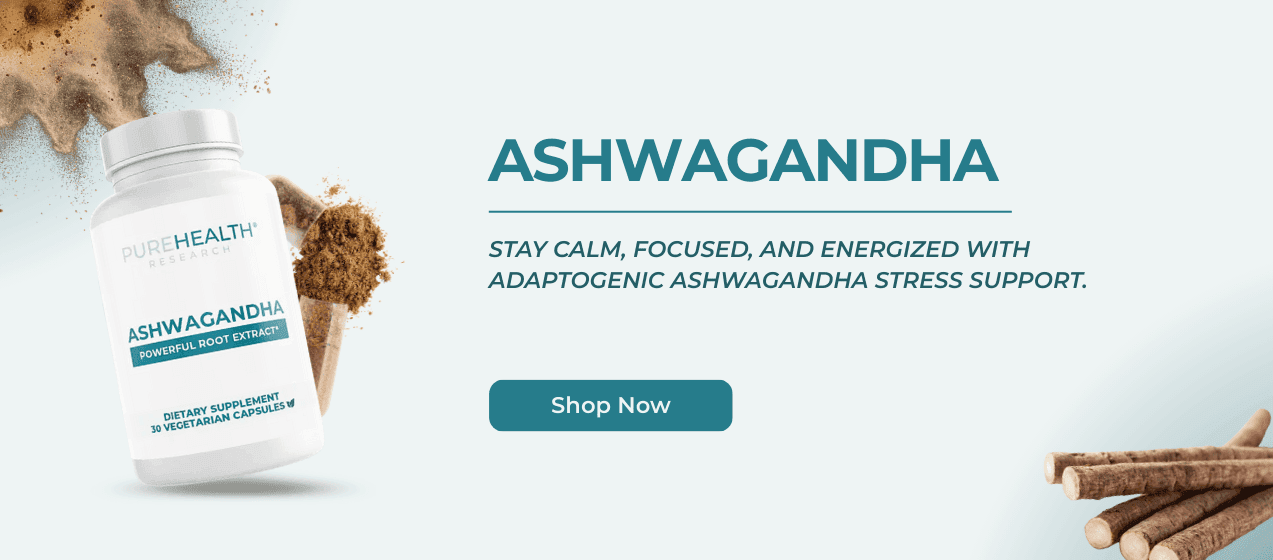
The formula is built for people who want to incorporate ashwagandha into a reliable daily routine, not use it as a one-night experiment. It is third-party tested for purity and potency, straightforward to take, and designed for the kind of consistent use that ashwagandha’s mechanism actually requires.
Whether the priority is daytime stress-response support or a calmer evening transition, this formulation provides a well-dosed, research-aligned foundation to build from.
How Ashwagandha Compares With Common Nighttime Supplements
Ashwagandha is used differently from most nighttime supplements. It is not typically taken for immediate sleep timing or as an on-demand wind-down tool. Its studied effects are tied to ongoing stress-response support and, over time, an improved ability to relax in the evenings.
Other nighttime supplements tend to be designed for occasional, more immediate sleep-onset support. Placing ashwagandha in the right category, as a consistent-use adaptogen rather than a fast-acting nighttime product, helps set realistic expectations and avoids judging it by the wrong standard.
Ashwagandha Works Differently
Some nighttime supplements are designed for acute, occasional use and are taken close to bedtime for sleep-timing support. Ashwagandha, by contrast, is generally discussed in the context of cumulative stress-response support across weeks of consistent use. This distinction matters practically: ashwagandha is not a substitute for more immediate sleep-onset tools, and those products are not substitutes for what ashwagandha may offer over time.
Do Not Combine Calming Products Casually
Using multiple calming supplements at the same time makes it harder to identify which product is contributing to any change, whether that is improved relaxation or unexpected grogginess. If you are already using other nighttime products and want to add ashwagandha, keeping a response log and seeking personalized guidance first is the most practical approach.
When Ashwagandha May Not Be the Right Fit
Ashwagandha is well-tolerated by most healthy adults, but it does not suit everyone. People who are pregnant or breastfeeding are generally advised to avoid it.
Those already using several calming or stress-support products may find that adding ashwagandha introduces too many variables to interpret clearly. People with known sensitivities to Solanaceae family plants may also want to proceed with caution before starting a regular routine.
Times to Use Extra Caution
Extra caution is reasonable if any of the following apply:
- Currently pregnant or breastfeeding
- Already using multiple calming or sleep supplements
- Known sensitivity to nightshade-family botanicals
- Experiencing ongoing, unexplained fatigue
In any of these situations, consulting a qualified health professional before starting ashwagandha is a sensible step.
Side Effects to Watch For
Ashwagandha drowsiness is the most commonly reported mild side effect, though most people describe it as a general sense of relaxation rather than heavy sedation. Other possible reactions include:
- Mild digestive discomfort or nausea
- Loose stools, particularly at higher serving sizes
- Fatigue, especially if taken during the day
Uncomfortable or persistent reactions are a clear signal to stop use and reassess.
Conclusion
Ashwagandha is not a fast-acting sleep trigger. Most people who notice its effects describe a gradual shift toward calm rather than sudden drowsiness. Whether that supports better rest depends on consistency, timing, and individual response. Treat ashwagandha as part of a broader, steady wellness routine rather than a standalone shortcut, and give it the six-to-eight weeks that a consistent-use adaptogen genuinely requires.
Yes. Taking it in the evening may suit people who notice a relaxation response from it. There is no strict requirement to take it at bedtime, but evening use aligns naturally with its calming profile.
Most people take it 30 to 60 minutes before bed when using it for evening wind-down support. Always follow your specific product’s label directions as the primary guide.
Morning grogginess is not a typical response. Ashwagandha does not suppress the central nervous system the way pharmaceutical sleep aids do. If grogginess occurs, reassess timing and serving size.
Some research suggests ashwagandha may support a calmer stress response, which may make an active mind feel more manageable at night. Effects develop with consistent use over several weeks.
Yes. Standardized extracts with defined withanolide content are what most clinical studies use. Unstandardized or generic powders may deliver inconsistent results across servings.
Both are connected. Ashwagandha is primarily studied for stress-response support. For many people, a calmer stress response may make evening wind-down and sleep quality easier to achieve over time.
Some people do combine these, but stacking calming supplements makes it harder to identify what is producing any response or side effect. For detailed guidance, see our article on ashwagandha and magnesium.

Advertisement. This site offers health, wellness, fitness and nutritional information and is designed for educational purposes only. You should not rely on this information as a substitute for, nor does it replace, professional medical advice, diagnosis, or treatment. If you have any concerns or questions about your health, you should always consult with a physician or other health-care professional. Do not disregard, avoid or delay obtaining medical or health related advice from your health-care professional because of something you may have read on this site. The use of any information provided on this site is solely at your own risk.
Related Articles
Which Magnesium Is Best for Sleep? See What Helps
Written by Gabriele Slimaite | May 1, 2026
Is It Good to Sleep With Your Feet Elevated?
Written by Donatas Leikas | August 12, 2025

What is Core Sleep? Benefits and How to Get It
Written by Donatas Leikas | April 10, 2025

International Sleep Day: Why Rest Matters More As We Age?
Written by Donatas Leikas | March 14, 2025

How Much Deep Sleep Do You Need by Age?
Written by Donatas Leikas | March 11, 2025
Can Lack of Sleep Cause Nausea? How to Prevent It?
Written by Donatas Leikas | July 13, 2024