12 Foods That Improve Blood Flow
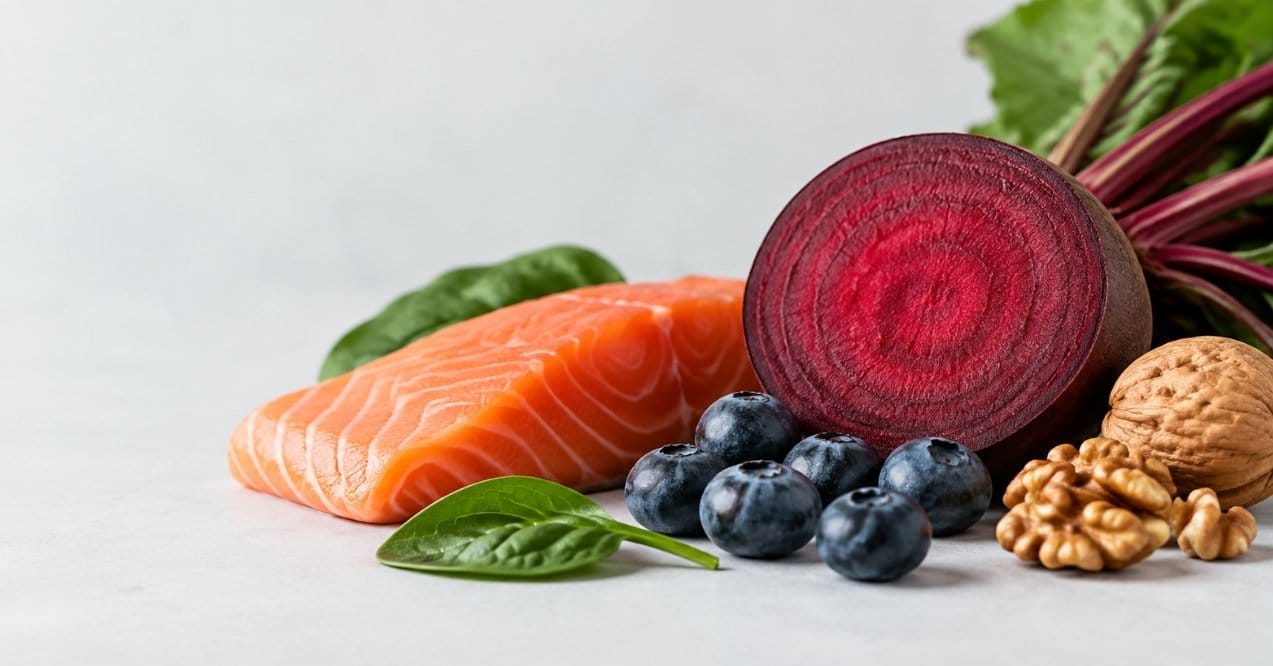
Nutrient-dense foods rich in nitrates, flavonoids, and omega-3 fatty acids support vessel elasticity and nitric oxide production, making it easier to discover foods that increase blood flow.


 On This Page:
Cold fingertips, heavy legs after a long day, and a general sense of sluggishness often trace back to how easily blood moves through your body. Circulation depends largely on the flexibility and tone of your blood vessels, and that flexibility responds to what lands on your plate.
Certain nutrients give the body raw material for nitric oxide, help protect vessel walls, and support a healthy inflammatory response. This guide groups the top foods that increase blood flow by how they actually work, so you can build a practical, heart-friendly grocery list rather than memorizing a random collection of items.
Top 12 Foods That Increase Blood Flow
The foods below are grouped by their active compounds rather than by food group, because that is how they influence the vascular system. Some supply nitrates the body converts into nitric oxide, the signaling molecule that helps vessels widen normally. Others deliver flavonoids, healthy fats, or warming botanicals that support vessel comfort and normal blood flow to the extremities.
None of these foods is a quick fix, and none replaces professional care for an ongoing concern. What they offer is a steady nutritional foundation, which is exactly what vascular tissue responds to over time.
1. Beets (Rich in Dietary Nitrates)
Beets are among the richest dietary sources of inorganic nitrate, which the body converts through saliva and stomach acid into nitric oxide. That molecule signals the smooth muscle in vessel walls to relax, supporting normal vasodilation. A randomized crossover trial in healthy older adults found that daily nitrate-rich beetroot juice was associated with modest reductions in blood pressure within the normal range.
Daily tip: Roast beets as a side dish, or start with a small 5 oz glass of beet juice.
2. Garlic (Allicin for Vessel Relaxation)
Crushing garlic activates an enzyme that produces allicin, a sulfur compound long studied for its effect on vessel tone. Animal research suggests allicin may promote vasorelaxation through hydrogen sulfide signaling, though these were laboratory findings in rats rather than human trials. Human evidence is more limited and generally uses concentrated extracts.
Crush or chop raw garlic and let it rest for about 10 minutes before cooking. That pause gives allicin time to form.
3. Spinach and Dark Leafy Greens
Spinach, kale, arugula, and Swiss chard carry nitrate levels comparable to beets. In a controlled trial, nitrate-rich vegetables raised plasma nitrate and nitrite and were linked to small reductions in blood pressure already in the normal range among healthy adults. That makes greens one of the easiest daily additions on this list.
A large handful blends invisibly into a morning smoothie. Sautéing with olive oil works just as well.
4. Citrus Fruits (Vitamin C and Flavonoids)
Oranges, grapefruit, and lemons supply vitamin C along with flavonoids such as hesperidin. Vitamin C contributes to normal collagen formation, which supports capillary wall structure, and a meta-analysis of randomized trials found vitamin C supplementation may improve measures of endothelial function. The endothelium is the thin inner lining that regulates vessel width.
Eat citrus whole when possible, since the flavonoids concentrate near the pith. A squeeze of lemon in water counts too.
5. Walnuts (L-Arginine and Healthy Fats)
Walnuts contain L-arginine, the amino acid the body uses as a starting point for nitric oxide, plus alpha-linolenic acid, a plant-based omega-3. A systematic review and meta-analysis of nut consumption reported favorable associations with markers of endothelial function, though effect sizes were modest and study designs varied.
Daily tip: A small handful, roughly seven to ten halves, is a realistic portion. Keep them refrigerated so the oils stay fresh.
6. Fatty Fish (Omega-3 Fatty Acids)
Salmon, mackerel, sardines, and herring supply EPA and DHA, the long-chain omega-3 fats most closely studied for vascular support. Research indicates omega-3s influence platelet behavior and support a healthy inflammatory response in vessel walls. They also appear to support normal nitric oxide release.
Two servings a week is a practical target. Canned sardines and frozen salmon fillets make this far easier and cheaper than it sounds.
7. Pomegranate (Antioxidant-Rich Fruit)
Pomegranate is unusually high in polyphenol antioxidants and also contains dietary nitrates, a combination that may help protect nitric oxide from breaking down too quickly. In a study of trained weightlifters, pomegranate supplementation was associated with faster recovery of soreness and inflammatory markers, which researchers linked partly to blood flow to working muscle.
That was a small, athlete-specific trial, so treat pomegranate as a flavorful addition rather than a centerpiece.
8. Berries (Anthocyanins for Flexibility)
The deep blue and purple pigments in blueberries, blackberries, and elderberries are anthocyanins, flavonoids studied for their effect on vessel flexibility. A randomized trial found that anthocyanin metabolites circulating after blueberry intake were associated with improved endothelial function in healthy adults.
Frozen berries retain their anthocyanins well, so a bag in the freezer is a genuinely useful staple. Stir them into oatmeal or yogurt.
9. Cayenne Pepper (Capsaicin for Warmth)
Capsaicin gives chili peppers their heat and acts as a gentle vasodilator, which is why warmth in the hands and feet is a common sensation after spicy food. Reviews of capsaicinoid research suggest possible support for normal blood pressure and vessel function, though most human trials have been short and small.
Start with a pinch in soups, stews, or a warm tea. A little goes a long way.
10. Turmeric (Curcumin for Inflammatory Balance)
Curcumin, the yellow pigment in turmeric, supports a healthy inflammatory response in circulatory tissue. In a 12-week randomized trial in healthy middle-aged and older adults, curcumin supplementation was associated with improved endothelial function. Notably, that trial used a concentrated supplement dose well above what culinary turmeric provides.
Curcumin absorbs poorly on its own, so pair turmeric with black pepper and a source of fat.
11. Ginger (Soothing Botanical)
Ginger has a long history in traditional Eastern practice as a warming botanical used to support smooth circulation and comfortable digestion. Modern observational data has associated regular ginger intake with healthier blood pressure readings, though association is not the same as cause.
Grate fresh ginger into stir-fries, steep slices in hot water, or add it to a smoothie alongside citrus for a brighter flavor.
12. Dark Chocolate (Cocoa Flavanols)
High-cacao dark chocolate at 85% or above delivers cocoa flavanols, among the better-studied flavonoids for vascular support. A Cochrane systematic review found that cocoa-rich products were associated with a small reduction in blood pressure across randomized trials. The effect was modest, and sugar content in lower-cacao bars offsets the benefit.
Keep it to one or two small squares a day.
The Circulation Grocery List at a Glance
| Food | Active Circulatory Compound | Practical Daily Serving Idea |
| Beets | Dietary nitrates | 1 roasted beet or 5 oz beet juice |
| Garlic | Allicin | 1 clove, crushed and rested 10 min |
| Spinach and leafy greens | Dietary nitrates | 1 large handful in a smoothie or salad |
| Citrus fruits | Vitamin C, hesperidin | 1 orange or lemon squeezed into water |
| Walnuts | L-arginine, ALA omega-3 | Small handful, 7 to 10 halves |
| Fatty fish | EPA and DHA omega-3s | 2 servings per week |
| Pomegranate | Polyphenols, nitrates | 1/2 cup arils or 4 oz juice |
| Berries | Anthocyanins | 1/2 to 1 cup, fresh or frozen |
| Cayenne pepper | Capsaicin | A pinch in soup or tea |
| Turmeric | Curcumin | 1/2 tsp with black pepper and fat |
| Ginger | Gingerols | 1 tsp grated fresh |
| Dark chocolate (85%+) | Cocoa flavanols | 1 to 2 small squares |
How to Build a Better Circulation Diet Daily
A better circulation diet is less about adding twelve new foods at once and more about how you combine and repeat a few of them. Vascular tissue responds to consistent nutrient supply over weeks, not to a single ambitious grocery run.
Three habits carry most of the weight: pairing nutrients so the body can use them, closing the gaps a busy week creates, and cutting back on the dietary patterns that work against you.
Build around meals you already eat. Greens in the eggs, citrus in the water bottle, walnuts in the afternoon, fish twice a week. That framework is sustainable in a way that a complete dietary overhaul rarely is.
Pair Foods So Nutrients Absorb Better
Nutrients rarely work alone. Vitamin C from citrus may help protect nitric oxide from breaking down too quickly, so squeezing lemon over a spinach salad is more useful than either food eaten separately. Fat-soluble compounds behave the same way.
- Turmeric with black pepper and olive oil for curcumin absorption
- Citrus with nitrate-rich greens
- Berries with a fat source such as yogurt or nuts
One overlooked detail: nitrate conversion depends on bacteria living on your tongue, and antibacterial mouthwash has been shown to blunt that step.
Fill the Gaps With Targeted Supplements
Even a well-planned week has gaps. Beets go bad, travel disrupts routines, and hitting a consistent daily intake of concentrated compounds like beetroot extract, ginger, or cocoa flavanols through meals alone is genuinely difficult. That is where targeted supplements for circulation from PureHealth Research fit into the picture.
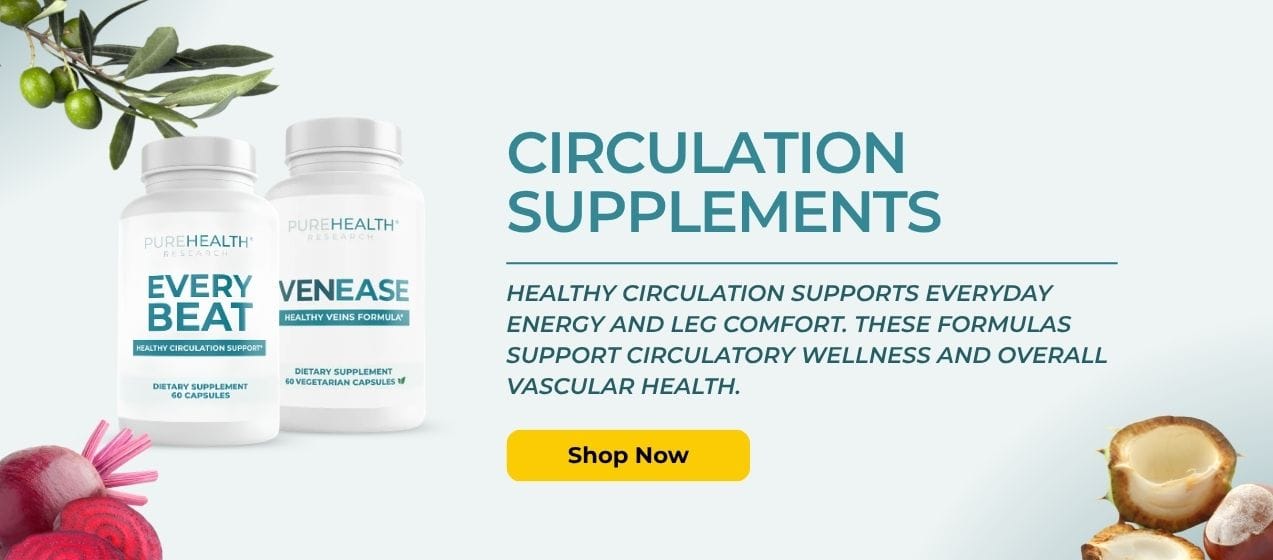
The collection focuses on standardized botanical extracts and nutrients chosen specifically for vascular support, delivering them at consistent daily doses rather than the variable amounts whole foods provide. Formulas are designed to help support healthy blood flow, help maintain vessel elasticity, and complement a nutrient-dense diet instead of replacing it.
For anyone building a circulation-focused routine, that consistency is the practical advantage. Browse the full collection to compare formats and ingredient profiles.
Avoid Dietary Circulation Blockers
Some patterns quietly counteract everything above. Excess sodium encourages fluid retention and greater pressure against vessel walls, and reducing intake is associated with healthier readings in adults. Trans fats and heavily refined sugars push blood lipids and inflammatory markers in an unfavorable direction.
Worth trimming:
- Packaged snacks and cured meats high in sodium
- Partially hydrogenated oils in baked goods
- Sweetened drinks and refined sugar
- Alcohol beyond moderate amounts
Some readers also look at botanicals for pressure support, and this overview of ashwagandha and blood pressure covers what the research currently shows.
Additional Foods Good for Circulation
The top twelve are not the whole story. Blood volume, hydration status, and plant-based fats all shape how easily blood moves, and a few categories deserve a place on the list even though they did not crack the main lineup. Beverages matter more than most people expect, since even mild dehydration reduces plasma volume and makes the cardiovascular system work harder.
Seeds are another easy win. They are shelf-stable, inexpensive, and blend into food you already eat, which makes them one of the lowest-effort additions to any diet to improve circulation.
Hydrating Teas and Beverages
Green tea supplies catechins, flavonoids studied for their effect on vessel function. A meta-analysis of controlled trials found tea consumption was associated with improved endothelium-dependent vasodilation. Plain water and lemon water do quieter work by maintaining blood volume.
Swapping one afternoon coffee for green tea is an easy trade. Keep a bottle of water within reach rather than aiming for a rigid glass count.
Seeds for Endothelial Support
Chia seeds and flaxseeds are dense in alpha-linolenic acid, the plant-based omega-3, along with fiber and magnesium. Together these nutrients support healthy blood pressure already in the normal range and contribute to normal vessel function.
Flaxseeds need to be ground for the body to access the oils. Stir a tablespoon into oatmeal, yogurt, or a smoothie, and store both seeds in the refrigerator.
Conclusion
A diet built on nitrate-rich vegetables, flavonoid-dense fruits, healthy fats, and warming spices gives your cardiovascular system steady material to work with. The pattern matters more than any single ingredient, and results come from repetition rather than intensity. Pick two or three items from the table above for your next grocery run, pair them with your daily supplements, and let consistency do the rest.
Nitrate-rich foods like beets can influence vascular measures within hours, but meaningful, lasting change reflects weeks of consistent eating. Treat individual meals as small deposits rather than immediate results.
Nitrate-rich greens, beets, fatty fish, and cayenne are common choices for lower-limb comfort. Movement matters just as much, and this guide on circulation in feet covers practical habits.
Salads help considerably, especially with spinach, arugula, and beets. Conversion also depends on oral bacteria, stomach acid, and overall diet, so pairing greens with citrus and regular movement gives better support.
Limit excess sodium, trans fats, refined sugar, and heavy alcohol intake. These patterns work against vessel flexibility and healthy pressure, offsetting the benefit of everything else on your plate.
Yes, indirectly. Adequate hydration maintains plasma volume, which supports normal circulation and cardiovascular workload. You do not need a fixed glass count, just consistent intake spread across the day.

Advertisement. This site offers health, wellness, fitness and nutritional information and is designed for educational purposes only. You should not rely on this information as a substitute for, nor does it replace, professional medical advice, diagnosis, or treatment. If you have any concerns or questions about your health, you should always consult with a physician or other health-care professional. Do not disregard, avoid or delay obtaining medical or health related advice from your health-care professional because of something you may have read on this site. The use of any information provided on this site is solely at your own risk.
Related Articles
Why Are My Feet So Cold? When It’s Normal, When It’s Not
Written by Laura Kraujalyte | September 7, 2026

Does Ashwagandha Lower Blood Pressure?
Written by Laura Kraujalyte | May 11, 2026
How to Improve Circulation in Feet: Complete 9-Step Guide
Written by Donatas Leikas | May 1, 2026

A Complete Guide to the Best Vitamins for Blood Flow
Written by Donatas Leikas | September 16, 2025

Can High Cholesterol Cause Headaches? Everything to Know
Written by Donatas Leikas | April 12, 2024