Can Enlarged Prostate Cause Constipation?
Yes, but usually indirectly. While a severely enlarged prostate can press on the rectum, constipation is more often linked to pelvic floor tension, bladder pressure, or certain prescription side effects.


 On This Page:
Can enlarged prostate cause constipation? In most cases, yes, though the connection is usually indirect rather than a simple case of one organ blocking another. Dealing with a weak urine stream at night and a stubborn bathroom trip the next morning is a frustrating combination, and the overlap is not a coincidence.
The prostate, bladder, and rectum share a small amount of space, so pressure and muscle tension in one area can affect the others. This article explains the anatomical links, the indirect pathways involved, why certain prescriptions may play a role, and practical steps that support both systems.
How Can an Enlarged Prostate Cause Constipation?
An enlarged prostate contributes to constipation mainly through pressure and muscle patterns rather than a physical blockage of the bowel. The prostate, bladder, rectum, and pelvic floor muscles occupy a compact space, so a change in one structure shifts the conditions for the others. Benign prostatic hyperplasia, the non-cancerous growth of the gland that becomes common with age, affects urination first and bowel habits second.
Three pathways explain most of what men notice:
- Mechanical pressure, where a substantially enlarged gland pushes toward the rectal wall.
- Bladder crowding, where retained urine takes up pelvic room and slows stool transit.
- Functional tension, where the pelvic floor muscles stay tight and no longer coordinate well.
The third pathway is the most common, and it is also the one most responsive to daily habits.
The Anatomical Connection
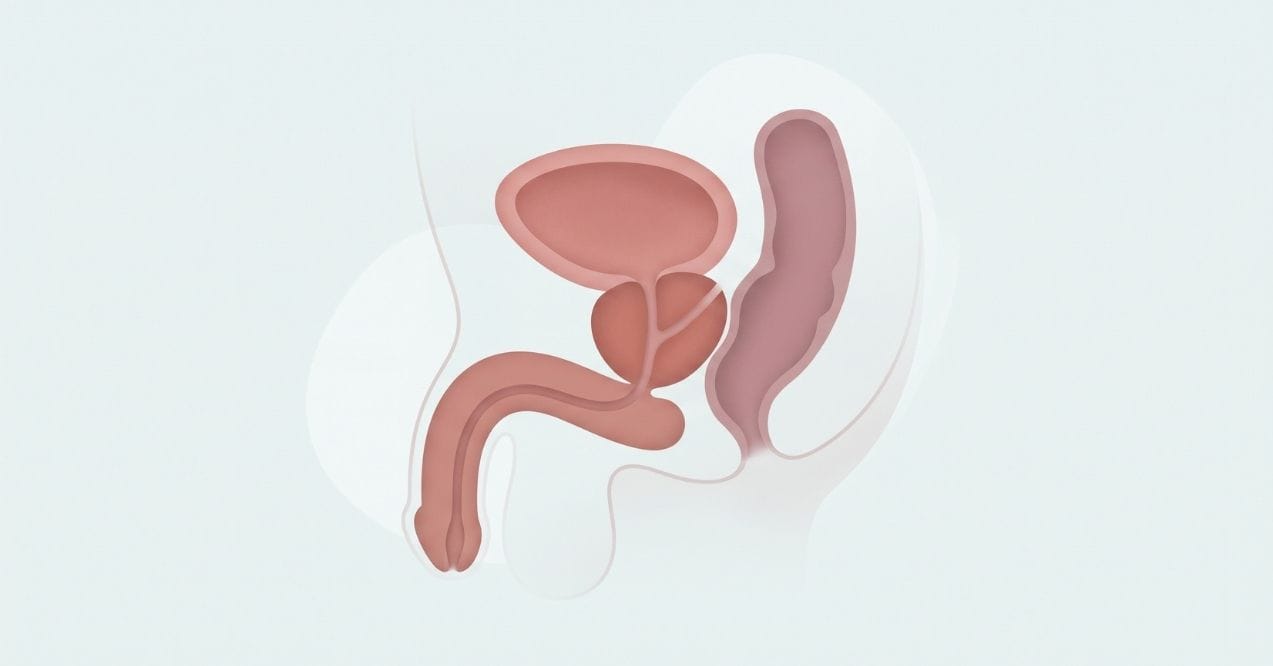
The prostate sits just below the bladder and directly in front of the rectum, separated from it by a thin layer of tissue. If the gland grows substantially, it can technically push against the rectal wall and make stool harder to move.
This direct mechanical crowding is documented but uncommon, and it usually appears alongside significant urinary difficulty rather than on its own. Reviewing what causes enlarged prostate growth helps put this in context.
Bladder Pressure and Bowel Crowding
When the gland narrows the urethra, the bladder may not empty completely. A bladder that stays partly full stretches and occupies extra pelvic space, which can press against the colon and slow the transit of stool.
Case reports describe men in whom significant urinary retention preceded bowel symptoms, and habits that help you empty the bladder more completely may ease that pressure. These are individual reports, not proof that this happens to most men.
Pelvic Floor Tension and Straining
The pelvic floor is a group of muscles that supports the bladder, bowel, and prostate and controls both urination and bowel movements. Men who strain to urinate often tense these muscles without noticing.
Over time the muscles may become overly tight and poorly coordinated, so they contract when they should release. Researchers call this pattern dyssynergic defecation, and it is a recognized functional cause of constipation.
What Are Symptoms of Enlarged Prostate Constipation?
The symptoms of enlarged prostate constipation tend to blend together, which is why many men struggle to tell the two problems apart. Rather than two separate complaints, it usually feels like one area of persistent pelvic pressure with two exits involved.
Common patterns include:
- A sense of incomplete emptying, both urinary and bowel
- Heavy or dull pressure low in the pelvis
- Intense straining on the toilet with little result
- The urge to urinate arriving during a bowel movement
- Hard, dry stools alongside a weak urine stream
Symptoms that appear suddenly, worsen quickly, or come with blood, fever, or an inability to pass urine deserve prompt professional attention rather than home management.
The Vicious Cycle Between Constipation and Prostate Enlargement
Constipation and prostate enlargement often reinforce each other, which is why one problem rarely stays contained. Difficulty urinating encourages straining and pelvic tension, and that tension makes bowel movements harder. A rectum loaded with hard stool then presses forward against the bladder and prostate, which may sharpen urgency and further weaken flow.
The loop matters because it changes where effort is best spent. Working on only the urinary side or only the digestive side leaves the other half of the cycle intact. Softening stool and easing pelvic tension addresses both directions at once, which is usually the more practical starting point.
| The Trigger | What Happens in the Body | The Result |
| Narrowed urethra from gland growth | Bladder works harder and may not empty fully | Weak stream, frequent trips, retained urine |
| Straining to urinate | Pelvic floor muscles tighten and stay guarded | Muscles fail to relax for a bowel movement |
| Tight, uncoordinated pelvic floor | Stool moves slowly through the rectum | Hard stools, incomplete emptying, more straining |
| Rectum full of hard stool | Pressure shifts forward onto bladder and prostate | Stronger urgency, more nighttime waking |
| Repeated straining on the toilet | Added downward pressure on the pelvic floor | Cycle restarts with more tension than before |
Natural Ways to Support Bowel and Prostate Health
Supporting both systems comes down to keeping stool soft, keeping the digestive tract moving, and reducing the tension that straining creates. None of these steps works instantly, and none replaces professional care for ongoing symptoms. What they do offer is a routine that removes some of the daily pressure driving the cycle.
Consistency matters more than intensity here. Small changes held for several weeks tend to do more than an aggressive week that ends in frustration. Movement also plays a part, since regular walking supports normal bowel motility and general pelvic circulation.
Hydration and Dietary Fiber
Fiber adds bulk that helps stool move, while adequate fluid keeps that bulk soft enough to pass without heavy straining, which protects the pelvic floor. Aim for fiber from beans, vegetables, fruit, and whole grains, and increase it gradually to limit gas. If nighttime urination is an issue, front-load fluids earlier in the day rather than cutting total intake.
Botanical and Nutritional Support
Nutrition supports the prostate indirectly by helping maintain a normal inflammatory response and normal urinary function, which may make the pelvic environment more comfortable and reduce the pull toward straining.
Zinc, selenium, and plant compounds found in saw palmetto, pumpkin seed, and nettle root are commonly studied in this context. Guidance on what is good for prostate health covers how these fit a broader routine.
For men who want that nutritional layer without assembling it ingredient by ingredient, PureHealth Research’s Prostate Health Supplements collection brings targeted botanical blends into a single daily step.

The formulas draw on well-studied botanicals such as saw palmetto, pumpkin seed, and nettle root alongside minerals including zinc and selenium, chosen to help maintain healthy urinary flow, promote a healthy inflammatory response, and support normal prostate function.
That combination is designed with the pelvic environment in mind, which is the part most single-ingredient products overlook when the concern spans both comfort and flow.
Capsule formats keep the routine simple, and pairing them with fiber and fluid habits fits the two-sided approach this topic calls for. Individual responses vary, and these blends are meant to complement daily habits rather than stand in for them. Browse the collection to compare formulas and find the one that matches your routine.
Pelvic Floor Relaxation (Not Just Kegels)
Kegels build strength, but men with prostate-related constipation often need the opposite skill, which is learning to release. Slow belly breathing, where the abdomen expands on the inhale, encourages the pelvic floor to lengthen. Sit fully supported on the toilet, let the breath out, and stop forcing when nothing moves. Standing up and returning later beats prolonged straining.
Could Your Prostate Prescriptions Be a Factor?
Some prescription options used for urinary urgency work by relaxing the bladder muscle, and that same action can slow the smooth muscle of the digestive tract. Slower transit means more water is absorbed from stool, which leaves it dry and hard to pass. Anticholinergic agents are the class most often associated with this effect.
Timing offers a useful clue. If bowel changes begin within a few weeks of starting or adjusting something new, that sequence is worth noting. Never stop or change anything you have been prescribed on your own. Bring a short written timeline of your symptoms to your next appointment so the pattern can be reviewed properly.
Can Prostatitis Cause Constipation?
Prostatitis can contribute to constipation, and the mechanism differs from simple enlargement. Prostatitis involves inflammation and swelling of the gland rather than the gradual growth seen with benign enlargement, and it often brings sharp pelvic or perineal discomfort.
That discomfort drives the problem indirectly. When bowel movements hurt, men tense the pelvic muscles and postpone going, sometimes without full awareness. Stool that sits longer in the rectum loses water and becomes harder, which makes the next attempt more painful and reinforces the avoidance. Breaking that pattern usually means addressing the discomfort and the stool consistency together rather than one after the other.
Conclusion
The prostate and the gut are close neighbors, but constipation is usually an indirect result of pelvic tension, bladder pressure, or prescription side effects rather than the gland physically blocking anything. That distinction is useful, because it points toward practical levers: steady fiber, well-timed fluids, gentler bathroom habits, and pelvic floor release. Overlapping urinary and bowel discomfort is common, and it is not something men simply have to accept as permanent.
Diet-related constipation usually shifts within a week of adding fiber and fluids. Prostate-related patterns tend to persist and come with pelvic pressure, straining to urinate, and a sense of incomplete emptying on both sides.
No. Prostate support may ease pelvic pressure and the urge to strain, but stool consistency depends on fiber, fluids, movement, and muscle coordination. Both sides usually need attention at the same time.
Repeated hard straining raises pressure inside the pelvis and keeps the pelvic floor guarded, which may worsen urinary symptoms over time. Gentler habits protect both the pelvic floor and urinary comfort.
Not directly. The gland sits low in the pelvis, far from the stomach and small intestine. Upper digestive symptoms such as bloating or reflux usually have separate causes worth reviewing.

Advertisement. This site offers health, wellness, fitness and nutritional information and is designed for educational purposes only. You should not rely on this information as a substitute for, nor does it replace, professional medical advice, diagnosis, or treatment. If you have any concerns or questions about your health, you should always consult with a physician or other health-care professional. Do not disregard, avoid or delay obtaining medical or health related advice from your health-care professional because of something you may have read on this site. The use of any information provided on this site is solely at your own risk.
Related Articles
What Vitamins Are Good for Prostate? D, E, Zinc and More
Written by Laura Kraujalyte | August 17, 2026
Does Alcohol Affect Prostate? Beer vs Wine vs Spirits
Written by Laura Kraujalyte | August 10, 2026

What Causes Bladder Stones and What Helps Them Pass
Written by Laura Kraujalyte | July 31, 2026
Does an Enlarged Prostate Affect a Man Sexually?
Written by Laura Kraujalyte | July 27, 2026

What Is Good for Prostate Health? 10 Proven Habits
Written by Laura Kraujalyte | July 24, 2026

Weak Urine Stream: When It’s Normal, When It’s Not
Written by Laura Kraujalyte | July 20, 2026