How to Treat Swollen Face: Puffiness vs Real Swelling
A swollen face usually stems from harmless overnight fluid retention, dietary choices, or poor sleep. However, sudden, painful, or persistent swelling requires a doctor's attention.


 On This Page:
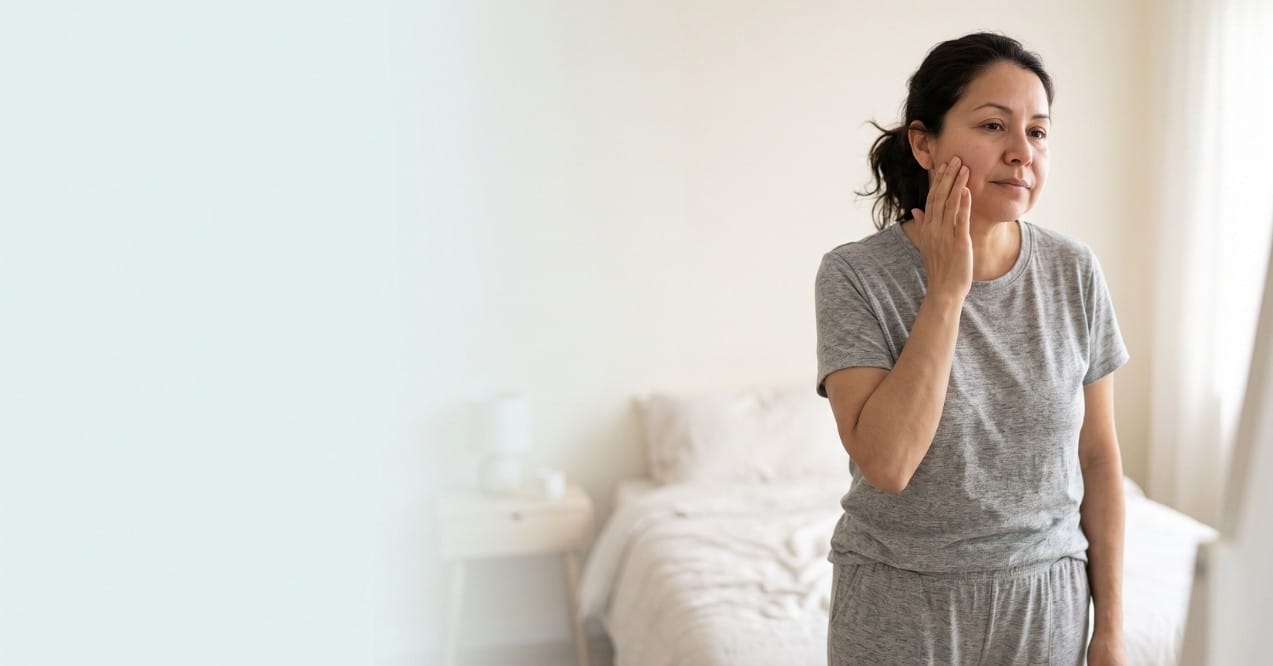
Learning how to treat swollen face concerns starts with one question: is this ordinary morning puffiness, or is it something else? Waking up with a rounder, heavier looking face is extremely common, and it usually traces back to sodium intake, sleep position, alcohol the night before, or a short night of rest. That kind of puffiness tends to settle on its own within a few hours.
Swelling that appears suddenly, feels painful, sits on only one side, or lingers for days belongs in a different category. This guide covers the likely causes, what you can do at home this morning, and the longer term habits that support healthy fluid balance.
Common Reasons Why Your Face Is Puffy
If you have ever wondered why your face swells overnight, the answer usually sits in the space between your cells. Your body constantly moves fluid out of small blood vessels into surrounding tissue, then drains it back through the lymphatic system, a network of vessels that returns excess fluid to circulation.
Facial tissue is thin, loose, and highly elastic, so even small amounts of retained fluid become visible there before anywhere else. When you lie flat for seven or eight hours, gravity no longer pulls that fluid toward your feet, and it settles around the eyes, cheeks, and jawline instead.
Several everyday factors make this pooling more pronounced. Sodium, alcohol, sleep quality, stress, and even the composition of last night’s dinner all influence how much water your tissues hold onto by morning.
Is It Just Puffiness or Real Swelling?
| Characteristics | Likely Causes | What to Do |
| Everyday puffiness: soft, symmetrical, worst on waking, eases through the morning, no pain, may include pillow creases | Salty dinner, alcohol, short sleep, sleeping face-down, carbohydrate-heavy evening meal, hormonal fluctuations | Cold compress, head elevation, light movement, water, reduced evening sodium |
| Swelling that needs evaluation: firm, one-sided, painful, warm or red, appears suddenly, lasts more than a few days, or comes with fever, vision changes, or breathing difficulty | Requires professional diagnosis. Possible triggers include dental infection, sinus congestion, allergic reaction, injury, or an underlying condition | Do not self-manage. Seek medical care promptly, and immediately if breathing or swallowing is affected |
High Sodium and Dehydration
Sodium and potassium work together to hold water in the right places. A high sodium intake shifts that balance and prompts the body to retain fluid until the concentration normalizes.
Dehydration can have a similar visible effect, since low fluid intake encourages the body to conserve what it has. This is also why dehydration and lymph nodes are often discussed together.
Sleep Position and Poor Rest
Sleeping flat on your stomach or side lets fluid settle in facial tissue, and direct pillow pressure adds to the effect. Short or broken sleep matters too.
Restricted sleep has been shown to raise evening cortisol levels, and controlled research found that sleep-deprived faces were rated as having more swollen eyelids and darker under-eye circles than well-rested ones.
Alcohol and Dietary Triggers
Alcohol temporarily suppresses the hormone that tells your kidneys to conserve water, which increases urine output and can leave you mildly dehydrated. Your body then holds onto fluid once the alcohol clears, which is why puffiness often peaks the next morning rather than the same night.
Carbohydrate-heavy dinners contribute as well, since stored glycogen is held alongside a meaningful amount of water. The same pattern applies to alcohol and lymph nodes.
The Role of the Lymphatic System
The lymphatic system is your body’s drainage network, and unlike the circulatory system it has no central pump. It relies on muscle contraction, breathing, and body movement to keep fluid moving.
Long stretches of sitting, minimal activity, and poor hydration may all slow that flow, which can leave the face looking persistently puffy rather than just puffy on bad mornings.
How to Treat Swollen Face at Home: Immediate Remedies
Searches for how to get rid of swollen face results usually come down to a handful of simple actions taken in the first hour after waking. None of these change what is happening inside your body in a lasting way, but they can help fluid move out of facial tissue more quickly than it would on its own.
Four approaches do most of the work. Cold narrows surface blood vessels, elevation lets gravity pull fluid downward, movement activates the muscles that push lymph along, and water supports normal fluid turnover.
Use whichever fits your morning. Doing two of them most days helps more than doing all four once.
Cold Compresses and Ice
Cold application causes surface blood vessels to narrow, which may temporarily reduce the appearance of puffiness in facial tissue. A chilled washcloth, a refrigerated gel pack wrapped in cloth, or a facial ice roller all work.
Keep sessions to roughly ten minutes and never apply ice directly to skin. Similar logic applies to a home remedy for swelling.
Head Elevation and Movement
Propping your head on an extra pillow keeps it above heart level overnight, which lets gravity draw fluid downward rather than letting it settle in your face.
In the morning, a short walk, some stretching, or light activity gets circulation going. Muscle movement is one of the main forces that keeps lymphatic fluid traveling in the right direction.
Gentle Facial Massage
Light massage may help move trapped fluid away from the face and toward the lymph nodes in the neck. Use flat fingers, very light pressure, and short downward strokes from the center of the face outward and then down the sides of the neck.
Evidence for manual lymphatic techniques is modest and mostly short-term. This lymphatic drainage map shows the directions to follow.
Strategic Hydration to Flush Fluids
Drinking more water when you feel puffy sounds backward, but adequate intake supports normal fluid turnover rather than adding to retention. Starting with a large glass on waking is a reasonable habit.
A slice of lemon or cucumber makes it easier to finish, and pairing water with a potassium-rich breakfast supports the sodium balance discussed earlier.
Internal Habits to Help Face Swelling Long-Term
Knowing how to help face swelling over months rather than mornings means shifting attention from quick external steps to daily internal habits. If your face looks puffy most days rather than occasionally, the pattern is usually driven by diet, movement, and hydration rather than by anything that happened the night before.
Three areas do most of the work here: electrolyte balance, lymphatic flow, and how much processed food is in your diet. None of them produce visible change overnight, and that is normal.
When these are in reasonable shape, occasional puffiness still happens. It just tends to be milder and shorter.
Balance Your Electrolytes
Potassium works against sodium and helps keep fluid balanced inside and outside your cells, and most people fall short of recommended intakes. Higher potassium intake has been associated with favorable effects on fluid and blood pressure regulation in pooled analyses.
Bananas, avocados, potatoes, beans, and leafy greens are practical sources. Magnesium-rich foods such as pumpkin seeds, almonds, and dark greens support normal electrolyte balance as well.
Support Healthy Lymphatic Flow
Daily movement, slow deep breathing, and steady hydration are the three habits that keep lymphatic fluid moving, since the system depends on muscle activity rather than a pump.
For anyone who wants a daily internal complement to external habits like massage and elevation, the Lymph System Supplements collection from PureHealth Research is made to support healthy lymphatic function and the body’s normal waste clearance.

The collection combines plant-based ingredients long used to support drainage, in simple daily capsule and powder formats rather than the loose teas and tinctures this category often relies on. It works alongside movement, hydration, and a potassium-rich diet, not in place of them. Individual responses vary, and results depend heavily on the rest of your routine.
Prioritize Anti-Inflammatory Foods
Refined carbohydrates and heavily processed foods contribute to water retention and to ongoing low-level inflammation, so cutting back is a reasonable starting point. In their place, build meals around healthy fats, dark leafy greens, berries, salmon, olive oil, and green tea. These foods may help keep inflammation in check and tend to be naturally lower in sodium.
When Real Swelling Needs a Doctor
Not all facial swelling is cosmetic, and a few patterns should move you toward professional care rather than home management. Seek immediate medical attention if swelling comes with difficulty breathing or swallowing, spreads rapidly, or involves the lips or throat.
Arrange a prompt appointment if you notice any of the following:
- Swelling on only one side of the jaw, cheek, or eye
- Skin that feels hot, looks red, or is painful to touch
- Fever, vision changes, or severe pain alongside the swelling
- Swelling that lasts more than a few days or keeps returning
- Puffiness that appeared shortly after starting something new
Dental infections, sinus congestion, allergic reactions, and injury are all possible triggers, but these require professional diagnosis. Do not attempt to manage persistent or painful facial swelling at home while the cause is unknown.
Conclusion
Waking up with a puffy face is usually a harmless result of salt, sleep position, alcohol, or a late dinner, and it typically eases within a few hours. Managing it well means combining quick external steps with steady internal habits around hydration, potassium, movement, and lymphatic care. Anything sudden, painful, or one-sided deserves medical attention instead. Start tomorrow with a large glass of water.
Apply a cold compress for about ten minutes, drink a large glass of water, and move around. Sleeping with your head slightly elevated the night before also helps limit overnight fluid pooling.
Ordinary puffiness generally eases within one to three hours of being upright and active. Swelling that persists beyond a full day, or worsens rather than settling, is worth having checked.
Yes. High-sodium foods, alcohol, and carbohydrate-heavy evening meals are the most common dietary triggers, since the body stores extra water alongside both sodium and glycogen.
Not necessarily. Sluggish lymphatic flow may contribute to persistent puffiness, but sodium, sleep, and hydration explain most cases. Persistent swelling should be assessed professionally rather than self-diagnosed.
Be concerned if swelling is one-sided, painful, warm, or accompanied by fever. Seek immediate care for any swelling that affects breathing or swallowing.

Advertisement. This site offers health, wellness, fitness and nutritional information and is designed for educational purposes only. You should not rely on this information as a substitute for, nor does it replace, professional medical advice, diagnosis, or treatment. If you have any concerns or questions about your health, you should always consult with a physician or other health-care professional. Do not disregard, avoid or delay obtaining medical or health related advice from your health-care professional because of something you may have read on this site. The use of any information provided on this site is solely at your own risk.
Related Articles
Can Lymphatic Drainage Make You Sick?
Written by Laura Kraujalyte | September 4, 2026

8 Ways to Reduce Swelling in Hands at Home
Written by Laura Kraujalyte | August 28, 2026
Does Deep Breathing Help the Lymphatic System?
Written by Laura Kraujalyte | August 24, 2026

Dry Brushing for Lymphatic Drainage: Does It Work?
Written by Laura Kraujalyte | August 21, 2026
How to Detox Your Lymphatic System Naturally: The Complete 8-Step Guide
Written by Karolina Rutkute | August 6, 2026
What Are Weeping Legs? The Complete 7-Step Guide to Managing Them
Written by Gabriele Slimaite | August 4, 2026