Dry Brushing for Lymphatic Drainage: Does It Work?
Dry brushing is excellent for exfoliation and for waking up surface circulation, which may support fluid movement close to the skin. It is not a medical treatment for deep lymphatic drainage.


 On This Page:
Dry brushing for lymphatic drainage has become one of the most talked-about wellness habits, and the honest answer sits somewhere between the hype and the skeptics. Yes, it works for skin texture and surface circulation. No, it does not replace clinical lymphatic care.
This article separates the myths from what actually happens beneath the skin when you brush. You will find a simple, safe technique, realistic benefits, and clear signs that point toward professional support instead of a bathroom routine.
What Is Dry Brushing, and Does It Help the Lymphatic System?
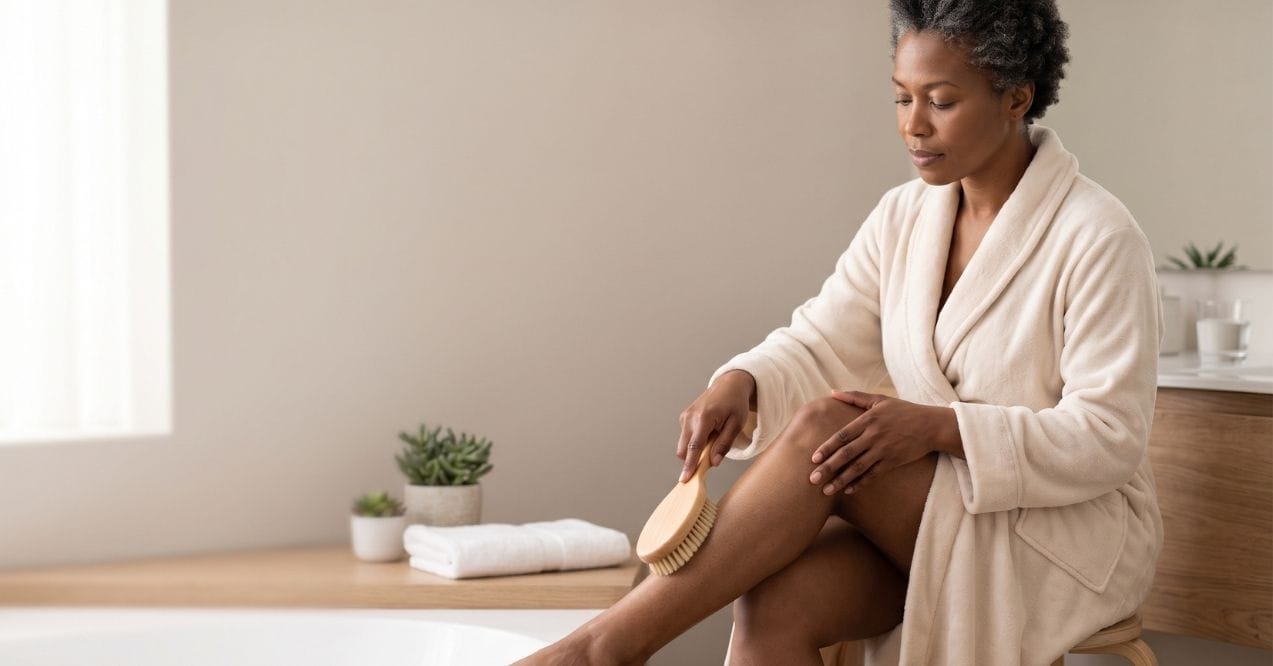
Dry brushing means sweeping a firm, natural-bristle brush over bare, dry skin, usually right before a shower. Sessions run three to five minutes, and the skin should feel warm and slightly tingly afterward, never raw.
So does dry brushing help with lymphatic drainage? Partially, and only at a surface level. The lymphatic system has no pump of its own, so lymph fluid depends on muscle contraction, breathing, and external pressure to keep moving toward the lymph nodes.
That mechanical dependency is why gentle external stimulation appeals to people. It is also why brushing alone cannot do the work that whole-body movement does.
How the Superficial Lymphatic Capillaries Work
Deep lymphatic vessels sit between muscles and respond mainly to contraction during activity. Closer to the surface lies a delicate mesh of lymphatic capillaries just beneath the skin, designed to collect fluid from surrounding tissue.
Brushing the lymphatic system at this level applies light friction that may temporarily increase local blood flow and support fluid movement in these shallow areas. The effect is mild and short-lived.
The Difference Between Exfoliation and True Lymphatic Drainage
Exfoliation is the part science is comfortable with. Removing dead surface cells leaves skin smoother and helps topical products absorb more evenly.
True drainage is a different process. A certified therapist performing manual lymphatic drainage uses slow, precise, low-pressure strokes mapped to specific pathways, which is not what a stiff brush does. Our evidence review of lymphatic drainage methods breaks down how these approaches compare.
Dry Brushing: Myth vs. Reality
| The Claim | The Reality | The Practical Takeaway |
| Brushing flushes toxins from the body | The liver and kidneys handle filtration. No research shows brushing removes toxins | Enjoy brushing for skin feel, not as a cleanse |
| It drains deep lymphatic fluid | Deep vessels respond to muscle activity, not skin friction | Pair brushing with daily movement |
| It works on long-term swelling | Persistent swelling calls for trained professional assessment, not a brush | Seek certified support for ongoing fluid buildup |
| Harder brushing means better results | Excess pressure irritates skin and can cause abrasions | Light, sweeping strokes only |
| It smooths cellulite permanently | Temporary plumping may soften the look, with no lasting structural change | Treat visual changes as short-term |
The Benefits of a Daily Lymphatic Brushing Routine
The realistic benefits of lymphatic brushing are everyday ones. Think of it as a supportive habit that makes skin feel better and adds a few mindful minutes to your morning, rather than a clinical intervention.
Most people notice three things fairly quickly:
- Skin that feels smoother within the first week or two
- A pleasant warmth and mild pinkness across brushed areas
- A calmer, more deliberate start or close to the day
None of these require a large time investment, which is part of the appeal. A brush costs little, the routine takes minutes, and there is nothing to schedule.
Exfoliation and Skin Vitality
Firm bristles lift away dry, flaky cells that dull the skin’s surface. Clearing that layer may help keep pores from clogging and leaves skin looking smoother and more even.
This is the most predictable outcome of dry brushing. It is also the one dermatology guidance supports, provided you brush gently and follow with moisturizer.
Stimulating Surface Circulation
That mild pinkness or goosebump response after brushing signals increased localized blood flow. More circulation at the surface delivers oxygen and nutrients to skin tissue, which may contribute to a healthier appearance.
The flush fades within an hour or so. It is a temporary response, not a permanent change to circulation.
Nervous System Relaxation
Repetitive, rhythmic strokes have a settling quality that many people find relaxing. Research on structured touch routines suggests they may support relaxation and help manage everyday stress.
Some readers brush in the morning as a wake-up ritual. Others prefer the evening, when the slower pace helps them wind down.
The Proper Dry Brushing Technique for Lymphatic Drainage
A good dry brushing technique is unhurried and light. The goal is contact with the skin surface, not deep tissue pressure, and the whole sequence should take under five minutes once you find your rhythm.
Work upward from the feet, cover each area with a few overlapping strokes, and stop when the skin looks lightly flushed. Consistency matters more than intensity, so three or four sessions a week is a reasonable starting point.
Step 1: Choose a Natural Bristle Brush
Look for natural fibers such as boar bristle or agave, which are firm without being scratchy. A long, detachable handle makes the back and the backs of the legs far easier to reach.
Softer brushes suit sensitive skin and the chest. Test the bristles on your forearm first.
Step 2: Start at Your Feet and Brush Upward
Begin on completely dry skin at the soles and tops of the feet. Use long, gentle strokes moving up the shins, calves, and thighs, always sweeping toward the heart.
Cover each section with a few overlapping passes. Then repeat on the other leg before moving higher.
Step 3: Work in Quadrants on the Torso
Treat the navel as your center point. Brush from the navel upward toward each armpit, then from the navel downward toward each bikini line, following the natural pathways toward the lymph nodes.
Keep pressure lighter here than on the legs. Our lymphatic drainage map shows exactly where these clusters sit.
Step 4: Use Light, Sweeping Pressure
This is brushing, not scrubbing. Skin should look faintly pink and feel warm, never red, scratched, stinging, or sore.
If you see raised marks or feel any burning, you are pressing too hard. Ease off immediately and shorten the next session.
Step 5: Shower and Moisturize
Shower straight afterward to rinse away loosened skin cells. Warm water works better than hot, which strips natural oils.
Pat dry, then apply a rich moisturizer or body oil while skin is still slightly damp to lock in hydration.
Complementing Your Routine with Internal Lymphatic Support
Brushing handles the outside. Lymphatic wellness, though, depends far more on what happens internally: fluid intake, regular movement, and steady nutritional support across the day.
Lymph is largely water, so hydration status directly affects fluid balance throughout the body. Movement supplies the mechanical pumping that skin-level friction cannot replicate. Nutrition fills in the third piece.
Together, these three habits do more for lymphatic function than any single tool in your bathroom.
Targeted Nutritional Support for Lymph Flow
Supporting lymphatic wellness is a full-body job, and that is where daily nutrition fits alongside a brushing habit. The lymphatic drainage supplements collection from PureHealth Research brings together formulas built around botanicals and nutrients selected for their role in helping the body maintain normal fluid balance, healthy circulation, and everyday immune function.

What sets the collection apart is its focus. Rather than a broad multivitamin approach, each formula is designed around lymphatic and circulatory wellness specifically, in daily capsule or liquid formats that slot into a morning routine without extra preparation.
If you already brush, hydrate, and walk, internal support fills the remaining gap. Browse the full collection to compare formulas and find the one that fits your routine.
Daily Habits for a Healthy Lymphatic System
Three habits carry most of the weight here:
- Water first. Lymph fluid is mostly water, so consistent intake across the day supports normal fluid movement.
- Rebounding. A few minutes on a mini-trampoline creates gentle, repetitive compression through the legs and torso.
- Walking. Daily walking keeps the muscular pump working, and measured lymph flow rises substantially during activity compared with rest.
For structured options, see our guide to exercises for lymphatic drainage.
Safety Tips and When to Avoid Dry Brushing
Dry brushing is low-risk for most people, but it is not universally suitable. The main concerns involve skin integrity and brush hygiene, both of which are easy to manage once you know what to watch for.
Skip a session entirely if your skin is compromised anywhere you would normally brush. And introduce the habit gradually rather than jumping straight to daily full-body sessions, which gives your skin time to adjust.
If brushing consistently leaves redness or stinging behind, that is a signal to brush less often or stop.
Protecting Sensitive or Broken Skin
Avoid brushing over sunburn, open wounds, cuts, moles, or areas with active eczema, rosacea, or psoriasis. Friction on already-irritated skin can worsen it.
Very dry or thin skin may tolerate only light, occasional brushing. Anyone with a diagnosed skin condition should check with a qualified skin care professional first.
Keeping Your Brush Clean
Brushes collect dead skin cells and oils, which can encourage bacteria. Wash yours weekly with mild soap and warm water, rinse well, and let it dry bristles-down in a ventilated spot.
Never store a damp brush in a closed shower. Replace it when bristles splay or soften.
When to Consider a Professional Dry Brush Lymphatic Massage
A dry brush lymphatic massage at home is a wellness habit. Some situations call for something more specialized, and knowing the difference protects you from relying on the wrong tool.
Seek out a certified lymphatic massage therapist if you notice significant or persistent swelling, fluid pooling in the arms or legs, heaviness that does not settle overnight, or if you are recovering from surgery. Trained therapists assess your individual pathways and apply calibrated pressure that no bristle brush replicates.
Brushing the lymphatic system at home may still fit alongside professional care, but it should follow that guidance rather than substitute for it.
Which Approach Is Right for You?
| Your Goal | Recommended Approach | Why It Works |
| Smoother, brighter skin | At-home dry brushing | Mechanical exfoliation clears dead surface cells |
| A calming daily ritual | At-home dry brushing | Rhythmic strokes may support relaxation |
| Better overall fluid movement | Walking, rebounding, hydration | Muscle activity and water intake drive lymph flow |
| Ongoing or noticeable swelling | Certified lymphatic therapist | Trained assessment and mapped, calibrated pressure |
| Post-surgical fluid concerns | Certified lymphatic therapist | Requires individualized professional guidance |
Conclusion
Dry brushing earns its place as an invigorating daily habit for smoother skin and livelier surface circulation, not as a medical solution for deep fluid movement. Brush gently, keep your brush clean, drink enough water, and stay active to support your lymphatic system from the inside. Pick up a natural bristle brush, start with two or three short sessions a week, and build from there.
Three to four sessions a week suits most people. Daily brushing is fine if your skin tolerates it well, but reduce frequency at the first sign of redness, dryness, or irritation.
Either works. Mornings suit people who find the stimulation energizing, while evenings suit those who enjoy the slower, calming rhythm before a shower. Choose the time you will stick with.
Brushing may temporarily plump the skin and soften the look of dimpling for a short period. It does not change the underlying structure, and no strong research supports lasting cellulite reduction.
No. Dry brushing works on dry skin with a dry brush, since oil reduces the friction that exfoliates. Apply oil or moisturizer afterward, once you have showered and patted dry.
Some people report this, though it is anecdotal rather than measured. Hydration levels and overall activity explain urination frequency far more reliably than a few minutes of skin brushing.

Advertisement. This site offers health, wellness, fitness and nutritional information and is designed for educational purposes only. You should not rely on this information as a substitute for, nor does it replace, professional medical advice, diagnosis, or treatment. If you have any concerns or questions about your health, you should always consult with a physician or other health-care professional. Do not disregard, avoid or delay obtaining medical or health related advice from your health-care professional because of something you may have read on this site. The use of any information provided on this site is solely at your own risk.
Related Articles
Can Lymphatic Drainage Make You Sick?
Written by Laura Kraujalyte | September 4, 2026

How to Treat Swollen Face: Puffiness vs Real Swelling
Written by Laura Kraujalyte | August 31, 2026
8 Ways to Reduce Swelling in Hands at Home
Written by Laura Kraujalyte | August 28, 2026
Does Deep Breathing Help the Lymphatic System?
Written by Laura Kraujalyte | August 24, 2026
How to Detox Your Lymphatic System Naturally: The Complete 8-Step Guide
Written by Karolina Rutkute | August 6, 2026
What Are Weeping Legs? The Complete 7-Step Guide to Managing Them
Written by Gabriele Slimaite | August 4, 2026