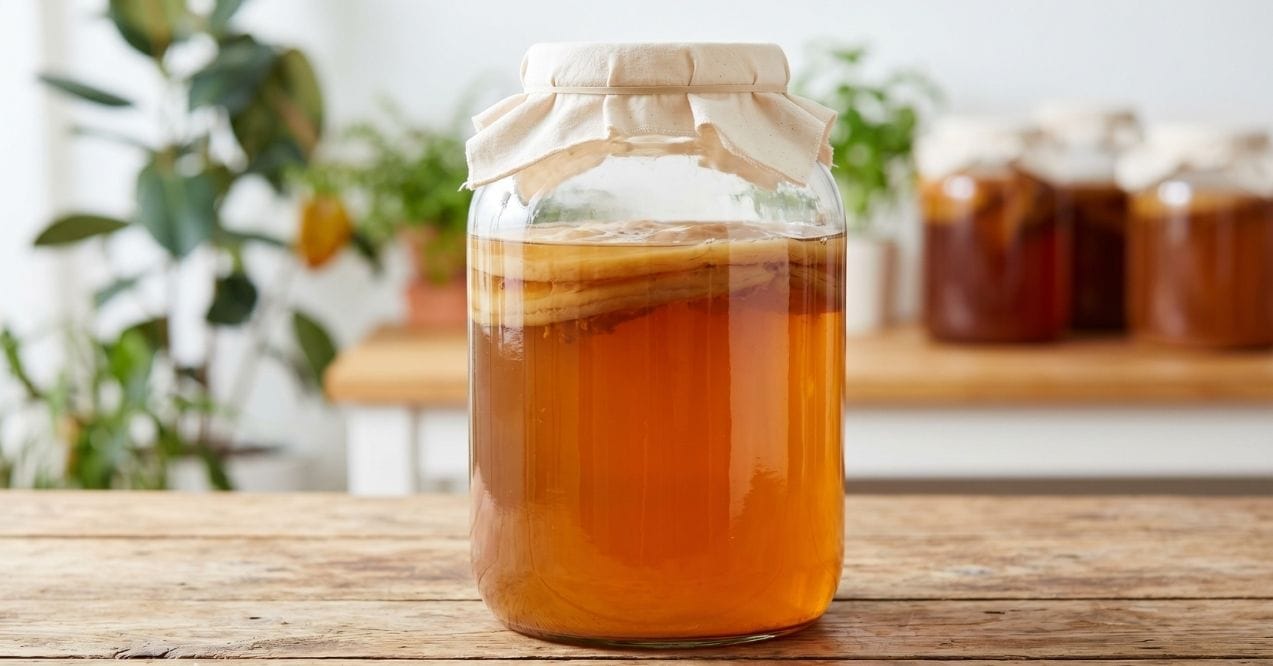
Does Kombucha Have Caffeine? Here’s How Much
Yes. Most kombucha has a small amount of caffeine, often about 8–25 mg per serving, far less than coffee. Here's how it compares and when it matters.


 On This Page:
Does kombucha have caffeine? Yes, in most cases, because it’s brewed from tea. Brands commonly report about 8–25 mg per serving, compared with 113–247 mg in 12 oz of brewed coffee. Figures vary widely online because tea type, brew strength, and each brewer’s recipe all differ.
Below, you’ll find how much caffeine kombucha typically holds, what raises or lowers it, who may want to keep track, and how to find lower-caffeine options. We’ll also cover bottle sizes and label details that most guides skip.
Why Most Kombucha Contains Caffeine
Kombucha contains caffeine because it’s made from tea from the Camellia sinensis plant: black, green, white, or oolong. Fermentation doesn’t create caffeine, and it doesn’t reliably remove it either. So most tea-based kombucha has some caffeine, usually much less than coffee.
Kombucha starts as sweetened tea, which a culture of bacteria and yeast then ferments for days or weeks. That process changes the flavor, acidity, and sugar content, but the tea itself stays in the drink. So when people ask if kombucha has caffeine, the more useful follow-up is how much ends up in the bottle.
The Caffeine Comes From the Tea Base
The tea brewed at the start is the only natural source of caffeine in kombucha. The bacteria and yeast feed mainly on sugar and don’t produce caffeine of their own. That means the final amount depends mostly on which tea the brewer chose, how much of it went into the pot, and how long it steeped before the culture was added.
Is Kombucha Caffeinated if It’s Made With Herbal Tea?
It may not be. Some kombucha-style drinks use rooibos, hibiscus, or other herbal bases, which are naturally caffeine-free. Traditional kombucha is brewed from Camellia sinensis, and a 2024 integrative review notes that herbal substrates can be fermented on their own or combined with true tea. Others brew with decaf tea, which lowers caffeine without removing all of it. Unless the label says “caffeine-free,” assume a little caffeine is present.
How Much Caffeine Is in Kombucha?
Brands commonly report about 8–25 mg of caffeine per 8–12 oz serving. That range comes from brand testing rather than an independent survey, so individual bottles can land above or below it.
Independent figures are scarce. A 2016 laboratory analysis measured about 39 µg/mL of caffeine in black tea kombucha, which works out to roughly 14 mg per 12 oz and sits inside the brand range. Bottle size matters too: many U.S. bottles hold 16 oz and list two servings, so the whole bottle can carry about twice the per-serving figure.
Caffeine in Kombucha vs. Other Drinks
| Drink | Serving | Approximate caffeine | Source |
| Kombucha (tea-based) | 8–12 oz | About 8–25 mg | Brand-reported |
| Green tea | 12 oz | About 37 mg | FDA |
| Black tea | 12 oz | About 71 mg | FDA |
| Brewed coffee | 12 oz | 113–247 mg | FDA |
| Decaf coffee | 8 oz | 2–15 mg | FDA |
| Herbal “kombucha-style” drink | Any | 0 mg if no true tea is used | Label |
What That Means for Your Daily Caffeine
For most healthy adults, kombucha adds only a small amount to the daily total. The FDA cites 400 mg a day as an amount not generally linked to negative effects in healthy adults, and two servings at the high end of the brand range (about 50 mg) would be roughly one-eighth of that.
Sensitivity varies widely from person to person, though. If you’re curious how this small dose relates to the lift people describe after a bottle, see our guide on kombucha and energy.
What Changes the Caffeine in Kombucha
The caffeine in kombucha shifts with the tea, the recipe, and anything added after the first fermentation. That’s the main reason caffeine estimates for kombucha disagree so much online. Two bottles labeled simply “kombucha” can be made in very different ways.
Labels don’t always help. U.S. rules require added caffeine to appear in the ingredient list, but brands don’t have to state how many milligrams a drink contains, and caffeine that comes naturally from tea rarely gets a number. Three factors do most of the work.
Tea Type and Brew Strength
Black tea usually contributes more caffeine than green or white tea, as the FDA figures in the table above show for black and green tea. Longer steeping and more tea per liter raise the total further. Many brewers also make a strong tea concentrate and dilute it before fermenting. That dilution likely explains much of the “about a third of the tea” figure some brands quote.
Does Fermentation Lower Caffeine?
Possibly a little, but it’s not something to count on. Brand claims range from no reliable change to cuts of up to 70%, and none of them cite primary studies. The 2016 lab experiment mentioned above treated caffeine as stable during fermentation and used it as a fixed reference point. The tea you start with remains the better predictor of what’s in the bottle.
Flavorings and Added Caffeine
Flavorings can move the number in either direction:
- Lower per serving: juice, fruit, or herbs added during a second fermentation dilute the tea base.
- Higher: “energy” or cola-style flavors may add yerba mate, green coffee extract, or guayusa, each with its own caffeine.
Hard kombucha is a separate alcoholic product with its own considerations, so it falls outside this guide.
Who Should Keep an Eye on Kombucha’s Caffeine
Most healthy adults don’t need to track the caffeine in a bottle or two of kombucha closely. A few groups may want to pay more attention, either because their caffeine limits are lower or because kombucha’s other traits, such as trace alcohol, acidity, and live cultures, deserve a second look. For these readers, kombucha and caffeine are best considered alongside everything else they drink in a day, including coffee, tea, and soda.
Pregnancy and Breastfeeding
The American College of Obstetricians and Gynecologists considers less than 200 mg of caffeine a day unlikely to be a major factor in miscarriage or preterm birth, a position reaffirmed in 2023. The FDA suggests talking with a healthcare provider if you’re pregnant, trying to conceive, or breastfeeding. Raw kombucha’s trace alcohol and live cultures are separate reasons to check first, and our look at whether kombucha is good for you covers both traits.
Caffeine Sensitivity and Sleep
People who sleep lightly or feel jittery or anxious after caffeine may notice even the small amount in kombucha. In a small sleep study of 12 healthy adults, 400 mg of caffeine taken six hours before bed cut measured sleep time by more than an hour, and participants didn’t notice the change. Kombucha delivers far less, but drinking it earlier in the day and choosing smaller servings may still help.
Children
The Dietary Guidelines for Americans advise avoiding drinks that contain caffeine for children younger than 2. For older children, caffeine isn’t the only question: raw kombucha can carry trace alcohol, and the drink is quite acidic. Both are good reasons to ask your child’s healthcare provider before offering it, and to keep portions small if you do.
How to Choose Lower-Caffeine Kombucha
A few label checks and simple swaps can bring the caffeine down, or close to zero if you need it there:
- Check the label or the brand’s website. Many brands don’t list caffeine because testing it requires lab analysis.
- Choose green or white tea bases over black tea.
- Skip “energy” or cola-style flavors made with yerba mate, coffee, or guayusa.
- Try a caffeine-free herbal kombucha-style drink if you need zero caffeine.
- Drink smaller servings, earlier in the day, and check how many servings a bottle holds.
If you brew at home, the tea you start with shapes more than caffeine, and our roundup of the best tea for gut health compares common choices.
A No-Brew Kombucha Option
If you like kombucha but want more control over your serving, Gut Kombucha offers a different format. It’s an instant, non-carbonated powder made with InstaKOMBU™ oolong tea kombucha, so there’s no brewing, no fizz, and no bottles to keep cold. Mix one 4 g scoop into 8 oz of cool water for a drink formulated to help support a balanced gut microbiome.
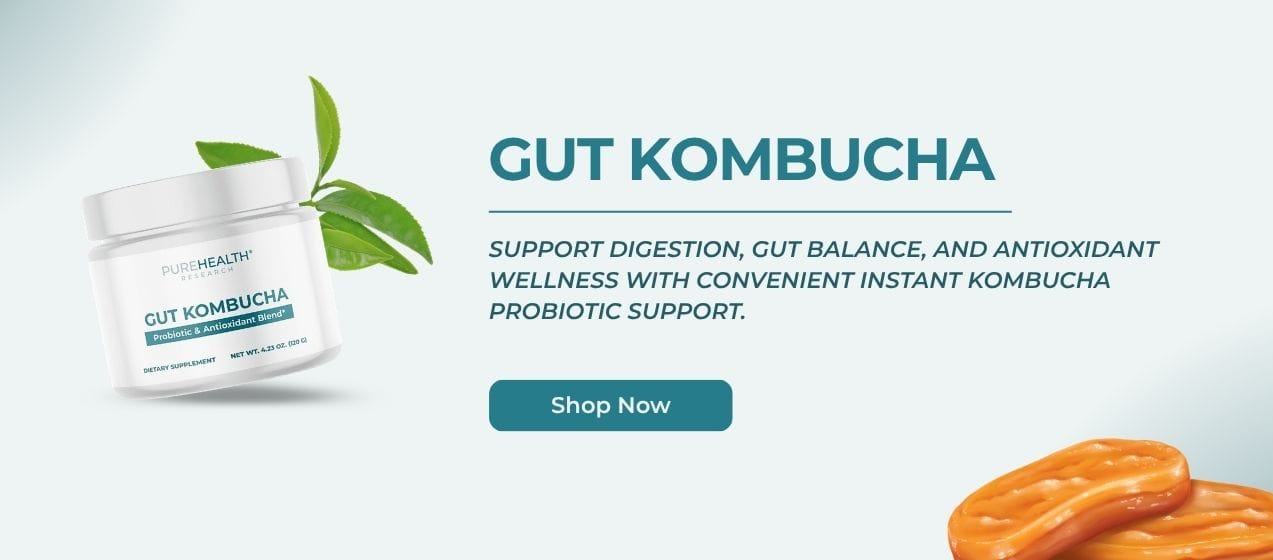
It’s vegan-friendly, gluten-free, soy-free, and dairy-free. Oolong tea naturally contains caffeine, so check the label and ask your healthcare provider if you’re tracking intake.
Conclusion
Kombucha and caffeine go together because the drink is brewed from tea, but a typical serving holds far less caffeine than coffee and usually less than a cup of tea. The exact amount depends on the tea base, brew strength, bottle size, and flavorings, so the label and brand website are your best guides. If you’re sensitive, choose lighter teas, skip energy-style flavors, and enjoy it earlier in the day, or try Gut Kombucha for a brew-free option.
Not for most people. A typical serving holds about 8–25 mg of caffeine, while 12 oz of brewed coffee can hold 113–247 mg. If you rely on coffee for caffeine, kombucha will feel much milder.
Usually, yes. Green tea tends to contain less caffeine than black tea, so kombucha brewed from it typically starts lower. Brew strength and steeping time still matter, so a strong green tea batch can outpace a weak black one.
It can. Homemade batches aren’t lab-tested, and stronger tea or longer steeping raises caffeine. Store-bought kombucha is often diluted or blended with juice, which may bring the caffeine per serving down.
Usually, if it’s made from true tea. Gut Kombucha, for example, uses oolong tea kombucha powder, and oolong naturally contains caffeine. Check the label or ask the brand for exact amounts.
Yes, in trace amounts, since fermentation produces some alcohol. In the U.S., kombucha with 0.5% alcohol by volume or more is regulated as an alcoholic beverage, and levels can rise if fermentation continues in the bottle.
It may. The liver enzyme that processes caffeine also handles several medicines, and some of them slow caffeine’s breakdown. If you take any prescription, ask your pharmacist or healthcare provider how kombucha fits into your routine.

Advertisement. This site offers health, wellness, fitness and nutritional information and is designed for educational purposes only. You should not rely on this information as a substitute for, nor does it replace, professional medical advice, diagnosis, or treatment. If you have any concerns or questions about your health, you should always consult with a physician or other health-care professional. Do not disregard, avoid or delay obtaining medical or health related advice from your health-care professional because of something you may have read on this site. The use of any information provided on this site is solely at your own risk.
Related Articles
Does Kombucha Actually Help Digestion?
Written by Laura Kraujalyte | November 6, 2026
Does Kombucha Go Bad or Just Get Stronger?
Written by Karolina Rutkute | August 7, 2026
Is Kombucha Actually Good for You?
Written by Karolina Rutkute | July 10, 2026
Fermented Vitamins: Hype or Helpful?
Written by Donatas Leikas | May 16, 2026
Why Does My Abdomen Hurt When I Cough?
Written by Donatas Leikas | May 12, 2026

Does Kombucha Help With Bloating?
Written by Karolina Rutkute | May 10, 2026