Does Kombucha Go Bad or Just Get Stronger?
Unopened raw kombucha generally keeps 3 to 6 months in the fridge, while opened bottles are best finished within about a week. True spoilage is rare. Kombucha usually just over-ferments and turns toward vinegar.


 On This Page:
A bottle pushed to the back of the fridge, a date stamp that passed last month, and a cloudy strand drifting near the bottom. It raises a fair question: does kombucha go bad, or does it simply get stronger with time? True spoilage is uncommon, because kombucha is highly acidic and full of living cultures, which makes it a poor home for unwanted microbes.
What does change is the taste, the fizz, and the sharpness. This guide covers how to separate real spoilage from ordinary over-fermentation, how long each type lasts, and how to store bottles so they stay pleasant to drink.
How to Tell if Your Kombucha Has Spoiled vs. Over-Fermented
Your senses handle most of this work. A living, fermented drink shifts in flavor over time, and a sharper, drier bottle is usually just a more mature one. The distinction that matters is between a batch that changed character and a batch that grew something it should not have.
Commercial kombucha is bottled at a low pH, and that acidity is the main reason harmful organisms struggle to establish themselves. Home-brewed batches carry a slightly higher risk, since kitchen equipment and open vessels introduce more variables than a controlled facility does. Either way, the checks below take a few seconds and settle the question.
Signs Your Kombucha Has Spoiled (Mold)
Mold is the one finding that ends the guesswork. Look at the surface of the liquid for fuzzy, dry, or raised patches in green, black, blue, or pink. These sit on top and look powdery or hairy rather than smooth, and a bottle showing them should go down the sink. Drinking straight from the bottle also adds bacteria from your mouth, which raises the chance of spoilage in whatever is left.
Signs Your Kombucha Is Just Over-Fermented
As yeasts work through the remaining sugars, they produce more acid, and the drink turns steadily drier and more sour. A batch that smells strongly of vinegar and tastes intensely tart has aged rather than turned. It is still fine to drink, though many people find it too sharp on its own. Over-soured kombucha works well in vinaigrettes, marinades, or a splash over sparkling water.
What Are Those Brown Floaties?
Brown, stringy strands are yeast, a normal part of any live fermented tea. Translucent, jelly-like discs are small SCOBYs, the same culture that drove the fermentation in the first place. Neither is a sign of a problem, and both point to a drink that is still active. If you are weighing whether to keep kombucha in your routine at all, this look at kombucha and gut health covers what the research does and does not show.
Kombucha Shelf Life: How Long Does It Really Last?
Kombucha shelf life depends on three things: whether it was pasteurized, whether it has been opened, and how cold it has been kept. Unopened raw bottles hold their quality for months in the fridge. Once the seal breaks, carbonation starts escaping and outside bacteria get in, which cuts the useful window down sharply.
The figures below reflect general industry and home-brewing practice rather than a fixed standard, so treat them as guidance for flavor and quality. The date printed on a commercial bottle is usually a “Best By” quality indicator, not a safety cutoff, and food date labels in the U.S. are largely voluntary outside of infant formula.
Kombucha Shelf Life Cheat Sheet
| Type of Kombucha | Storage Location | Estimated Shelf Life |
| Raw, unopened | Refrigerated | 3 to 6 months |
| Raw, unopened | Room temperature | Days to weeks before turning sharply sour |
| Raw, opened | Refrigerated | 7 to 10 days for best flavor and fizz |
| Pasteurized, unopened | Pantry or shelf | Until the printed date |
| Pasteurized, opened | Refrigerated | 7 to 10 days |
| Homemade, bottled | Refrigerated | 1 to 3 months, with more variation |
| Homemade, bottled | Room temperature | Not advised due to pressure buildup |
Unopened vs. Opened Bottles
An unopened raw bottle stays stable for months in cold storage because the cultures slow dramatically and the seal keeps outside organisms out. Opening changes both conditions at once. Carbonation starts escaping immediately, and every pour exposes the liquid to air. Aim to finish an opened bottle within 7 to 10 days, and reseal it tightly between servings.
Raw vs. Pasteurized Store-Bought Options
The label tells you which rules apply. Pasteurized kombucha has been heated, which deactivates the live cultures and makes the bottle shelf-stable until opened. Raw kombucha is still alive and keeps fermenting slowly, so it requires cold storage from the shelf to your fridge. Raw versions keep their live organisms, though how many survive through storage differs from product to product.
A Simpler Way to Get Fermented Tea
Bottles come with chores. They take up fridge space, carry dates you have to track, go flat once opened, and now and then build enough pressure to make a mess. For anyone who likes fermented tea more than the storage routine, PureHealth Research Gut Kombucha offers a different format.
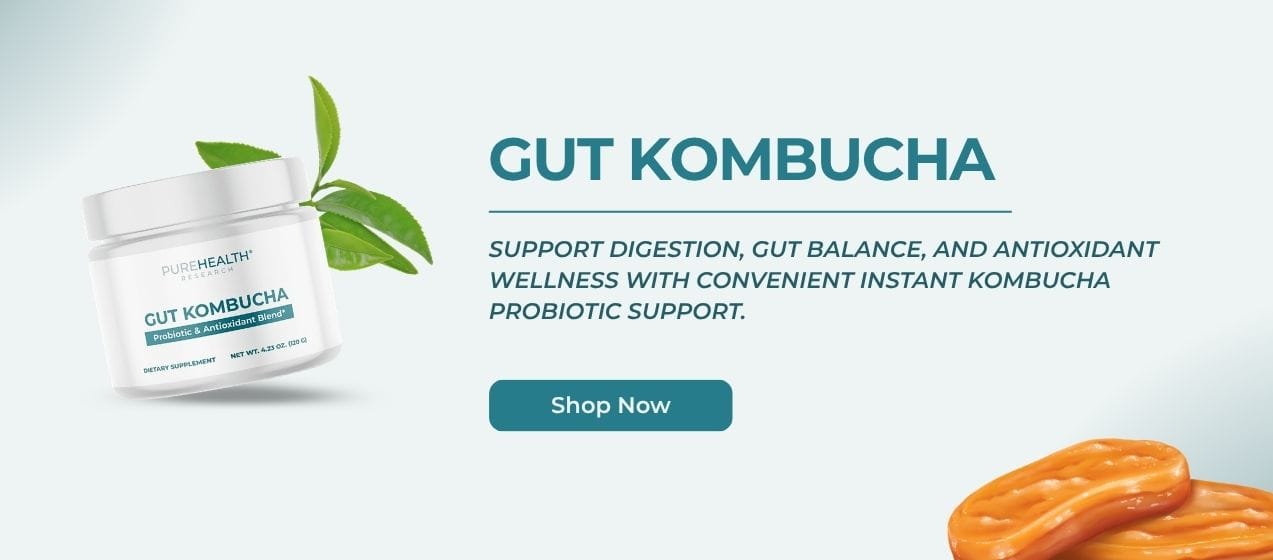
It is an instant powder built on InstaKOMBU™ Oolong Tea Kombucha Powder, at 4 grams per scoop and 30 servings per 4.23 oz jar. You stir one scoop into 8 fl oz of water or another cold drink once a day, which means no brewing, no fridge space, and no half-finished bottle counting down. The jar is vegan friendly, non-GMO, and free from gluten, soy, and dairy, made in the USA in an SQF-certified facility and third-party lab tested.
As a fermented oolong tea source of probiotics and antioxidants, it may support balanced gut bacteria and day-to-day digestive comfort as part of a regular routine. If digestion is your main reason for drinking kombucha, this guide on kombucha and bloating pairs well with it. The full label and serving details are on the product page.
Does Kombucha Need to Be Refrigerated?
Yes, raw kombucha needs to be refrigerated. Cold storage keeps the drink tasting the way the brewer intended, because temperature controls how fast the yeasts and bacteria work through the leftover sugars.
At refrigerator temperatures, generally at or below 40°F, microbial activity slows sharply across food and beverage categories. Fermentation does not stop entirely in most raw kombucha, but it drops to a pace where flavor changes take months instead of days. Pasteurized bottles are the exception, since there is no live culture left to slow down. Those can sit on a shelf until you open them, at which point they belong in the fridge like any other opened beverage.
Why Raw Kombucha Needs Cold Storage
Cold puts the yeasts and bacteria into a dormant state. Sugar use slows, acid production tapers off, and the dissolved carbon dioxide stays in the liquid instead of escaping. The result is a bottle that tastes close to how it did on bottling day, with its balance of tart and sweet intact and its fizz still there when you open it.
What Happens If You Leave It on the Counter?
Warmth restarts the process. The yeasts speed up, work through the remaining sugar, and generate additional carbon dioxide and acid. Within days the drink turns noticeably drier and more vinegary. In a sealed glass bottle, that gas has nowhere to go, and pressure can build to the point of foaming over or cracking the container. Keep raw bottles cold and open them over a sink.
Conclusion
Kombucha’s acidity does most of the protective work, which is why the drink so rarely spoils outright. Storage handles the rest. Keep raw bottles cold, finish opened ones within about a week, and trust the two signals that matter: a strong vinegar note means the batch simply matured, while fuzzy or colored patches on the surface mean it belongs in the sink. With that much settled, there is little reason to hesitate over a bottle again.
Usually yes. The printed date reflects quality rather than safety, and a past-date bottle is typically just more sour. Check the surface for mold first, then judge by smell and taste.
Rarely. Cold storage slows fermentation and limits microbial growth, so refrigerated bottles mostly lose fizz and gain tartness. Mold remains the exception and means the bottle should go.
No. Excess pressure signals active fermentation, usually from warm storage or extra sugars. The drink is generally fine, though the mess suggests keeping future bottles consistently cold.
Typically not. Home batches vary more in acidity and carbonation and face greater contamination risk from open vessels and equipment. Plan on a shorter refrigerated window and inspect bottles closely.

Advertisement. This site offers health, wellness, fitness and nutritional information and is designed for educational purposes only. You should not rely on this information as a substitute for, nor does it replace, professional medical advice, diagnosis, or treatment. If you have any concerns or questions about your health, you should always consult with a physician or other health-care professional. Do not disregard, avoid or delay obtaining medical or health related advice from your health-care professional because of something you may have read on this site. The use of any information provided on this site is solely at your own risk.
Related Articles
Is Kombucha Actually Good for You?
Written by Karolina Rutkute | July 10, 2026
Fermented Vitamins: Hype or Helpful?
Written by Donatas Leikas | May 16, 2026
Why Does My Abdomen Hurt When I Cough?
Written by Donatas Leikas | May 12, 2026

Does Kombucha Help With Bloating?
Written by Karolina Rutkute | May 10, 2026
Does Magnesium Help With Bloating?
Written by Karolina Rutkute | April 27, 2026
Is Matcha Good for Gut Health?
Written by Karolina Rutkute | January 12, 2026