Does Kombucha Actually Help Digestion?
Kombucha may support digestion and regularity for some people, but human studies are small and early. Here's what research shows, who it suits, and when it backfires.



 On This Page:
Kombucha may help some people’s digestion through its live cultures, organic acids, and fluid content, but it is not a proven digestive aid. Interest in kombucha for digestion keeps growing, yet most claims online borrow from probiotic supplement research, and only a handful of human trials have tested the drink itself.
This article covers what kombucha may do for your gut, what those trials actually found, and when the drink can upset your stomach. It also explains how to fit kombucha into a gut-friendly routine, so you can decide whether a daily glass deserves a place in yours.
How Kombucha May Support Digestion
Kombucha may support digestion in a few ways: unpasteurized kombucha carries live bacteria and yeasts, fermentation produces organic acids, the tea adds polyphenols, and every glass counts toward your fluid intake. None of these makes it a proven digestive aid, and the effects likely vary from one person to the next.
Live Cultures, If the Bottle Has Them
Raw, unpasteurized kombucha contains live bacteria and yeasts that may add to the variety of microbes in your gut. Pasteurized versions are heat-treated, so most of those microbes do not survive.
A fermented food only counts as a probiotic when it contains defined strains in amounts shown to offer a benefit. Kombucha strains and counts vary by brand and batch, and storage plays a part too, which is why it helps to know whether kombucha goes bad once opened.
Organic Acids and Tea Polyphenols
Kombucha’s tangy, vinegar-like taste comes mostly from organic acids made during fermentation, including acetic acid (the main acid in vinegar), gluconic acid, and glucuronic acid. The tea itself adds polyphenols, plant compounds that act as antioxidants.
Some research suggests tea polyphenols may feed certain gut bacteria, although most of that work comes from animal and lab studies. How these compounds affect digestion in people is still being studied.
Fluid That Supports Regularity
Fluid helps keep stool soft and easier to pass, especially alongside a fiber-rich diet. A glass of kombucha counts toward your daily fluid intake, but it works best as an addition to plain water rather than a replacement. Water carries no sugar, acid, or caffeine, so it stays the simplest everyday choice.
Is Kombucha Good for Gut Health? What Studies Show
The honest answer is that the evidence is still thin. Only a few controlled human trials have tested kombucha itself, and all of them are small. A 2019 systematic review found just one human study of kombucha at the time, with most claims resting on lab and animal research.
Newer trials add useful data, but each tested a specific drink under specific conditions. The two below are the most relevant to kombucha and digestion so far.
Gut Microbiome Changes
In a 2024 controlled trial in Scientific Reports, healthy adults on a low-fiber Western diet drank 16 oz of a commercial kombucha daily for four weeks, with 16 people in the kombucha group and 8 controls finishing. Researchers saw modest shifts, including more Weizmannia, a probiotic genus included in the drink, and more of some bacteria that make short-chain fatty acids.
Short-chain fatty acids are compounds gut bacteria produce that help nourish the colon lining. Inflammation markers did not change significantly across the group, which the authors linked to the small sample and wide differences between participants.
Regularity and Bowel Movements
A 2023 pilot trial followed 40 women with constipation-predominant irritable bowel syndrome (IBS) for 10 days. Half drank 220 mL (about 7.5 oz) a day of a kombucha drink fortified with inulin, a plant fiber, and B vitamins, while the other half drank water. The kombucha group saw more frequent bowel movements and softer stools.
The limits matter: the study was small, short, and open-label, and the researchers developed the drink themselves. It was also pasteurized and contained added fiber, so kombucha alone can’t take the credit.
What the Research Says About Kombucha and Digestion
| Common claim | What human research shows | Evidence level |
| Changes the gut microbiome | Modest shifts in a 4-week, 24-person trial | Early, small |
| Supports regularity | Better stool frequency and consistency in a 10-day, 40-person pilot of fortified kombucha | Preliminary |
| Eases bloating | No significant change in bloating in the same pilot | Not yet supported |
| Supplies digestive enzymes | No human data | Claim only |
| Adds to fluid intake | Fluid supports stool consistency, and kombucha counts toward it | Indirect |
| Fermented foods support microbial diversity | A 2021 fermented-food diet trial used several fermented foods, not kombucha alone | Indirect |
When Kombucha Can Upset Your Stomach
The same features that make kombucha distinctive, its fizz, acidity, and sweetness, can bother some stomachs. Most reactions are mild and depend on the person, the brand, and how much you drink.
Bloating and Gas
Carbonation and fermentable sugars can add gas to the digestive tract, and reactions differ a lot from person to person. If bloating is your main concern, our guide on whether kombucha helps with bloating covers it in depth.
Heartburn and Reflux
Kombucha is both acidic and fizzy, and either trait can trigger heartburn in people prone to reflux. In the 2023 pilot, two participants reported lasting heartburn after one fruit flavor, and three noticed that existing heartburn got worse.
Drinking kombucha with food may make it easier to tolerate. If it reliably causes a burning feeling, skipping it is the simplest choice.
Sugar, Sweeteners, and FODMAPs
Many bottled brands add sugar, fruit juice, sugar alcohols, or inulin. Sugar alcohols, some juices, and inulin are FODMAPs, fermentable carbohydrates that can cause gas and discomfort in sensitive people.
A helpful marker is about 4 g of sugar or less per bottle. If fructans tend to bother you, our guide to the best enzyme for fructans may be useful.
Pregnant readers, children, and anyone with a weakened immune system or an ongoing digestive condition should check with a healthcare provider first, and our guide on who should be cautious with kombucha explains why.
Kombucha vs. Other Fermented Foods for Digestion
Kombucha is one fermented option, not the best one by default. Each food below brings something different, and variety across the week likely matters more than any single drink.
Fermented Foods and Digestion at a Glance
| Food | What it offers | Digestion note |
| Kombucha | Live cultures if raw, organic acids, fluid | Can be acidic, fizzy, and sugary |
| Kefir | Wide range of bacteria and yeasts | Contains lactose, though often tolerated better than milk |
| Yogurt with live cultures | Well-studied cultures, protein | Check the label for live and active cultures and added sugar |
| Sauerkraut and kimchi | Live cultures plus fiber, if unpasteurized | High in sodium; shelf-stable jars are usually heat-treated |
| Miso | Fermented soy | Salty, so small amounts go a long way |
Rotating two or three of these foods through your meals is a simple way to add variety without relying on one product.
How to Use Kombucha for Digestion: Better Daily Habits
Kombucha for digestion fits best as one small piece of a broader routine rather than its centerpiece. A few simple habits may help you enjoy it while keeping your stomach comfortable:
- Pair it with meals if acidity bothers you on an empty stomach.
- Start with small servings and adjust based on how you feel; our bloating guide covers starter serving sizes.
- Build meals around fiber from vegetables, fruit, legumes, and whole grains, since fiber feeds the bacteria already in your gut.
- Drink water alongside it instead of letting kombucha replace your usual glasses.
Tea itself can also play a role in a gut-friendly routine, and our roundup of the best tea for gut health compares other options worth adding to your cup.
A Fizz-Free Way to Enjoy Kombucha
If bottled kombucha feels too fizzy, or you want a simpler daily option, Gut Kombucha offers a different format. It is a non-carbonated, instant kombucha powder made with InstaKOMBU™, a fermented oolong tea kombucha blend, while many bottled brands start from black or green tea.
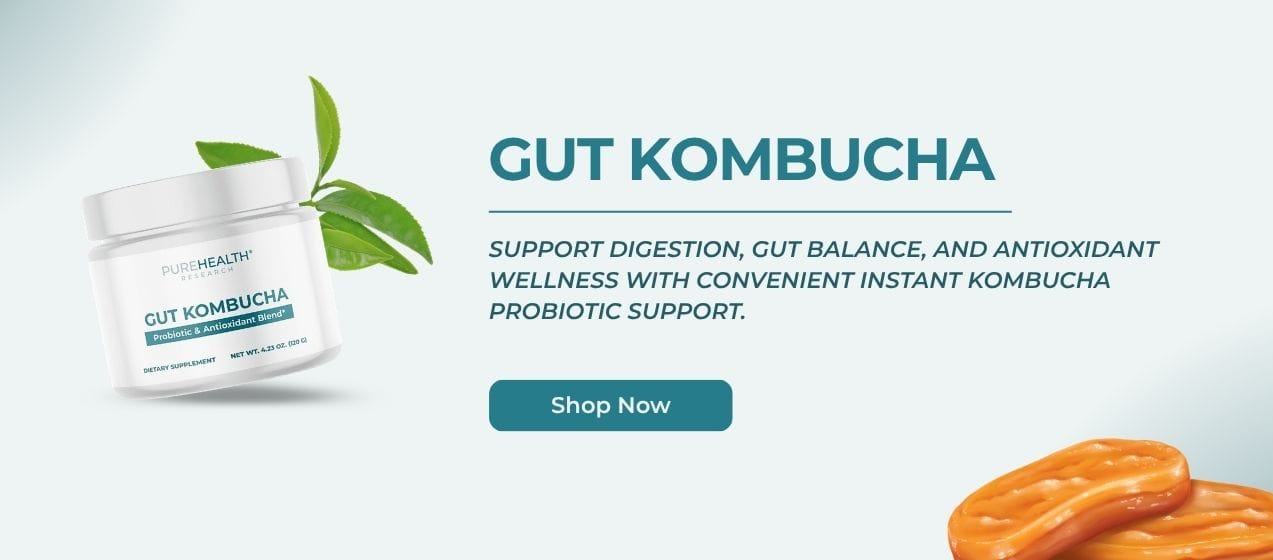
Just mix one scoop into 8 oz of cool water once a day, whether with breakfast or before a meal. Designed to support a balanced gut microbiome, it can complement a fiber-rich routine and steady water intake. Explore Gut Kombucha to see whether it suits your day.
Conclusion
So, does kombucha help with digestion? It may support digestion and regularity for some people, but the human evidence is early and modest, coming mostly from small, short trials. If you want to try kombucha for digestion, start with small servings, notice how your stomach responds, and choose lower-sugar options. Keep fiber-rich foods and water as the foundation, and think of kombucha as a pleasant extra rather than the main strategy.
Usually not. Some people notice more regular bowel movements over several days, possibly from fluid, organic acids, or added fiber. No study shows an immediate effect, and responses vary widely.
No time has been proven best. Drinking it with a meal may be gentler on sensitive stomachs, and since kombucha contains some caffeine, earlier in the day may suit you, as our look at whether kombucha gives you energy explains.
Pasteurized kombucha has few or no live cultures, but it still provides organic acids, tea polyphenols, and fluid. The 2023 pilot that saw changes in stool frequency actually used a pasteurized, fiber-fortified drink.
Research is limited to one small pilot using a fortified drink. Carbonation, sugar alcohols, and inulin can bother sensitive stomachs, so anyone with an ongoing digestive condition should check with a healthcare provider first.
Some people find a small glass pleasant after eating, but no research shows kombucha speeds digestion after a large meal. Its acidity and fizz may also add discomfort if you are prone to heartburn.
Kombucha contains caffeine, acids, and sometimes small amounts of alcohol, which may matter alongside certain prescriptions. If you take anything prescribed, ask your pharmacist or healthcare provider before drinking it regularly.

Advertisement. This site offers health, wellness, fitness and nutritional information and is designed for educational purposes only. You should not rely on this information as a substitute for, nor does it replace, professional medical advice, diagnosis, or treatment. If you have any concerns or questions about your health, you should always consult with a physician or other health-care professional. Do not disregard, avoid or delay obtaining medical or health related advice from your health-care professional because of something you may have read on this site. The use of any information provided on this site is solely at your own risk.
Related Articles
Does Kombucha Go Bad or Just Get Stronger?
Written by Karolina Rutkute | August 7, 2026

Is Kombucha Actually Good for You?
Written by Karolina Rutkute | July 10, 2026

Fermented Vitamins: Hype or Helpful?
Written by Donatas Leikas | May 16, 2026

Why Does My Abdomen Hurt When I Cough?
Written by Donatas Leikas | May 12, 2026

Does Kombucha Help With Bloating?
Written by Karolina Rutkute | May 10, 2026

Does Magnesium Help With Bloating?
Written by Karolina Rutkute | April 27, 2026