Varicose Vein Myths, and What the Research Actually Says
Varicose veins are the "just cosmetic" myth debunked, plus the real causes. See what peer-reviewed research actually says about 9 common beliefs.



 On This Page:
Few common conditions attract as much confident misinformation as varicose veins. They’re visible, they run in families, and everyone seems to have an explanation, most of which are half-right, out of date, or simply wrong.
So here’s a myth-by-myth reckoning against the peer-reviewed evidence. Some of these popular beliefs turn out to be true, some are the opposite of true, and a few are true in a way that changes what you’d actually do about them. Every claim links to its source.
Myth 1: “They Are Just A Cosmetic Problem”
Verdict: False, and this is the one worth correcting first.
Varicose veins can cause aching, heaviness, throbbing, swelling, itching, and at the more serious end, skin changes and even ulceration. The impact is real enough that researchers built dedicated patient-reported outcome measures to capture it, work that began because clinical appearance alone underestimated how much the condition affects daily life.
The underlying issue isn’t skin-deep either. A 2002 review in the European Journal of Vascular and Endovascular Surgery describes the actual problem: one-way valves inside the vein fail, and vein walls weaken, letting blood pool. The visible bulge is the surface sign of a mechanical failure happening inside the vessel. Calling that “cosmetic” is like calling a warning light “decorative.”
Myth 2: “Crossing Your Legs Causes Varicose Veins”
Verdict: False.
This is the most repeated cause in casual conversation, and the evidence doesn’t support it. The established risk factors, documented across large epidemiological reviews including the 2005 Annals of Epidemiology review, are age, female sex, pregnancy, family history, obesity, and prolonged standing or sitting, not leg-crossing.
The real mechanism is valve incompetence and vein-wall weakening, driven substantially by genetics and by sustained pressure, not by a sitting posture you can hold for a few minutes. You can stop crossing your legs if you like; it won’t change your varicose-vein risk.
Myth 3: “If You Don’t Have Visible Veins, Your Legs Are Fine”
Verdict: Mostly false.
Visible varicose veins are one part of a spectrum. At the more serious end sits chronic venous insufficiency (CVI), which can cause symptoms and skin changes and which the 2005 review reports affecting up to roughly 40% of women and 17% of men. Some venous problems produce symptoms, aching, heaviness, swelling, before or without dramatic visible veins.
So “no bulging veins” doesn’t guarantee healthy venous function. Persistent leg heaviness, aching or swelling deserves attention regardless of what the surface looks like.
Myth 4: “Only Older People Get Them”
Verdict: False.
Age is a genuine risk factor, risk rises as you get older, but varicose veins are far from exclusive to the elderly. The Framingham Study measured meaningful annual incidence in adults across age ranges, and pregnancy is a well-established trigger in younger women. Family history means some people develop them relatively early.
The accurate version: age increases risk, but plenty of people in their 20s, 30s and 40s have varicose veins, especially with a family history or after pregnancy.
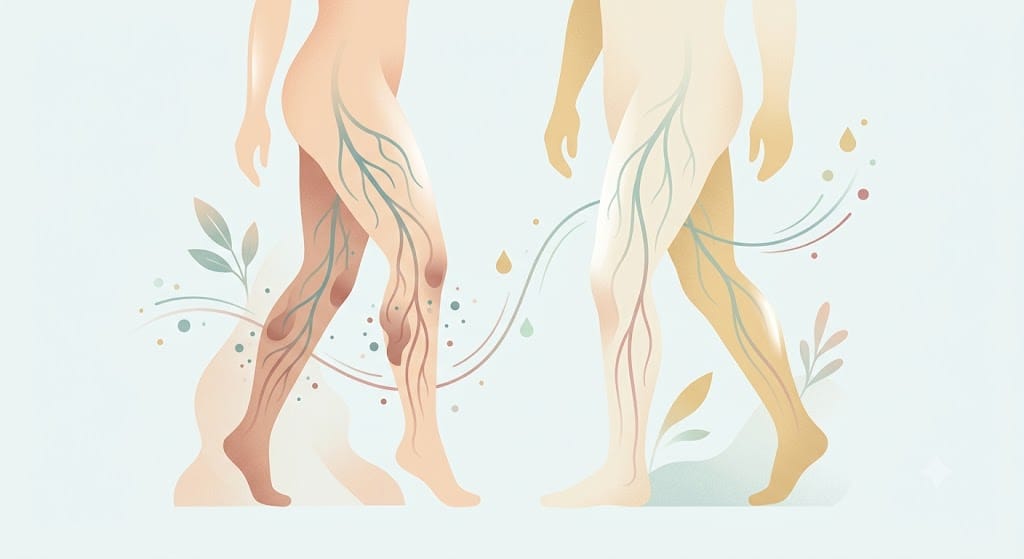
Myth 5: “Sitting All Day Is Fine, It’s Standing That’s The Problem”
Verdict: False, and this one genuinely surprises people.
Prolonged standing is a real risk factor, an occupational study linked standing at work with higher likelihood of varicose veins. But so is prolonged sitting. The Framingham Study found that sedentary behavior of 8 or more hours a day was associated with higher incidence.
The unifying factor isn’t standing versus sitting, it’s staying in one position. Leg veins rely on the surrounding muscles contracting to push blood upward against gravity. Long stretches of stillness, in either posture, remove that pump. The evidence-based advice is to break up both.
Myth 6: “Nothing Can Really Be Done About Them”
Verdict: Firmly false, this belief is decades out of date.
Treatment has been transformed. The landmark CLASS randomized trial in the New England Journal of Medicine (2014) compared foam sclerotherapy, endovenous laser ablation, and surgery, and found all three improved quality of life. A 2011 systematic review and meta-analysis confirmed endovenous techniques as effective, and a 2021 best-practice review describes minimally invasive endovenous treatment as first-line for many patients today, often done in an outpatient setting.
The old mental image of stripping surgery as the only option is exactly that: old. Effective, less-invasive treatments now exist.
Myth 7: “Only Women Get Varicose Veins”
Verdict: False, though there’s a kernel of truth.
Varicose veins are more common in women, that part is true. But men get them too, at substantial rates. The 2005 review reported prevalence up to roughly 56% in men (versus up to 73% in women). The Framingham data showed annual incidence of 1.9% in men alongside 2.6% in women.
So it’s a female-predominant condition, not a female-only one. Men who assume they’re immune may ignore real symptoms.
Myth 8: “Once You Treat Them, They Are Gone For Good”
Verdict: Partly false, recurrence is a real thing.
Treatment is effective, but varicose veins can return. A 2013 review in the Journal of Vascular Surgery examines exactly why: new vessel growth (neovascularization), veins missed during the initial treatment, and ongoing progression of the underlying venous disease.
This isn’t an argument against treatment, it’s an argument for realistic expectations and for continuing the modifiable habits (weight, movement, avoiding prolonged stillness) that address risk factors even after a procedure.
Myth 9: “Having Varicose Veins Means You Did Something Wrong”
Verdict: False, and worth hearing if you feel self-conscious.
Given how heavily genetics, sex, pregnancy and family history weigh in the risk profile, varicose veins are substantially outside personal control. And they’re extremely common, with prevalence figures reaching the majority of adults in some populations, having them is statistically ordinary, not a personal failing or a sign of neglect.
The modifiable factors (weight, activity, prolonged stillness) are worth acting on. But a visible vein is not a verdict on your habits.
What The Evidence Actually Supports Doing
Strip away the myths and the research points to a short, consistent list. Move regularly and break up long stretches of sitting or standing. Maintain a healthy weight. Elevate your legs when resting. Use compression when a clinician recommends it. And take persistent symptoms, aching, heaviness, swelling, skin changes, seriously rather than dismissing them as cosmetic.
None of these reverse the structural valve changes behind existing varicose veins, but they address the modifiable risk factors and help with symptoms. Some people add nutritional support to that routine: PureHealth Research’s Supplements for Vein Health are formulated with botanicals traditionally associated with circulatory and vein-wall support, meant to complement movement, weight management and compression rather than substitute for medical care. For pain, skin changes or ulceration, the evidence is unambiguous: see a professional.

Conclusion
Most of what “everyone knows” about varicose veins is wrong in a way that leads people to either worry about the wrong things (leg-crossing) or dismiss the right ones (symptoms, treatment options). The accurate picture is more reassuring and more actionable: they’re common, largely not your fault, rarely just cosmetic, and, when they need treating, very treatable.
No. They can cause aching, heaviness, swelling, itching and, in advanced cases, skin changes and ulceration, with a measurable impact on quality of life. The underlying cause is mechanical valve and vein-wall failure.
No. The established risk factors are age, female sex, pregnancy, family history, obesity and prolonged standing or sitting, not leg-crossing.
Yes. While risk rises with age, pregnancy and family history mean many people develop them in their 20s, 30s and 40s.
Both raise risk. The unifying factor is staying in one position for long periods, which removes the muscle-pump action veins rely on. Breaking up both sitting and standing is the evidence-based approach.
Yes, very effectively. A landmark randomized trial found foam sclerotherapy, laser ablation and surgery all improved quality of life, with minimally invasive endovenous techniques now first-line for many patients.
Yes. They’re more common in women but affect men at substantial rates, one review reported prevalence up to around 56% in men.
They can. Recurrence happens through new vessel growth, veins missed initially, or progression of the underlying disease, which is why maintaining healthy habits matters even after treatment.

Advertisement. This site offers health, wellness, fitness and nutritional information and is designed for educational purposes only. You should not rely on this information as a substitute for, nor does it replace, professional medical advice, diagnosis, or treatment. If you have any concerns or questions about your health, you should always consult with a physician or other health-care professional. Do not disregard, avoid or delay obtaining medical or health related advice from your health-care professional because of something you may have read on this site. The use of any information provided on this site is solely at your own risk.
Related Articles
Varicose Veins by the Numbers: What the Research Actually Shows
Written by Laura Kraujalyte | July 29, 2026

6 Stages of Varicose Veins: Identifying Symptoms at Each Level
Written by Donatas Leikas | May 11, 2026
Spider Veins on Ankles: Causes, Prevention & Solutions
Written by Donatas Leikas | March 30, 2026
Spider Veins on Face? Common Causes and Treatments
Written by Donatas Leikas | March 22, 2026
Do Spider Veins Itch? Everything You Need to Know
Written by Donatas Leikas | March 7, 2026

How to Cover Spider Veins on Legs? 4 Best Tips
Written by Donatas Leikas | February 18, 2026