Does GLP-1 Lower Blood Sugar?
Does GLP-1 lower blood sugar after meals? See the three mechanisms behind it and what daily habits may support the process.


 On This Page:
Does GLP-1 lower blood sugar? Yes, particularly in response to eating, but the more useful answer lies in understanding how that happens. GLP-1 is a hormone the gut produces naturally after a meal. It coordinates several food-triggered responses that help the body manage incoming glucose.
Critically, this process is proportional by design, which means it adjusts to what is actually present. That matters because “lower” in this context does not mean “too low,” and those are meaningfully different outcomes.
How GLP-1 Affects Blood Sugar
The question of does GLP-1 lower blood sugar comes down to three mechanisms working in coordination. GLP-1 prompts the pancreas to release its glucose-managing response when glucose is detected. It also reduces glucagon signaling, which limits how much stored glucose the liver releases post-meal. Finally, it slows the rate at which food leaves the stomach, giving the body more time to process incoming glucose.
For broader context on the hormone’s role in the body, this overview of how GLP-1 works offers additional depth. Together, these three pathways shape a more measured post-meal glucose response.
| What GLP-1 Affects | What Happens in the Body | Why It Matters After Eating |
| Pancreatic response | The pancreas releases glucose-managing compounds when glucose rises | Supports the body’s capacity to handle the glucose arriving from a meal |
| Glucagon signaling | Glucagon activity decreases after eating | Limits how much additional glucose the liver sends into circulation |
| Gastric emptying rate | Food moves from the stomach more gradually | Glucose enters the bloodstream at a steadier, more manageable pace |
The Pancreatic Response After Meals
When glucose rises after eating, GLP-1 signals the pancreas to release its glucose-regulating response. This process is glucose-dependent, meaning it activates in proportion to how much glucose is actually present rather than at a fixed rate.
The response is more closely matched to what the body needs at that moment, functioning less as a blanket signal and more as a calibrated one that adjusts based on what the meal actually delivered.
Glucagon and Post-Meal Glucose Balance
Glucagon is a hormone that signals the liver to release stored glucose into circulation. After eating, GLP-1 may reduce glucagon activity, which helps limit how much additional glucose the liver contributes to the post-meal rise.
This secondary effect works alongside the pancreatic pathway rather than replacing it. The combined result is a more controlled overall response, reflecting the coordinated way that multiple systems manage post-meal glucose together.
Slower Digestion, More Gradual Rise
GLP-1 slows gastric emptying — the rate at which the stomach passes food into the small intestine. When this process proceeds more gradually, glucose from the meal enters the bloodstream at a steadier pace rather than arriving in a sharp, concentrated surge.
For anyone paying attention to post-meal glucose patterns, the pace of glucose entry matters as much as the total amount that eventually enters circulation.
How Does GLP-1 Lower Blood Sugar?
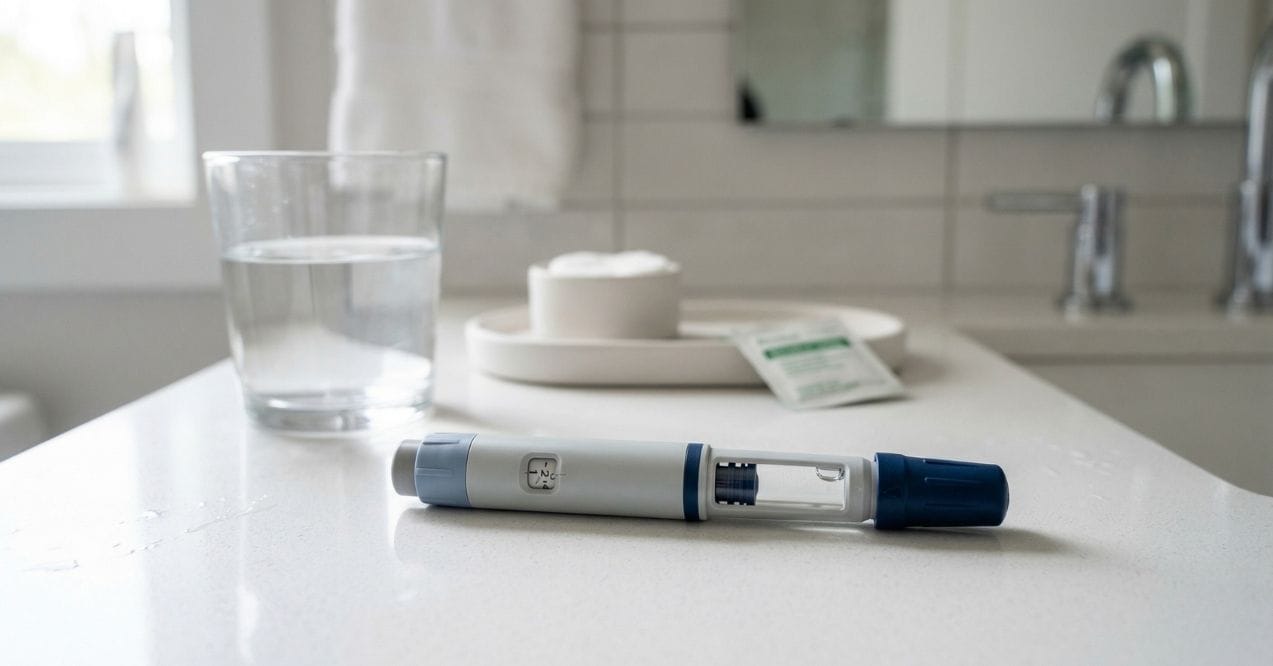
How does GLP-1 lower blood sugar? By sequencing three responses that moderate what the body does with glucose after eating. The process depends on food being present and glucose rising in response to it.
GLP-1 release from the small intestine sets off a coordinated cascade, and each step reinforces the others in timing and effect. Rather than acting as a simple glucose-lowering switch, GLP-1 functions more precisely as a meal-triggered regulatory signal.
What Happens After You Eat
Once food enters the digestive system, cells in the small intestine begin releasing GLP-1 into circulation. The hormone signals the pancreas to initiate its post-meal response, reduces glucagon activity, and slows stomach emptying simultaneously.
By the time glucose from a meal reaches the bloodstream in meaningful amounts, the body has already begun adjusting. The sequence typically unfolds within minutes of eating and runs its course over the following hour or two.
Why Timing Matters
GLP-1’s effects are most concentrated during and shortly after a meal, which is when the body’s glucose-management demands are highest. Fasting glucose levels are shaped by a different set of processes.
This timing distinction explains why discussions around GLP-1 tend to focus on post-meal patterns rather than overall daily levels. The hormone’s activity is food-triggered and tapers off gradually as the meal clears the digestive system.
Can GLP-1 Lead to Low Blood Sugar?
This distinction matters for anyone exploring GLP-1 activity. GLP-1 low blood sugar, meaning glucose falling below a healthy functional range as a direct result of GLP-1 signaling, is not the typical outcome of this hormone’s natural activity.
Because the mechanism is glucose-dependent, the signal naturally becomes more subdued when glucose is already within a normal range. Supporting a more moderate post-meal glucose rise is a fundamentally different outcome from driving glucose too low.
| Common Assumption | What’s More Accurate | Why the Difference Matters |
| GLP-1 always reduces glucose | GLP-1 supports proportional regulation based on glucose that is actually present | The effect adjusts naturally rather than pushing glucose in one direction regardless of context |
| Lower glucose means glucose is too low | Lower and too low describe meaningfully different outcomes | A more moderate post-meal rise is not the same as a problematic drop |
| GLP-1 activity is constant throughout the day | GLP-1 responds to food intake and tapers between meals | The response is time-limited and food-dependent, not a continuous suppression signal |
Lower vs. Too Low
Lower post-meal glucose means the rise following a meal is more gradual and moderate. Too low refers to glucose falling below the range the body needs to function well.
GLP-1’s glucose-dependent design acts as a natural safeguard in ordinary circumstances. The signal scales with how much glucose is present rather than pushing in one direction regardless of the starting level, and those are different mechanisms with different practical outcomes.
When Context Matters More
The broader daily pattern shapes how GLP-1 activity fits into the overall glucose picture. Meal size, activity level, sleep, and the timing of food all interact with how glucose is managed hour to hour.
GLP-1 is one part of that system, not the whole of it. When surrounding habits are generally balanced, GLP-1’s proportional response tends to work within the body’s existing capacity rather than in tension with it.
Blood Sugar, Appetite, and Fullness

Appetite and meal size are directly relevant to post-meal glucose because they determine how much glucose enters the body at once. GLP-1 signals appetite-regulating areas of the brain, which may reduce the drive to eat further and slow the pace of a meal.
Smaller, more measured portions allow the body more time to manage incoming glucose, and the post-meal response tends to be more moderate as a result. For those curious whether GLP-1 may also influence the body’s broader picture, this related resource explores that connection further.
Why Fullness Signals Matter
When GLP-1 signals the brain that the body has received enough food, eating pace tends to naturally slow. Slower eating gives the digestive system more time to process each portion before more arrives.
This is not a direct glucose mechanism in the same way the pancreatic and glucagon pathways are, but it shapes the conditions under which those mechanisms operate. Meal size and pace set the stage for everything that follows.
The Link to Post-Meal Energy
Steadier post-meal glucose patterns are often associated with more consistent energy in the hours after eating. Sharp rises followed by rapid dips can leave people feeling sluggish or unfocused.
While GLP-1 does not directly regulate energy levels, the more gradual post-meal response it may support could contribute to a smoother experience for some people. This connection between glucose pace and energy is a practical reason why post-meal patterns matter beyond the numbers themselves.
Daily Habits That Support Blood Sugar Balance
Lifestyle habits can work alongside the body’s natural glucose-regulating systems rather than replacing them. Meal structure, fiber intake, protein, physical activity, and sleep each play a role in how glucose is managed throughout the day.
For a grounded starting point, this resource on normal glucose ranges offers helpful context on what healthy post-meal patterns may look like. Consistent daily rhythms create more predictable conditions, which may allow the body’s internal systems, including GLP-1 signaling, to function more effectively over time.
For readers looking to build on these daily habits, PureHealth Research’s natural GLP-1 supplements can complement a balanced wellness routine centered on mindful eating, steady daily rhythms, and practical long-term support.

Meal Composition Matters
Protein and fiber both slow glucose absorption from a meal, which aligns naturally with how GLP-1 functions. Dietary protein may also directly stimulate GLP-1 release, making what is on the plate relevant from two directions.
Foods that support a more gradual glucose response, including legumes, vegetables, lean proteins, and whole grains, tend to work alongside GLP-1 signaling. Foods that may support GLP-1 activity are covered in more detail in a companion resource.
Small Habits, Better Rhythm
Short walks after meals, consistent sleep timing, and eating at regular intervals are among the habits most consistently linked to stable post-meal glucose patterns. A 10-minute walk after dinner, for example, may support the body’s natural post-meal response more effectively than a single longer session at a different point in the day.
Exercise and its relationship to glucose is explored in detail separately. Regular patterns compound over time in ways that isolated actions rarely do.
Conclusion
GLP-1 can help lower blood sugar by coordinating three food-triggered responses: a glucose-dependent pancreatic signal, reduced glucagon activity, and slower digestion. Each is proportional to what glucose is actually present, which is why lower post-meal support from GLP-1 does not mean glucose drops too low. Meal structure, physical activity, and consistent daily habits shape the environment in which these natural systems operate, and working with them tends to produce the steadiest long-term results.
Yes. GLP-1 is released in response to food, and its main effects, including support for the pancreatic response, glucagon regulation, and digestion pace, are most active in the post-meal window. Its influence on fasting glucose levels is comparatively limited.
No. Lower refers to a more gradual and moderate post-meal rise. Low blood sugar means glucose has fallen below a functional range. GLP-1’s glucose-dependent design generally acts proportionally, making a significant overcorrection unlikely under ordinary circumstances.
GLP-1 is primarily triggered by food intake. Smaller meals produce a more modest GLP-1 response. The post-meal effect scales with how much glucose is entering the body, so a smaller meal typically means a less pronounced overall pattern.
GLP-1 is released from cells in the small intestine after eating. It then signals the pancreas, reduces glucagon activity, and engages appetite-regulating areas of the brain. These responses happen rapidly and in coordination rather than strictly one after another.
GLP-1 may support a more gradual post-meal glucose response by slowing digestion, regulating the pancreatic response, and reducing glucagon activity. Together, these effects shape a slower and more moderate post-meal rise rather than a sharp spike followed by a sudden drop.

Advertisement. This site offers health, wellness, fitness and nutritional information and is designed for educational purposes only. You should not rely on this information as a substitute for, nor does it replace, professional medical advice, diagnosis, or treatment. If you have any concerns or questions about your health, you should always consult with a physician or other health-care professional. Do not disregard, avoid or delay obtaining medical or health related advice from your health-care professional because of something you may have read on this site. The use of any information provided on this site is solely at your own risk.
Related Articles
GLP-1 and Inflammation: What Current Research Suggests
Written by Donatas Leikas | August 19, 2026

Does GLP-1 Increase Metabolism? What to Know
Written by Karolina Rutkute | March 25, 2026

How to Naturally Increase GLP-1 (Science-Backed Tips)
Written by Karolina Rutkute | March 23, 2026

How Much Weight Can I Lose on a GLP-1?
Written by Karolina Rutkute | March 20, 2026

Does GLP-1 Cause Muscle Loss?
Written by Karolina Rutkute | March 18, 2026
Does GLP-1 Help With Menopause Weight Gain?
Written by Gabriele Slimaite | March 16, 2026