Can Ashwagandha Really Help Anxiety and Stress?
Is ashwagandha good for anxiety? Discover how it may support healthy cortisol levels and better sleep. Learn more.



 On This Page:
Is ashwagandha good for anxiety? Ashwagandha, an adaptogenic herb rooted in Ayurvedic tradition, has drawn attention from researchers studying its effects on mood and stress response. While this botanical is not a cure for anxiety disorders, emerging clinical evidence suggests it may support a calmer state of mind when used consistently. This article explores what science reveals about ashwagandha and anxiety, including dosage recommendations, timeline expectations, and how to select a quality supplement.
Is Ashwagandha Good for Anxiety? What the Research Shows
The question of whether ashwagandha benefits for anxiety hold up under scientific scrutiny has been examined in multiple clinical trials. A 2021 systematic review analyzed seven randomized controlled studies involving nearly 500 adults with self-reported high stress or diagnosed anxiety disorders.
Participants who took ashwagandha for 6 to 8 weeks showed significant reductions in anxiety scores compared to placebo groups. These findings remained consistent across different extract types and dosages, suggesting the herb may offer reliable support for those experiencing tension and worry.
The research also noted improvements in sleep quality and reductions in fatigue, both of which contribute to overall mental wellbeing.
Clinical Studies on Ashwagandha and Anxiety
Several well-designed trials have measured ashwagandha’s effects using validated psychological assessments. One 8-week study found participants taking 600 mg daily experienced notable drops in Hamilton Anxiety Rating Scale scores.
Another trial using 300 mg twice daily reported similar outcomes on the GAD-7 scale, a standard tool for measuring generalized anxiety symptoms.
| Study Duration | Daily Dosage | Key Finding |
| 8 weeks | 600 mg | Significant reduction in HAM-A scores |
| 6 weeks | 240 mg | Lower perceived stress and anxiety |
| 60 days | 300 mg twice daily | Reduced cortisol, improved mood |
| 8 weeks | 250-600 mg | Decreased anxiety and stress markers |
Ashwagandha for Social and Generalized Anxiety
Most clinical research has focused on generalized anxiety symptoms rather than specific subtypes. However, ashwagandha for social anxiety has shown promise in smaller studies and user reports.
Because the herb appears to modulate the body’s stress response rather than targeting specific anxiety pathways, its calming effects may extend to various forms of unease. Those dealing with situational nervousness or social discomfort often report feeling more composed after several weeks of supplementation.
Ashwagandha for Stress: Can It Really Help?
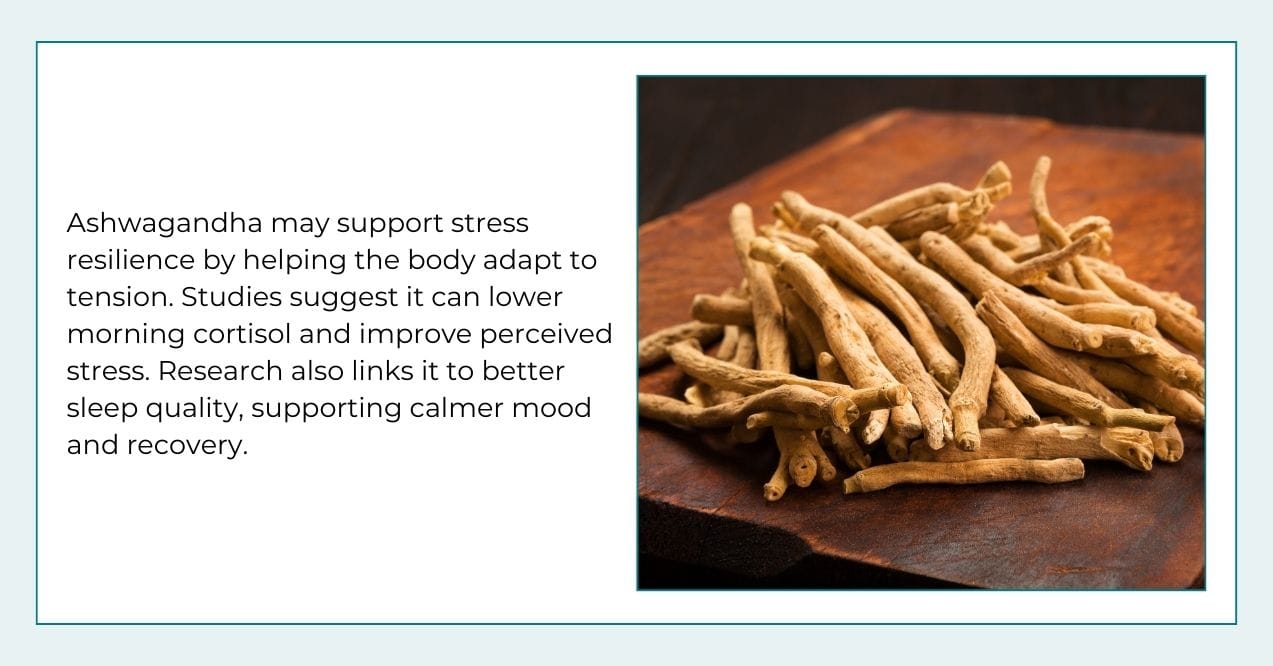
Stress and anxiety share overlapping symptoms but differ in important ways. Anxiety often involves persistent worry about future events, while stress typically arises from identifiable pressures like work deadlines or family responsibilities.
Ashwagandha for stress and anxiety addresses both by supporting the body’s adaptive response to tension. Research suggests this herb may help build resilience against daily pressures, making it easier to navigate demanding situations without feeling overwhelmed. Certain foods that calm the nervous system can complement herbal support for a more comprehensive approach to stress management.
How Ashwagandha Impacts Cortisol Levels
Cortisol, often called the stress hormone, rises when the body perceives threat or pressure. Chronically elevated cortisol can disrupt sleep, mood, and energy levels. Multiple studies show ashwagandha may lower morning cortisol by up to 23% after 60 days of use.
This reduction correlates with improvements in perceived stress, mental clarity, and emotional balance. The herb appears to work on the hypothalamic-pituitary-adrenal axis, the system governing stress hormone release throughout the body.
Ashwagandha and Sleep Quality
Poor sleep amplifies stress and anxiety while undermining the body’s recovery processes. Research indicates ashwagandha may support deeper, more restorative rest. In one trial, 72% of participants reported better sleep compared to 29% in the placebo group.
Improvements included falling asleep faster, staying asleep longer, and waking feeling more refreshed. Because quality sleep plays such a vital role in stress management, these benefits contribute significantly to the herb’s overall calming effects.
How Long Does Ashwagandha Take to Work for Anxiety?
Understanding how long does ashwagandha take to work for anxiety helps set realistic expectations. When asking is ashwagandha good for anxiety, timing matters as much as dosage. Most people notice subtle shifts within 2 to 4 weeks, though meaningful changes typically emerge after 6 to 8 weeks of daily use.
Clinical trials measuring anxiety scores often show the most significant improvements at the 8-week mark. Individual responses vary based on factors like dosage, extract quality, baseline stress levels, and overall lifestyle habits. Consistency matters more than timing, so taking ashwagandha at the same time each day supports steady results.
Expected Timeline for Results
| Goal | Typical Timeframe |
| Initial calming effects | 2-4 weeks |
| Noticeable stress reduction | 4-6 weeks |
| Significant anxiety improvement | 6-8 weeks |
| Sleep quality enhancement | 2-6 weeks |
| Sustained wellbeing | 8-12 weeks |
Ashwagandha Dosage for Anxiety
Finding the right ashwagandha dosage for anxiety involves balancing effectiveness with tolerability. Clinical studies have used a wide range, but most successful trials fall within 300 to 600 mg daily of a standardized extract.
The key factor is withanolide content, the active compounds responsible for the herb’s calming properties. Extracts standardized to at least 5% withanolides deliver consistent potency across batches. Combining ashwagandha and magnesium may offer synergistic benefits for those seeking enhanced relaxation support.
General Guidelines for Adults
For anxiety support, research suggests starting with 300 mg daily of a root extract standardized to 5% withanolides. After 2 weeks, this amount can be increased to 600 mg if well tolerated. Higher doses up to 1,000 mg have been used in studies, though most people find relief within the 300 to 600 mg range. Capsules, powders, and gummies all deliver the herb effectively, though capsules often provide the most precise dosing.
Timing and Duration Tips
Take ashwagandha with food to support absorption and reduce any digestive sensitivity. Morning doses work well for those seeking daytime calm, while evening doses may benefit those prioritizing sleep. Some people split their daily amount between morning and night.
Plan to use the supplement consistently for 6 to 8 weeks before evaluating its full effects. Taking periodic breaks, such as one week off every two to three months, may help maintain the body’s responsiveness.
Choosing the Right Ashwagandha Supplement for Anxiety Support
Supplement quality directly impacts results. Not all ashwagandha products deliver the same benefits because extraction methods and plant parts used vary considerably. Understanding label terminology helps identify products backed by research rather than those offering minimal active compounds.
What to Look for on the Label
Quality markers include:
- Look for at least 5% withanolides
- KSM-66 and Sensoril are well-researched branded extracts
- Root extracts have stronger clinical support than leaf-based products
- Certifications from USP, NSF, or similar organizations confirm purity
- Avoid products with artificial colors, fillers, or excessive binders
For those seeking a reliable option, PureHealth Research offers an ashwagandha supplement formulated with a potent root extract standardized for optimal withanolide content. This formulation supports stress resilience and mental calm while meeting rigorous quality standards for purity and potency.
Capsules, Powders, or Gummies?
Each delivery format has advantages worth considering:
- Capsules offer precise dosing and convenience without taste concerns
- Powders allow flexible dosing and can be mixed into smoothies or warm beverages
- Gummies provide an enjoyable option for those who dislike swallowing pills, though they may contain added sugars
Absorption rates remain similar across formats when withanolide content is equivalent. Choose based on your lifestyle preferences and commitment to daily use.
Can Ashwagandha Cause Anxiety or Side Effects?
While does ashwagandha help with anxiety for most users, a small percentage report unexpected reactions. Can ashwagandha cause anxiety? In rare cases, some individuals experience increased restlessness, irritability, or overstimulation, particularly at higher doses. These reactions may relate to the herb’s effects on thyroid hormones or individual sensitivity to adaptogens.
Common side effects, when they occur, tend to be mild:
- Digestive upset or nausea
- Drowsiness, especially with evening doses
- Headache during the first week of use
Most side effects resolve by lowering the dose or taking the supplement with food. Anyone experiencing persistent discomfort should discontinue use and consult a healthcare provider.
Who Should Avoid Ashwagandha?
Certain groups should avoid ashwagandha or use it only under medical supervision. Pregnant and breastfeeding women should not take this herb due to insufficient safety data and traditional concerns about its effects on pregnancy. Those with hyperthyroidism or Hashimoto’s thyroiditis need caution because ashwagandha may influence thyroid hormone levels.
People taking the following should consult their healthcare provider before use:
- Sedatives or sleep medications
- Thyroid hormone replacements
- Immunosuppressant drugs
- Blood pressure or blood sugar medications
Those with autoimmune conditions like lupus, rheumatoid arthritis, or multiple sclerosis should also seek guidance, as ashwagandha may stimulate immune activity.
Conclusion
So is ashwagandha good for anxiety? Evidence suggests it offers promising support for those navigating stress and tension, though it works best as part of a broader wellness approach. Clinical trials indicate consistent daily use at proper doses may reduce cortisol, improve sleep, and ease anxious feelings over 6 to 8 weeks. Selecting a quality standardized extract and maintaining realistic expectations helps maximize potential benefits.
Limited research specifically addresses social anxiety, but user reports and the herb’s general calming effects suggest it may help reduce nervousness in social situations.
Rarely, some individuals experience increased restlessness at higher doses. Starting low and increasing gradually helps identify your optimal amount.
Capsules containing standardized root extract with at least 5% withanolides offer the most reliable and well-researched option for anxiety support.
Ashwagandha works gradually over weeks and is not designed for immediate relief. It supports baseline calm rather than addressing acute episodes.
Sign up for our Healthy Living newsletter!



Advertisement. This site offers health, wellness, fitness and nutritional information and is designed for educational purposes only. You should not rely on this information as a substitute for, nor does it replace, professional medical advice, diagnosis, or treatment. If you have any concerns or questions about your health, you should always consult with a physician or other health-care professional. Do not disregard, avoid or delay obtaining medical or health related advice from your health-care professional because of something you may have read on this site. The use of any information provided on this site is solely at your own risk.
Related Articles
Does a Pinched Nerve Cause Headaches?
Written by Donatas Leikas | June 30, 2025
The Role of Nerve Health in Managing Parkinson’s Symptoms
Written by Donatas Leikas | April 8, 2025

Is Your Nervous System Stuck in Fight or Flight Mode?
Written by Donatas Leikas | June 30, 2024

How to Relieve Body Aches From Stress: World Meditation Day Special
Written by Donatas Leikas | May 21, 2024

Comprehensive Guide to Managing a Dysregulated Nervous System
Written by Donatas Leikas | April 29, 2024
Central Nervous System Disorders Symptoms
Written by Donatas Leikas | November 10, 2023