Does Kombucha Give You Energy All Day?
Kombucha is a fermented tea containing caffeine, though usually less than coffee. Any noticeable stimulant effect depends on the amount in the product and on individual caffeine sensitivity, and amounts vary between brands.



 On This Page:
The 2:00 PM slump has a familiar solution, and for a lot of people it stopped working years ago. A second coffee brings alertness, then restlessness, then a flat stretch that runs into the evening.
So does kombucha give you energy, and does anything about it hold up across an afternoon? Kombucha is fermented from tea, so it carries caffeine along with other tea-derived compounds. Any stimulant effect depends on how much caffeine the product contains and how sensitive you are to it.
What follows covers what is in the drink, how its caffeine compares with coffee, and why the label matters more than the marketing.
Does Kombucha Give You Energy?
Kombucha starts as sweetened tea, and a culture of bacteria and yeast ferments it over roughly one to three weeks. The sugar feeds the fermentation, while the tea contributes caffeine and other compounds.
The process produces organic acids, live microorganisms, and small amounts of vitamins, though published analyses show results differ considerably between batches and producers. No single component acts as a strong stimulant.
Any noticeable stimulant effect will depend on the amount of caffeine in the product and on individual caffeine sensitivity. The sections below cover each component and what the research does and does not show.
L-Theanine and Caffeine in Tea
Tea naturally contains L-theanine. Research pairing 100 mg of isolated L-theanine with 50 mg of caffeine in 27 healthy adults reported improvements in attention-switching tasks.
Those were measured doses of isolated compounds, and the study did not analyze kombucha. Amounts retained after fermentation and processing vary between products and are rarely listed, so this research should not be assumed to predict the effect of any given bottle.
B-Vitamins Produced During Fermentation
Fermentation can produce small amounts of B-vitamins, with reported quantities varying by batch and method. B-vitamins act as coenzymes in the reactions that turn food into ATP, the form of energy cells run on.
One review notes that low B-vitamin levels are associated with fatigue, while adding more when intake is already adequate has shown little consistent effect. Kombucha labels rarely state B-vitamin content.
Live Microorganisms and Gut Health
Unpasteurized kombucha may contain live microorganisms. Their types and amounts vary between products, and more product-specific research is needed to determine whether they offer probiotic benefits, since that term requires identified strains, adequate counts, and demonstrated effects.
Gut bacteria are known to play a role in how food components are broken down and metabolized. If you are curious about how the drink sits with digestion, our guide to kombucha and bloating covers that separately.
Comparing Popular Energy Drinks
| Kombucha | Coffee | Standard Energy Drink | |
| Caffeine per serving | Generally lower than coffee; varies by product, check the label | About 95 mg per 8 oz cup | Varies by product; often high, check the label |
| Sugar per serving | Varies widely by brand | Roughly none when black | Varies; often high, check the label |
| Other tea compounds | May contain L-theanine and polyphenols; amounts usually unlisted | Not tea-derived | Depends on formulation |
Is There Caffeine in Kombucha?
Yes. Kombucha is brewed from tea, so caffeine is present in almost every authentic product.
The amount is generally lower than coffee, which is why the drink appeals to people cutting back on stimulants. How much lower depends on the tea used, the brewing and fermentation conditions, processing, and serving size. The label is the reliable answer.
How Much Caffeine Does Kombucha Have?
Kombucha caffeine content varies by product. When available, check the label or the manufacturer’s testing rather than relying on a general range.
For comparison, a standard 8 oz cup of brewed coffee contains about 95 mg of caffeine. Fermentation may alter caffeine levels, but studies do not show a consistent reduction across all products.
Does All Kombucha Have Caffeine?
Almost all traditional kombucha contains caffeine, because it is fermented from real tea, usually black or green. Sugar drives the fermentation, while the tea supplies caffeine and other compounds.
Some products labeled caffeine-free are fermented from herbal infusions instead. These are made by a similar process but are not tea-based kombucha in the traditional sense.
How Sugar Content Varies in Kombucha
Sugar is one of the biggest differences between bottled kombucha products, and it is not always obvious from the front of the label.
Many commercial brands add fruit juice or cane sugar after fermentation to soften the tartness. That changes the nutrition panel considerably, and two bottles on the same shelf can differ a great deal.
Comparing Sugar Across Kombucha Products
One analysis of commercial products found an average of about 3.2 g of sugar per 100 mL, with serving sizes averaging 352 mL. Juice-forward brands sit above that average.
Anyone monitoring added sugar may prefer to compare Nutrition Facts panels and pick an option that fits their own diet, rather than assuming the category is uniformly low.
A Convenient Powdered Kombucha Option
Label reading helps, though bottled kombucha can be tart, bulky to carry, and dependent on refrigeration.
PureHealth Research Kombucha tea powder offers a different format: an instant powder made with InstaKOMBU™ Oolong Tea Kombucha Powder. Instead of opening a ready-to-drink bottle, you mix one scoop with eight fluid ounces of water or another cool beverage, following the current label directions.
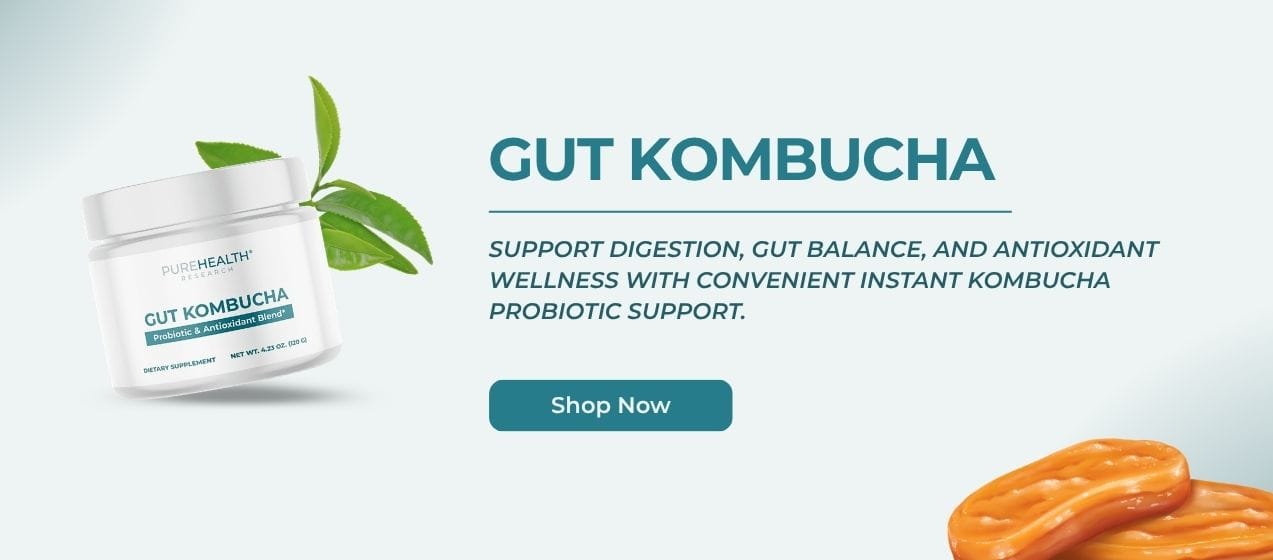
There is no brewing required, and the compact container is easier to keep at a desk or pack for travel than multiple refrigerated bottles.
This powdered option focuses on simple preparation and everyday convenience while keeping the familiar fermented-tea format. Review the current ingredient list, Supplement Facts panel, and storage instructions to decide whether it fits your routine.
PureHealth Research also currently backs the product with a 365-day money-back guarantee, giving customers time to try its travel-friendly approach to enjoying kombucha without the usual bottle storage and preparation trade-offs at home.
Practical Ways to Use Kombucha
Two practical points are worth considering before making it a regular habit.
Timing and Caffeine Intake
Kombucha is sometimes used in place of a second coffee. Caffeine consumed later in the day can affect sleep, and switching to a lower-caffeine drink is one way to reduce afternoon intake.
Whether that suits you depends on your own sensitivity and the caffeine listed on the product. It sits alongside other practical ways to raise energy levels such as sleep, meals, and movement.
Pairing With Hydration and Fiber
Kombucha is acidic and fermented, so it works better alongside plain water than in place of it. Prebiotic fiber from foods like oats, onions, garlic, and bananas is a well-established part of a diet that supports gut bacteria.
If you are new to fermented drinks, a smaller first serving lets you see how you respond before making it a habit.
Conclusion
Kombucha is a lower-caffeine option than coffee or energy drinks, and its contents come from tea and fermentation: caffeine, L-theanine, polyphenols, small amounts of vitamins, and live microorganisms in unpasteurized versions. Any stimulant effect depends on the caffeine in the product and your own sensitivity to it. Because amounts vary so much between brands, the label is what tells you what you are actually drinking, particularly for caffeine and added sugar.
Kombucha generally contains less caffeine than coffee. Any stimulant effect depends on the amount in the product and your sensitivity to caffeine. Check the label for a clearer picture.
That depends on the caffeine in the specific product and your own sensitivity to it. If caffeine affects your sleep, check the label and consider when you have your last serving.
You can. Caffeine per serving is usually lower than coffee. Changing your usual caffeine intake can affect how you feel at first.
Fermented foods and drinks contain histamines. Anyone with a known histamine intolerance may prefer to approach fermented products cautiously and track their own response.
Kombucha is acidic, and tolerance varies from person to person. Some people prefer it with food. There is no strong evidence that meal timing changes the effect.

Advertisement. This site offers health, wellness, fitness and nutritional information and is designed for educational purposes only. You should not rely on this information as a substitute for, nor does it replace, professional medical advice, diagnosis, or treatment. If you have any concerns or questions about your health, you should always consult with a physician or other health-care professional. Do not disregard, avoid or delay obtaining medical or health related advice from your health-care professional because of something you may have read on this site. The use of any information provided on this site is solely at your own risk.
Related Articles
Does Matcha Have Caffeine in It?
Written by Karolina Rutkute | May 15, 2026
Does Matcha Give Energy or Just the Feeling of It?
Written by Karolina Rutkute | January 16, 2026
10 Tips How to Improve Stamina and Get More Energy
Written by Karolina Rutkute | January 31, 2025

How to Increase Your Energy Levels: Expert Advice
Written by Karolina Rutkute | May 26, 2024

11 Warning Signs of Magnesium Deficiency
Written by Karolina Rutkute | May 19, 2024
Metabolic Efficiency 101: What It Is and How to Increase It
Written by Karolina Rutkute | April 24, 2024