Does Matcha Have Caffeine in It?
Yes, and Camellia sinensis, the botanical source of every true tea, produces it as a natural alkaloid. Matcha's stone-ground whole-leaf format concentrates that caffeine significantly more than steeped varieties.


 On This Page:
Matcha is fully caffeinated, derived from the same Camellia sinensis plant as all true teas, and it delivers that caffeine in a way that sets it apart from a standard cup of coffee or steeped green tea. The difference starts with how the leaf is processed and consumed, and it extends to how the body absorbs what the leaf contains.
This guide breaks down matcha tea caffeine levels, how cultivation practices shape its concentration, and why a naturally occurring amino acid changes how that caffeine acts in the body.
Demystifying Matcha Tea Caffeine Levels and the Whole-Leaf Difference
Matcha comes from Camellia sinensis, the botanical source of all caffeinated teas. What sets it apart from standard green tea is not the plant itself but the way it is grown, processed, and consumed.
To appreciate why matcha tea caffeine levels are notably higher than those of ordinary steeped varieties, it helps to look at two defining factors: how the leaf is prepared for drinking, and the environmental stressors applied during cultivation.
Consuming the Entire Leaf vs. Traditional Steeping
With most green teas, dried leaves are steeped in hot water and then removed. Only the water-soluble compounds transfer into the cup.
Matcha is different: young leaves are stone-ground into a fine powder, then whisked thoroughly into liquid. The drinker consumes the complete leaf tissue, including its full complement of caffeine, antioxidants, and amino acids. This whole-leaf delivery mechanism is the primary reason matcha provides a more concentrated nutritional experience than conventionally brewed teas.
The Biological Role of Shading Practices
Several weeks before harvest, matcha tea plants are covered to block direct sunlight. This deliberate stress triggers the plant to hyper-produce chlorophyll, specific amino acids, and alkaloids, including caffeine, as a survival response.
The result is the vivid emerald color and deep umami flavor characteristic of quality matcha. It also means the harvested leaves carry denser concentrations of caffeine, chlorophyll, and amino acids than leaves grown in full sun, which directly contributes to matcha’s higher caffeine content per gram compared to standard green tea.
How Much Caffeine Is in Matcha Compared to Other Drinks?
Caffeine in matcha green tea sits at approximately 19 to 44 mg per gram of powder. A typical single-serving preparation uses 2 to 4 grams, yielding roughly 60 to 70 mg per cup.
That positions matcha clearly above steeped green teas while remaining moderately below a standard cup of drip coffee. The table below places these numbers in practical context.
| Beverage Type (8 oz) | Average Caffeine (mg) | Primary Energy Experience |
| Drip Coffee | 80 – 110 mg | Rapid spike; potential afternoon crash |
| Premium Matcha | 60 – 70 mg | Sustained, calm alert state |
| Traditional Black Tea | 45 – 75 mg | Moderate, steady lift |
| Steeped Green Tea | 25 – 45 mg | Mild, short-lived lift |
Drip Coffee vs. Premium Matcha
A standard cup of drip coffee delivers approximately 80 to 110 mg of caffeine, absorbed quickly into the bloodstream. Matcha, by contrast, provides around 60 to 70 mg per serving in a physiologically distinct format.
The raw numbers favor coffee in terms of sheer quantity, but the experience diverges significantly, largely because of how matcha’s compounds interact during digestion. The gap in milligrams is smaller than most people expect.
Regular Green Tea and Black Tea Baselines
Steeped green tea typically falls between 25 and 45 mg of caffeine per 8-ounce cup, while black tea ranges from 45 to 75 mg. Matcha lands above both, which often surprises people who associate it with the lighter end of the tea spectrum.
The distinction is structural: because matcha is ingested as a suspended powder rather than a brewed extract, its caffeine yield per serving is considerably greater than any steeped equivalent.
The L-Theanine Synergy: Why Caffeine in Matcha Green Tea Feels Different
Caffeine in matcha green tea does not act in isolation. Matcha is also rich in L-theanine, an amino acid found almost exclusively in the Camellia sinensis plant. When caffeine and L-theanine are consumed together, the body processes them differently than it would caffeine alone.
Promoting Alpha Brain Waves for Calm Focus
L-theanine may cross the blood-brain barrier and support the production of alpha brain waves, which are associated with a state of relaxed alertness. This is the physiological counterpoint to caffeine’s stimulatory activity.
Rather than the hyper-excitability that large doses of caffeine alone can produce, the combined action of these two compounds may produce clearer, calmer focus without the edge. For those exploring whether matcha gives energy differently than coffee, this neurochemical pairing is central to the answer.
Why Matcha May Feel Smoother Than Coffee for Some People
L-theanine appears to loosely bind with caffeine molecules during gastric absorption, slowing how quickly caffeine enters the bloodstream. Rather than a sharp spike followed by an equally sharp drop, the caffeine content in matcha is released over a more gradual window, commonly cited as 4 to 6 hours.
This may help explain why some people describe matcha as producing a smoother energy experience than coffee. For those interested in broader strategies around foods that calm the nervous system, matcha’s L-theanine profile makes it a notable example.
Best Ways to Enjoy Caffeinated Matcha Daily
Getting the most from matcha involves more than choosing a quality powder. Timing, preparation method, and dietary context all shape how effectively the body processes its caffeine and associated compounds.
Ideal Timing and Dietary Alignment
The best window for matcha is generally the morning or early afternoon. Because caffeine in matcha releases gradually, consuming it later in the day may interfere with the body’s natural wind-down process and healthy sleep architecture.
Pairing matcha with a small amount of food can also reduce any gastric sensitivity some people experience on an empty stomach. For those thinking about matcha’s effect on gut health, meal timing is a practical consideration worth factoring in.
A few practical guidelines for daily matcha use:
- Consume matcha between 8 a.m. and 2 p.m. for best alignment with natural energy cycles.
- Start with a single 2-gram serving to assess personal caffeine tolerance before increasing.
- Avoid combining matcha with other high-caffeine products to stay within daily thresholds.
- Store matcha powder in an airtight, opaque container away from heat and moisture to preserve its active compounds.
A Simpler Daily Format
Traditional whisking requires specific tools, precise water temperature, and a few minutes of dedicated preparation time. Not everyone finds that practical on a daily basis, and the natural bitterness of raw matcha powder is an acquired taste that not all palates welcome.
PureHealth Research Matcha green tea capsules offer a convenient way to incorporate whole-leaf matcha powder into a daily routine without whisking or preparation. Each capsule delivers a standardized amount of whole-leaf matcha powder in a form that is easy to incorporate into any morning routine.
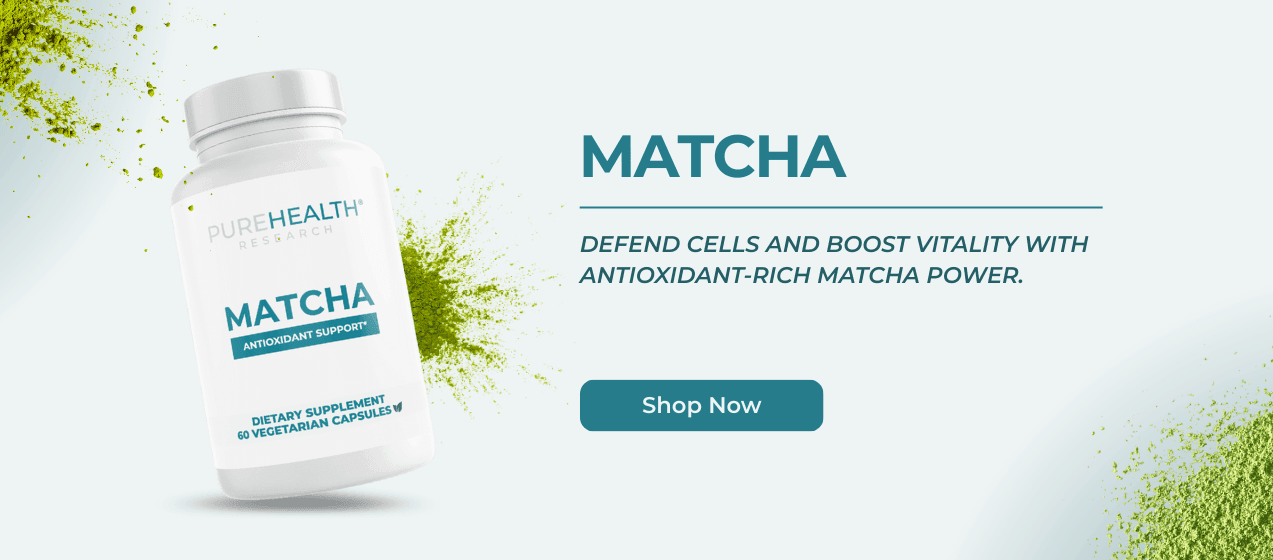
The formula is produced in a cGMP-compliant facility, third-party tested for purity, and free from artificial additives. For those who travel frequently or simply prefer a measured, mess-free format, matcha capsules make consistent daily intake straightforward.
PureHealth Research applies its quality standards to every step of the process, from raw material sourcing through finished product testing, so what is listed on the label reflects what is actually in each capsule.
Is Matcha Green Tea Caffeinated Safely for Everyone?
Is matcha green tea caffeinated at levels that work for all adults? For most people, yes. Its caffeine content sits well within established safe ranges when consumed in reasonable amounts. That said, individual tolerance varies, and a few groups warrant additional consideration.
Staying Within Healthy FDA Thresholds
The FDA cites 400 mg of daily caffeine as a safe upper limit for healthy adults. A single serving of matcha contains approximately 60 to 70 mg, meaning three to four servings daily falls comfortably within that guideline, provided no other significant caffeine sources are in the diet.
Spreading servings across the morning and early afternoon, rather than stacking them, supports steadier energy without approaching threshold levels.
When to Consult a Healthcare Provider
Individuals with heightened caffeine sensitivity, disrupted sleep patterns, or specific digestive conditions should monitor their matcha intake and consider speaking with a qualified healthcare provider before making it a daily habit.
Pregnant or nursing individuals should limit total daily caffeine intake to 200 mg or less, as recommended by standard obstetric guidelines, making it advisable to track all dietary caffeine sources including matcha.
Conclusion
Matcha is caffeinated, and does matcha have caffeine in it is a question with a clear and well-supported answer. What makes matcha distinct is how that caffeine behaves in the presence of L-theanine, delivering a more sustained and measured alertness than coffee typically provides. For those seeking a daily source of focused energy with fewer reported energy crashes, matcha represents a well-studied and widely used option.
Matcha contains approximately 60 to 70 mg of caffeine per serving. Steeped green tea typically delivers 25 to 45 mg. The difference comes from consuming the whole leaf as a suspended powder rather than a brewed extract.
It may be less likely to, due to L-theanine’s moderating effect on caffeine absorption. Many people report a calmer alertness with matcha than with coffee, though individual sensitivity to caffeine still applies.
A single serving of matcha provides 60 to 70 mg compared to coffee’s 80 to 110 mg. It may serve as a functional substitute for those seeking a moderate, more gradual caffeine experience.
Some people experience mild gastric discomfort when consuming matcha without food. Starting with a small serving alongside a light meal can support better tolerance for most individuals.
Ceremonial-grade matcha typically uses younger, more shaded leaves, which tend to carry higher caffeine and L-theanine concentrations. The difference is meaningful but not always dramatic; preparation amount matters more than grade alone.

Advertisement. This site offers health, wellness, fitness and nutritional information and is designed for educational purposes only. You should not rely on this information as a substitute for, nor does it replace, professional medical advice, diagnosis, or treatment. If you have any concerns or questions about your health, you should always consult with a physician or other health-care professional. Do not disregard, avoid or delay obtaining medical or health related advice from your health-care professional because of something you may have read on this site. The use of any information provided on this site is solely at your own risk.
Related Articles
Does Kombucha Give You Energy All Day?
Written by Karolina Rutkute | July 6, 2026
Does Matcha Give Energy or Just the Feeling of It?
Written by Karolina Rutkute | January 16, 2026
10 Tips How to Improve Stamina and Get More Energy
Written by Karolina Rutkute | January 31, 2025
How to Increase Your Energy Levels: Expert Advice
Written by Karolina Rutkute | May 26, 2024
11 Warning Signs of Magnesium Deficiency
Written by Karolina Rutkute | May 19, 2024
Metabolic Efficiency 101: What It Is and How to Increase It
Written by Karolina Rutkute | April 24, 2024