Does Ashwagandha Make You Lose Weight?
Does ashwagandha make you lose weight? It may support stress and sleep, but results are modest. See what the research shows.


 On This Page:
Does ashwagandha make you lose weight? Not directly. Ashwagandha is not a fat burner. It does not meaningfully alter caloric output or target fat tissue on its own. What it may do is support conditions that make weight management harder for some people, particularly chronic stress, poor sleep, and stress-driven eating patterns.
For some individuals, supporting those factors may allow healthier habits to take hold more consistently. This article explains what the evidence actually says about ashwagandha and weight loss, and what realistic outcomes look like.
How Ashwagandha May Support Weight Loss
Ashwagandha (Withania somnifera) is an herb classified as an adaptogen — a plant compound that helps the body manage its response to stress — with a long history of use in Ayurvedic practice. The relationship between ashwagandha and weight loss is primarily indirect. Rather than acting on fat metabolism, this herb may address factors that make maintaining a healthy weight more difficult, including elevated cortisol, disrupted sleep, and stress-driven food choices.
That distinction matters. People expecting meaningful scale results from ashwagandha alone will likely find it underwhelming. For those whose weight challenges are tied to chronic stress, however, the picture may look somewhat different.
| Claim | What It May Support | Realistic Expectation |
| Cortisol regulation | Lower stress response | May reduce stress-related appetite changes |
| Sleep support | More consistent rest | May support daily habit consistency |
| Body composition | Lean muscle preservation | Modest changes when paired with exercise |
| Appetite patterns | Reduced food cravings | Subtle effect in stressed individuals |
What It Can and Can’t Do
Ashwagandha may support a calmer stress response and more restful sleep. It is not a thermogenic agent. It does not suppress appetite through stimulant pathways or directly burn stored fat.
For individuals whose weight challenges are rooted in chronic stress or poor sleep, ashwagandha may offer meaningful indirect support over time. For those whose challenges are primarily caloric or lifestyle-related, its role in weight management will likely be minor.
What the Research Suggests
Most published data on ashwagandha centers on stress and cortisol reduction rather than direct fat loss. In one 8-week trial of chronically stressed adults taking 300 mg twice daily, the ashwagandha group showed a modest but statistically significant reduction in body weight compared with placebo — roughly twice the weight change seen in the control group.
That is a modest result. The same trial showed meaningful reductions in perceived stress and food cravings. The weight-related effect appears most relevant in individuals managing ongoing stress.
Ashwagandha and Weight Loss
The most relevant connection between ashwagandha for weight loss and real-world outcomes runs through the body’s stress system. When cortisol levels stay elevated over time, appetite signaling may shift. The body can develop a stronger preference for calorie-dense foods. Energy becomes harder to regulate. Sleep suffers. These changes accumulate and make consistent healthy habits significantly harder to maintain.
Ashwagandha’s primary strength lies in supporting the body’s stress response. That mechanism may have meaningful downstream effects on eating behavior and daily consistency for the right individual.
Stress and Emotional Eating
Chronic stress can quietly reshape eating patterns. It may increase cravings for calorie-dense foods, make portion awareness harder, and disrupt meal timing. Those patterns compound steadily over weeks and months.
Ashwagandha may help regulate the stress response that drives these habits. For a deeper look at how this herb interacts with the stress system, this article on ashwagandha for anxiety and stress covers the evidence in detail. Addressing the root pattern may matter more than targeting appetite directly.
Sleep and Daily Habits
Poor sleep is closely connected to disrupted appetite regulation and lower motivation for physical activity. When rest suffers, staying consistent with daily routines becomes harder.
Published data suggests ashwagandha may support sleep onset and overall sleep quality in some individuals. Better rest tends to make consistent choices around meals and movement more manageable. Over several weeks of consistent use, improved sleep may contribute meaningfully to daily routine stability.
Can Ashwagandha Cause Weight Loss for Some People?
Whether ashwagandha benefits for weight loss are noticeable depends heavily on the individual. The question “will ashwagandha make me lose weight?” does not have a single answer. Someone managing chronic stress, irregular sleep, and stress-driven snacking is in a very different position than someone with stable habits and primarily caloric challenges.
For the former, supporting the stress system may create genuine improvements in daily consistency. Does ashwagandha make you lose weight if your habits are already solid? Probably not in any meaningful way.
Who May Notice More Support
People most likely to notice indirect support from ashwagandha include those experiencing:
- Chronic or ongoing stress that affects daily habits and food choices
- Irregular sleep linked to elevated tension or anxious thinking
- Stress-driven snacking or late-night cravings
- Low energy that reduces willingness to stay physically active
If these patterns feel familiar, ashwagandha may offer indirect support through its effects on the stress response. Results will still be subtle and gradual. The mechanism is simply more relevant for this group than for the general population.
When Expectations Are Too High
Ashwagandha is not a fast-acting weight management tool. Readers expecting visible changes within days, or meaningful weight loss without dietary adjustments, are likely to be disappointed.
Published trials show modest, gradual outcomes measured over weeks. Framing ashwagandha as one part of a broader approach, rather than a primary solution, is both more accurate and more useful for realistic long-term planning.
Choosing Ashwagandha for Weight Loss Support
Supplement quality varies widely, and the research behind ashwagandha uses specific extract concentrations. Knowing what to look for makes it easier to choose a product that reflects the actual evidence rather than marketing claims.
| What to Check | Why It Matters | What to Look For |
| Extract type | Standardized extracts deliver consistent potency | Examples: KSM-66, Sensoril, or other clearly labeled root extracts with stated standardization |
| Withanolide content | Active compounds tied to published benefits | 5% withanolides or stated standardization |
| Serving format | Affects absorption and daily consistency | Capsule or tablet with a clear daily serving |
| Quality certification | Confirms label accuracy | NSF, USP, or equivalent third-party testing |
What to Look for in a Supplement
A well-made ashwagandha supplement matters more than any trendy formulation claim. Look for products using a standardized root extract with clearly stated withanolide concentration and a consistent daily serving.
Combining ashwagandha with complementary compounds is also worth considering. Research on ashwagandha and magnesium together suggests the pairing may support relaxation and recovery more effectively than either alone.
PureHealth Research’s ashwagandha supplement uses a standardized root extract intended to support the body’s stress response. For adults whose daily habits are disrupted by ongoing stress, that support may help make healthy routines easier to maintain. The capsule format is straightforward and built for daily, consistent use — which matters more than any single serving.
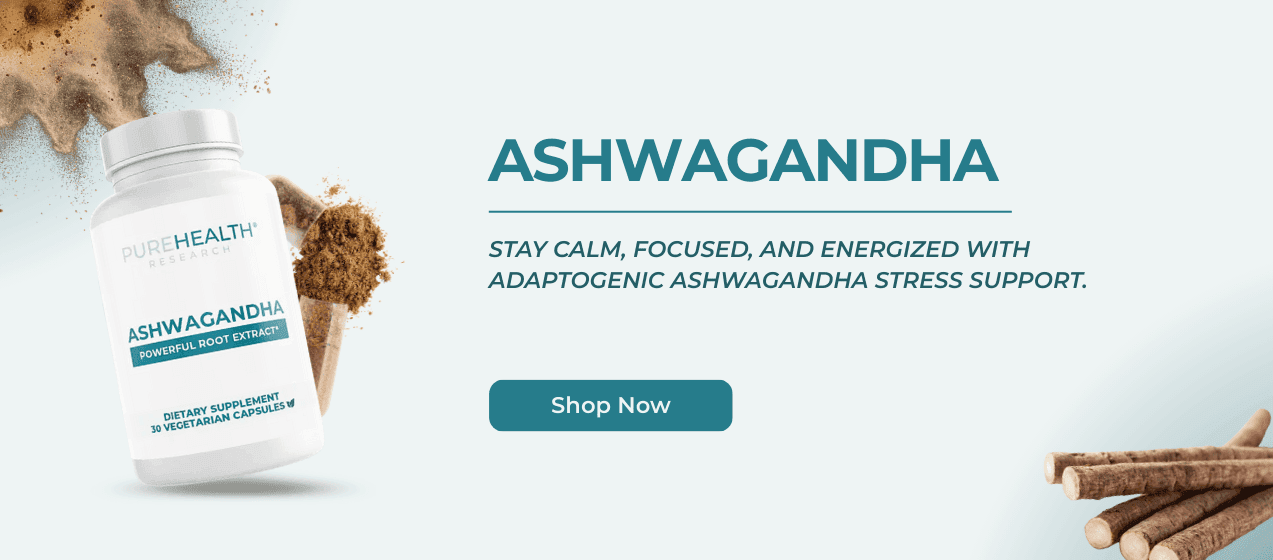
For readers exploring ashwagandha for weight loss support, not as a shortcut but as a complement to a healthy routine, PureHealth Research’s ashwagandha supplement offers a clear, evidence-aligned starting point.
Give It Time and Keep Expectations Realistic
Most ashwagandha research runs over four to eight weeks. Changes in stress levels and sleep quality are typically gradual. Meaningful support for daily habit consistency may take several weeks to become noticeable.
Evaluating the supplement after only a few days, or measuring results solely by the scale, will produce a misleading picture. Tracking changes in sleep quality, energy levels, and eating patterns offers a much more accurate way to assess whether ashwagandha is providing value.
Supportive Habits Still Come First
Ashwagandha may support a healthier routine, but it does not create one. The habits that shape weight outcomes most are:
- Prioritizing consistent, sufficient sleep each night
- Eating balanced, whole-food meals throughout the week
- Including regular physical movement as a sustainable daily practice
These factors matter more than any supplement. Ashwagandha may make it somewhat easier to stay consistent, particularly for those managing stress. For more context on how lifestyle habits interact with body weight, this overview of metabolic age is a useful read.
Conclusion
Does ashwagandha make you lose weight on its own? The evidence says no. What it may do is support the conditions that make weight management harder for some people: chronic stress, poor sleep, and inconsistent routines. That kind of indirect support is real but modest. For readers whose challenges include stress-driven habits, ashwagandha may be a worthwhile addition to a broader healthy routine, provided expectations stay grounded in what the research actually shows.
Ashwagandha may support a calmer stress response, which could make stress-driven eating patterns easier to manage over time. It does not directly suppress appetite, but reducing the stress that triggers cravings may support better food choices.
Published data suggests ashwagandha may reduce food cravings in chronically stressed individuals. The effect appears tied to cortisol regulation rather than a direct appetite mechanism. Results are subtle and vary between people.
Ashwagandha primarily supports the stress response. If your weight challenges are not stress-related, the supplement may offer general wellness support without producing noticeable changes on the scale.
Most published trials run four to eight weeks. Giving the supplement at least six to eight weeks while tracking sleep, energy, and eating patterns offers a fairer evaluation than checking the scale weekly.
Human studies have commonly evaluated daily use over periods of 8 to 12 weeks, but long-term use has been studied less extensively. Consistency over weeks matters more than any specific timing protocol.
Consistent sleep, balanced meals, and regular physical activity form the foundation. Ashwagandha may support these habits indirectly by helping regulate the stress response that tends to disrupt them.

Advertisement. This site offers health, wellness, fitness and nutritional information and is designed for educational purposes only. You should not rely on this information as a substitute for, nor does it replace, professional medical advice, diagnosis, or treatment. If you have any concerns or questions about your health, you should always consult with a physician or other health-care professional. Do not disregard, avoid or delay obtaining medical or health related advice from your health-care professional because of something you may have read on this site. The use of any information provided on this site is solely at your own risk.
Related Articles
Is Kombucha Good for Weight Loss?
Written by Karolina Rutkute | August 3, 2026

How to Lose Face Fat: 10 Effective Tips
Written by Karolina Rutkute | March 12, 2026
Is Matcha Good for Weight Loss?
Written by Karolina Rutkute | January 19, 2026

Do Men Process Carbs Differently Than Women?
Written by Karolina Rutkute | June 16, 2025

What Are the Natural Alternatives To Ozempic?
Written by Karolina Rutkute | May 12, 2025
What is Metabolic Confusion and Can it Benefit You?
Written by Karolina Rutkute | February 21, 2025