Can Varicose Veins Disappear With Exercise?
Can varicose veins disappear with exercise? Discover what movement can and can't do for vein health, plus the best exercises for circulation.


 On This Page:
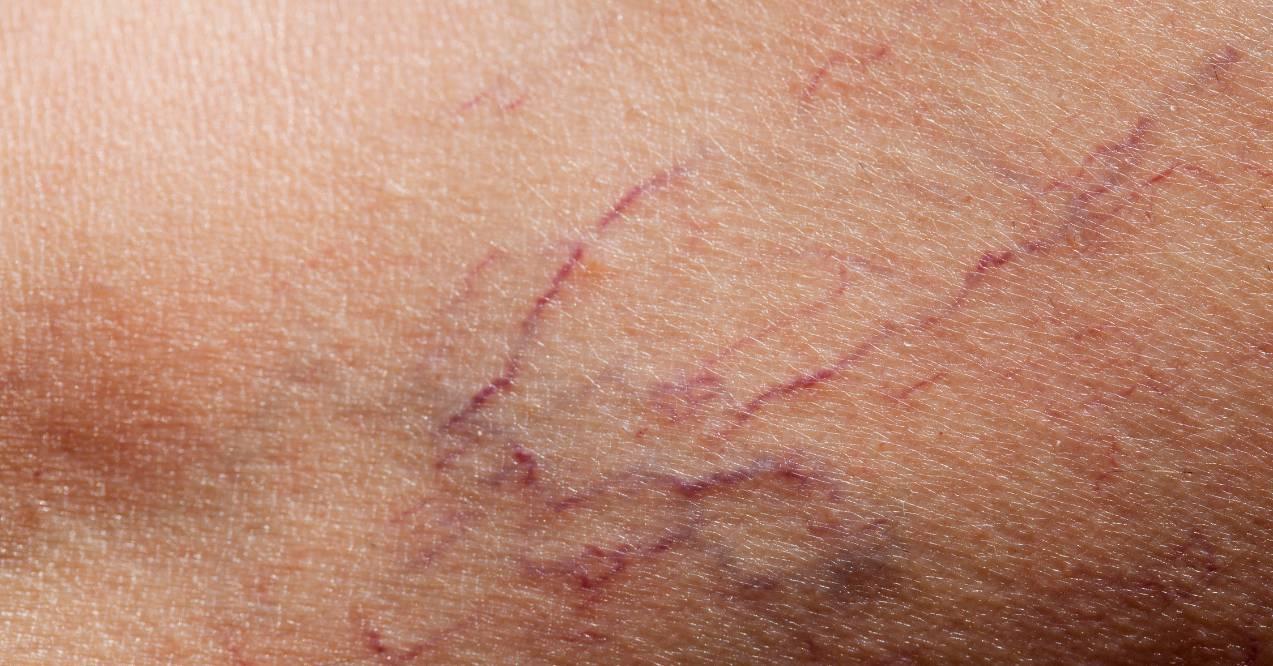
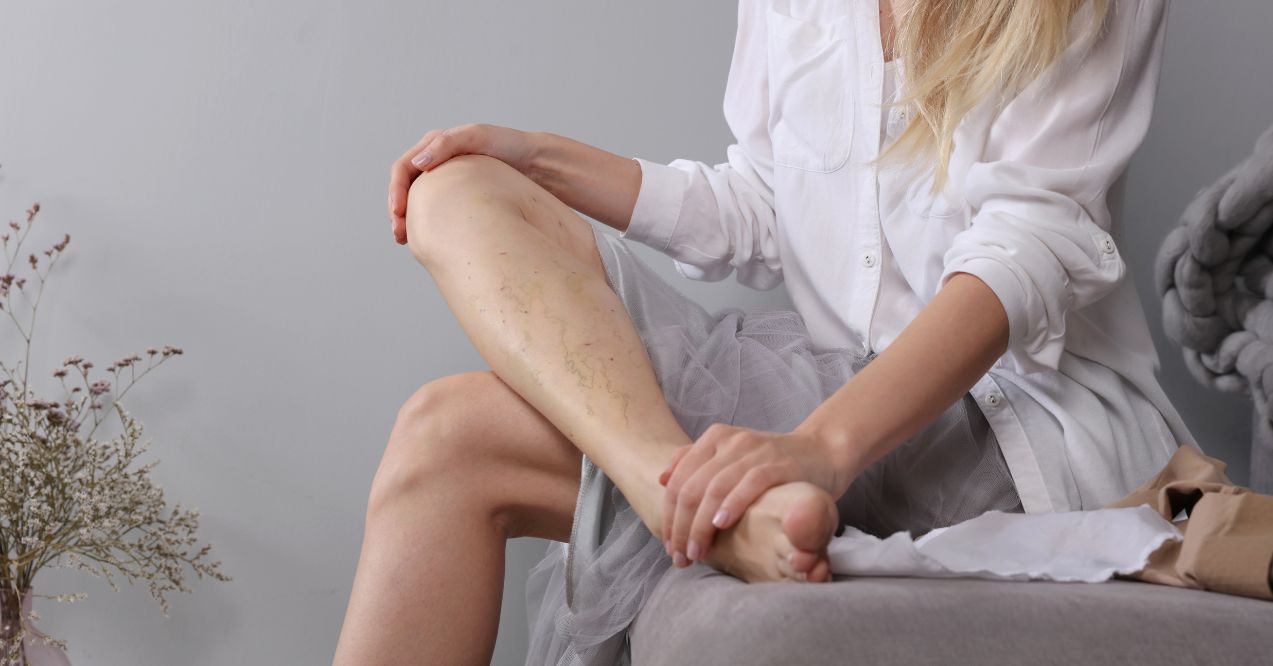
Can varicose veins disappear with exercise? If you’ve noticed twisted, bulging veins on your legs, you’re likely hoping that fitness routines might reverse the damage. These visible veins can cause discomfort, heaviness, and self-consciousness.
While exercise offers meaningful benefits for vein health, it won’t erase existing varicose veins. Regular movement may significantly reduce symptoms, improve circulation, and help keep new veins from forming.
This guide explores what exercise can realistically do for your legs and how to build a safe, effective routine for your vascular health.
Can Varicose Veins Disappear With Exercise?
No, can varicose veins disappear with exercise isn’t something you’ll achieve through movement alone. Once veins become damaged and enlarged, they don’t shrink back to their original state. However, varicose veins physical exercise routines offer real benefits for managing symptoms and protecting vascular health.
Regular movement activates mechanisms that improve blood flow, reduce pooling, and ease the discomfort many people experience. Physical activity addresses some of the factors that worsen vein function, even if it can’t reverse structural damage.
Why varicose veins form in the first place
Varicose veins develop when small valves inside your leg veins stop working properly. These valves normally keep blood flowing upward toward your heart. When they weaken or fail, blood flows backward and pools in the veins.
Gravity makes this worse, especially during long periods of standing or sitting. Over time, the increased pressure causes vein walls to stretch and bulge. The visible, twisted appearance occurs because the damaged vein can no longer handle normal blood volume.
Understanding the difference between spider veins and varicose veins helps you recognize which type you’re dealing with and what to expect from exercise.
What exercise can and can’t do for existing varicose veins
Exercise improves circulation, which may reduce swelling, heaviness, and achiness in your legs. Movement activates your calf muscles, helping push pooled blood back toward your heart. This temporary decompression often eases discomfort during and after physical activity.
However, exercise doesn’t repair damaged valves or shrink enlarged veins. The structural changes already present will remain unless addressed through other methods. Think of movement as symptom management rather than a fix.
Regular activity may slow how quickly the condition progresses and keep new veins from developing, especially when combined with other habits. Tracking the stages of varicose veins can help you see how exercise fits into your vein health strategy.
How the calf pump improves circulation
Your calf muscles function as a secondary circulatory pump. When you walk or move your legs, these muscles contract and squeeze nearby veins. This compression pushes blood upward against gravity, working alongside your heart’s pumping action.
The rhythmic contraction and relaxation creates a vacuum effect that draws blood from smaller vessels. This mechanism explains why sedentary lifestyles worsen vein problems. Without regular calf activation, blood stagnates in the legs. Strengthening and engaging these muscles through targeted movement gives your venous system the help it needs to work more efficiently.
Best Exercises to Help Varicose Veins
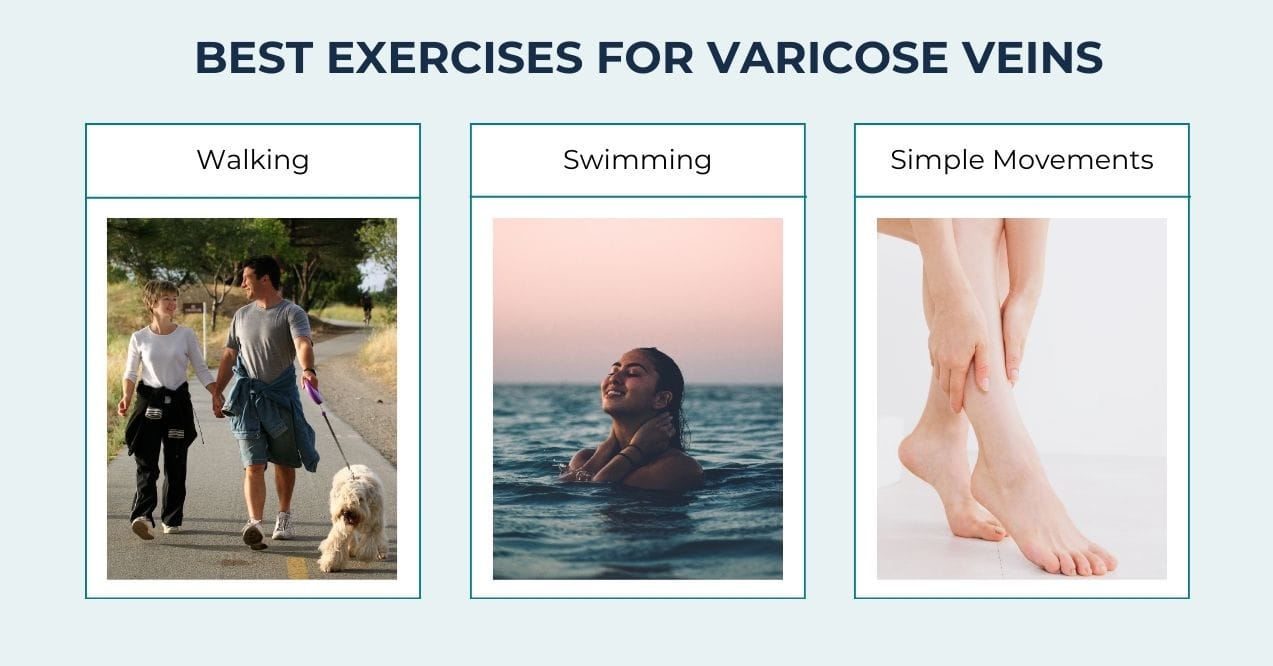
Low-impact activities that engage your leg muscles without straining your veins provide the most benefit. Exercises to help varicose veins should encourage steady circulation while avoiding sudden pressure spikes.
The goal is consistent movement that activates the calf pump and improves blood return. Frequency matters more than intensity for vein health. Daily gentle activity works better than occasional intense workouts when it comes to venous function.
Does walking help varicose veins?
Yes, does walking help varicose veins is one of the most straightforward questions about vein health. Walking ranks among the most effective activities for circulation. Each step contracts your calf muscles and pushes blood upward through your leg veins.
Start with 15 to 20 minutes daily if you’re currently inactive. Gradually increase to 30 to 45 minutes most days of the week. Maintain a moderate pace where you can still hold a conversation. Vary your terrain when possible, as gentle inclines further activate calf muscles. Consistent walking schedules produce better results than sporadic long walks.
Yoga, cycling, and swimming
Yoga poses that elevate your legs may reduce pooling and ease discomfort. Legs-up-the-wall pose allows gravity to move blood back to your heart. Reclined bound angle pose opens hip circulation without straining leg veins. Hold each position for three to five minutes for the best effect.
Swimming provides resistance without impact, making it ideal for vein health. The water pressure naturally compresses leg veins, similar to compression stockings.
Cycling on flat terrain or a stationary bike strengthens legs without jarring movements. Keep resistance moderate and maintain steady pedaling rather than high-intensity intervals.
Simple movements for sedentary lifestyles
Desk-bound routines don’t have to sabotage vein health. Ankle circles and foot flexes can be done while seated, promoting blood flow during long work sessions. Point and flex your toes ten times each hour. Rotate each ankle in both directions, making full circles.
Calf raises work even in small spaces. Stand and slowly lift your heels, rising onto your toes. Hold for two seconds, then lower back down. Complete 15 to 20 repetitions several times daily. These micro-movements add up, keeping your calf pump engaged throughout sedentary periods.
What Exercises Are Bad for Varicose Veins?
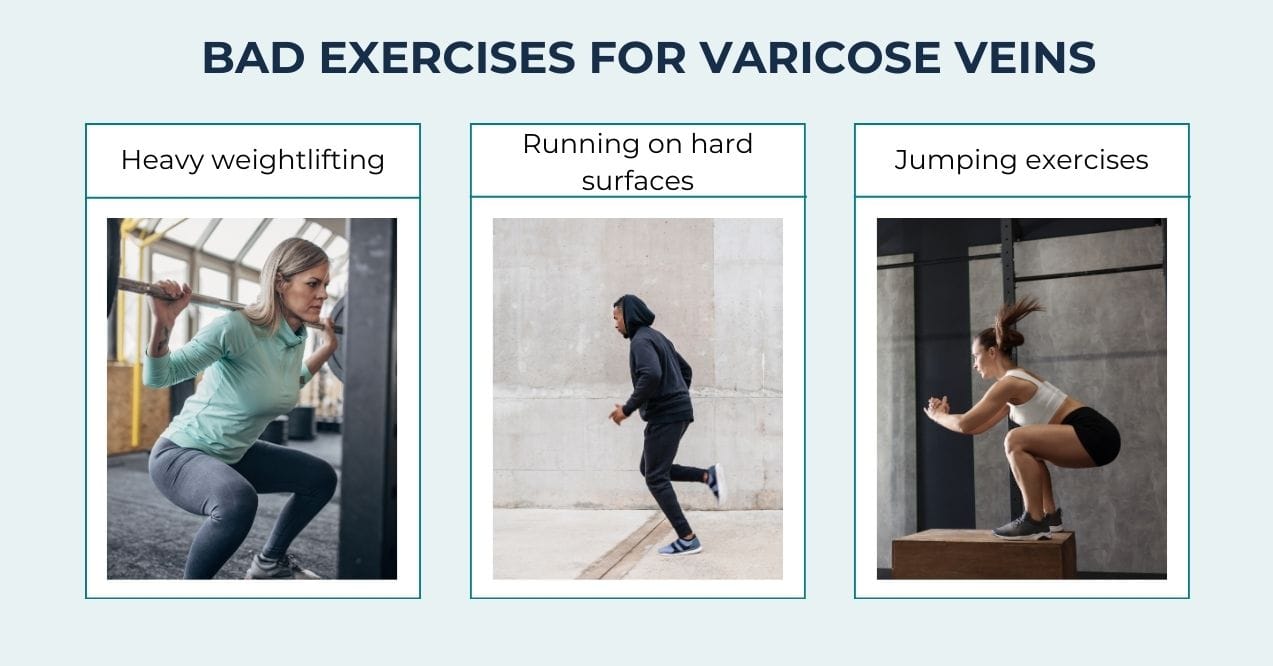
Certain activities increase venous pressure and may worsen symptoms or accelerate vein damage. What exercises are bad for varicose veins typically involve sudden force, prolonged strain, or movements that restrict blood flow.
High-impact actions create pressure waves that stress already-weakened vein walls. Recognizing which exercises to modify or avoid helps you stay active without compromising vein health.
Avoid prolonged standing or high-strain lifting
Heavy weightlifting forces you to hold your breath and bear down. This creates intense intra-abdominal pressure that backs up into leg veins. The temporary pressure spike can damage delicate vein valves over time. If you enjoy strength training, focus on lighter weights with higher repetitions.
Breathe steadily throughout each movement rather than holding your breath. Consider seated or lying exercises that reduce gravitational pressure on leg veins. Modify standing exercises to include movement rather than static holds.
Rethinking high-impact cardio
Running on hard surfaces sends shock waves through your legs with each foot strike. The repeated impact may aggravate varicose vein symptoms and increase discomfort. Jumping exercises like burpees or high-intensity interval training create similar issues. If you experience leg heaviness or achiness after these activities, they may not be suitable for your vein health.
Switch to elliptical machines that provide cardiovascular benefits without impact. Water jogging offers running motion with water’s natural support. Trail running on soft surfaces reduces impact compared to concrete or asphalt.
Varicose Veins and Exercise: Daily Integration
Managing varicose veins and exercise together requires more than just movement alone. Multiple habits working together enhance vein function better than exercise by itself. Small adjustments to your routine amplify the benefits of physical activity while protecting vascular health throughout your day.
Use compression garments during activity
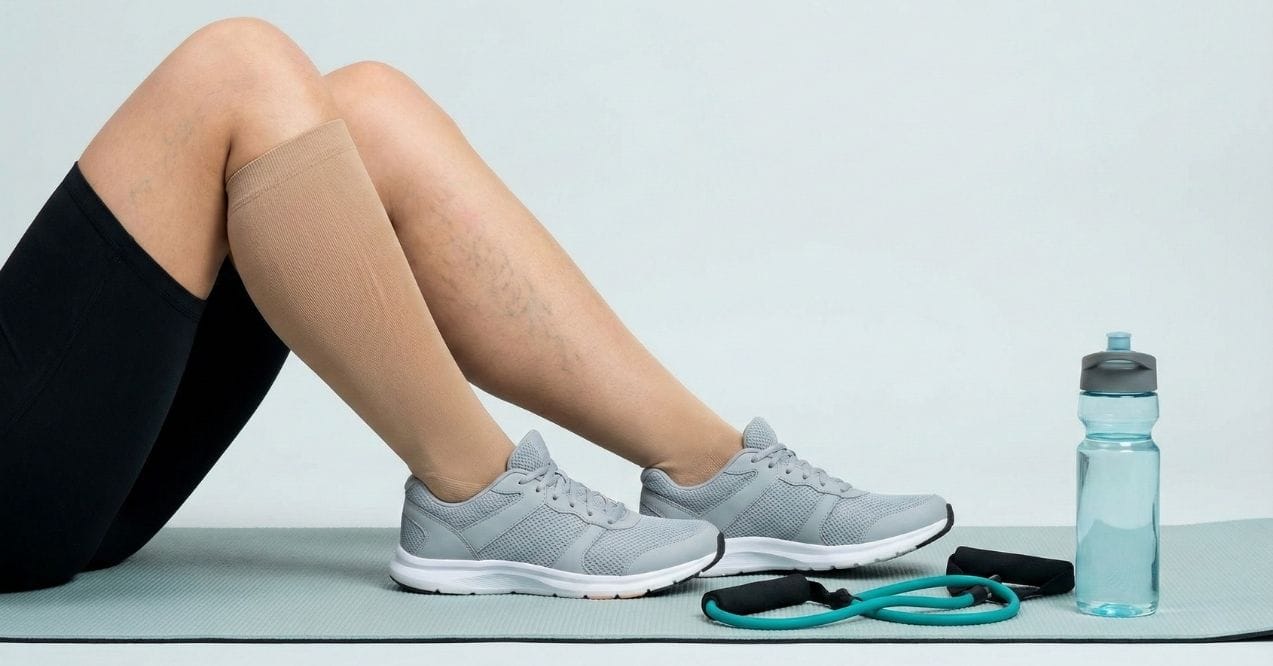
Compression wear applies graduated pressure that assists vein walls during movement. The external compression helps damaged valves close more effectively, reducing blood backflow. Wear compression socks or stockings during walks, gym sessions, or any extended standing.
Choose graduated compression that’s tighter at the ankle and gradually looser up the leg. This design mimics how blood naturally moves and helps push it upward. Put them on first thing in the morning before swelling develops for the best results.
Combine movement with hydration and nutrition
Adequate water intake keeps blood flowing smoothly and prevents thickening that stresses veins. Aim for half your body weight in ounces of water daily, adjusting for activity level. Foods rich in vitamin C and flavonoids may help maintain vein wall strength.
Berries, citrus fruits, and leafy greens provide these nutrients. Reducing sodium intake helps minimize fluid retention that increases vein pressure. Consider adding supplements for vein health to provide specific nutritional building blocks your veins need to work properly.
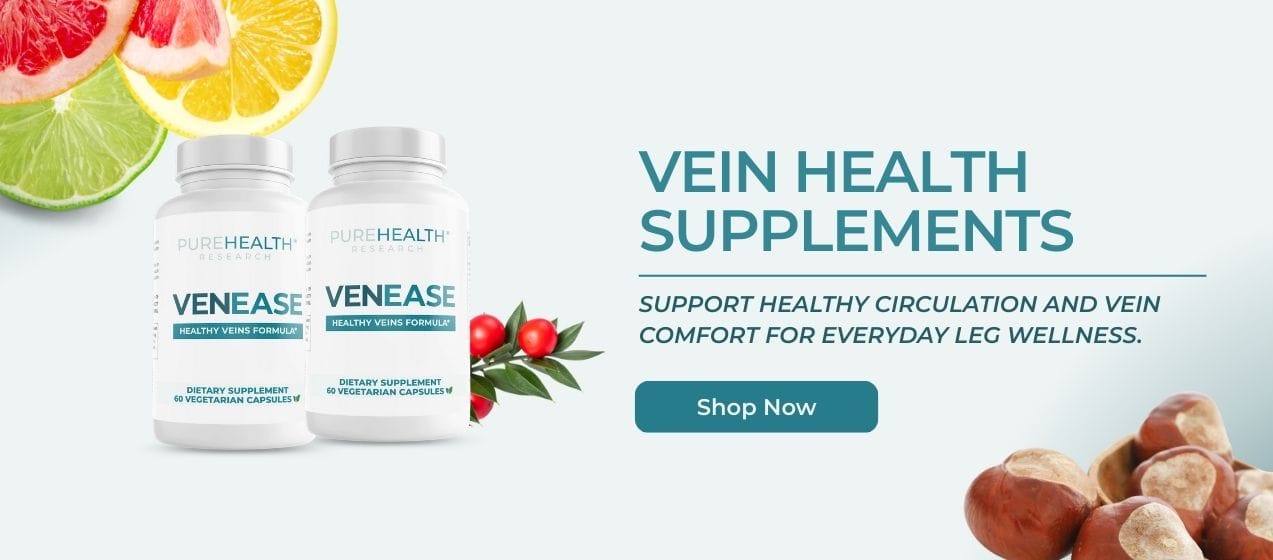
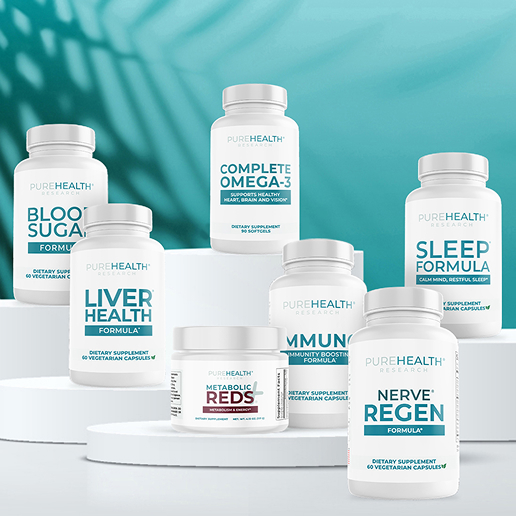
PureHealth Research offers a specialized collection designed to address vascular wellness from multiple angles. Their formulations include ingredients selected for their potential to help maintain vein wall structure and encourage healthy circulation.
Vein Support combines horse chestnut extract, which has been studied for its effects on vein tone, with diosmin and other botanicals traditionally used for circulatory health. These supplements work alongside exercise and lifestyle modifications. When paired with regular physical activity and proper nutrition, these formulations may work with your body’s processes to maintain vascular function and comfort in your legs.
Conclusion
Exercise won’t make varicose veins vanish, but it remains one of your most useful tools for managing symptoms and protecting vein health. Regular low-impact movement activates your calf pump, improves circulation, and may reduce the discomfort that affects daily life. Building a routine that includes walking, swimming, or gentle yoga, while avoiding high-strain activities, gives your veins the help they need. Pair consistent physical activity with compression wear, proper hydration, and nutrition for better results.
Exercise may reduce varicose vein symptoms like swelling and discomfort by improving circulation. However, it won’t shrink or remove existing damaged veins. Regular movement helps keep new veins from forming.
No, will varicose veins go away with exercise is a common misconception. Exercise improves blood flow and symptoms but doesn’t reverse structural vein damage. Existing varicose veins require other approaches for removal.
Yes, most low-impact exercise is safe and beneficial with existing varicose veins. Walking, swimming, and yoga typically help rather than harm. Avoid high-impact activities and heavy lifting that increase vein pressure.
No, you don’t need to avoid the gym entirely. Focus on cardio machines, light weights, and proper breathing. Skip exercises that require prolonged standing or heavy lifting. Wear compression garments during workouts.
Sign up for our Healthy Living newsletter!
Advertisement. This site offers health, wellness, fitness and nutritional information and is designed for educational purposes only. You should not rely on this information as a substitute for, nor does it replace, professional medical advice, diagnosis, or treatment. If you have any concerns or questions about your health, you should always consult with a physician or other health-care professional. Do not disregard, avoid or delay obtaining medical or health related advice from your health-care professional because of something you may have read on this site. The use of any information provided on this site is solely at your own risk.
Related Articles
How to Avoid Getting Spider Veins
Written by Donatas Leikas | January 5, 2026
Why Do My Legs Feel Heavy and Weak All the Time?
Written by Donatas Leikas | January 2, 2026
Spider Veins on Ankles: Causes, Prevention & Solutions
Written by Donatas Leikas | October 23, 2024
How to Cover Spider Veins on Legs? 4 Best Tips
Written by Donatas Leikas | August 22, 2024
Do Spider Veins Itch? Everything You Need to Know
Written by Donatas Leikas | July 16, 2024
Spider Veins on Face? Common Causes and Treatments
Written by Donatas Leikas | March 22, 2024