Can I Take Iron and Vitamin C Together?
Can I take iron and vitamin C together? Discover how this nutrient pairing may improve absorption, when it helps most, and practical tips.


 On This Page:
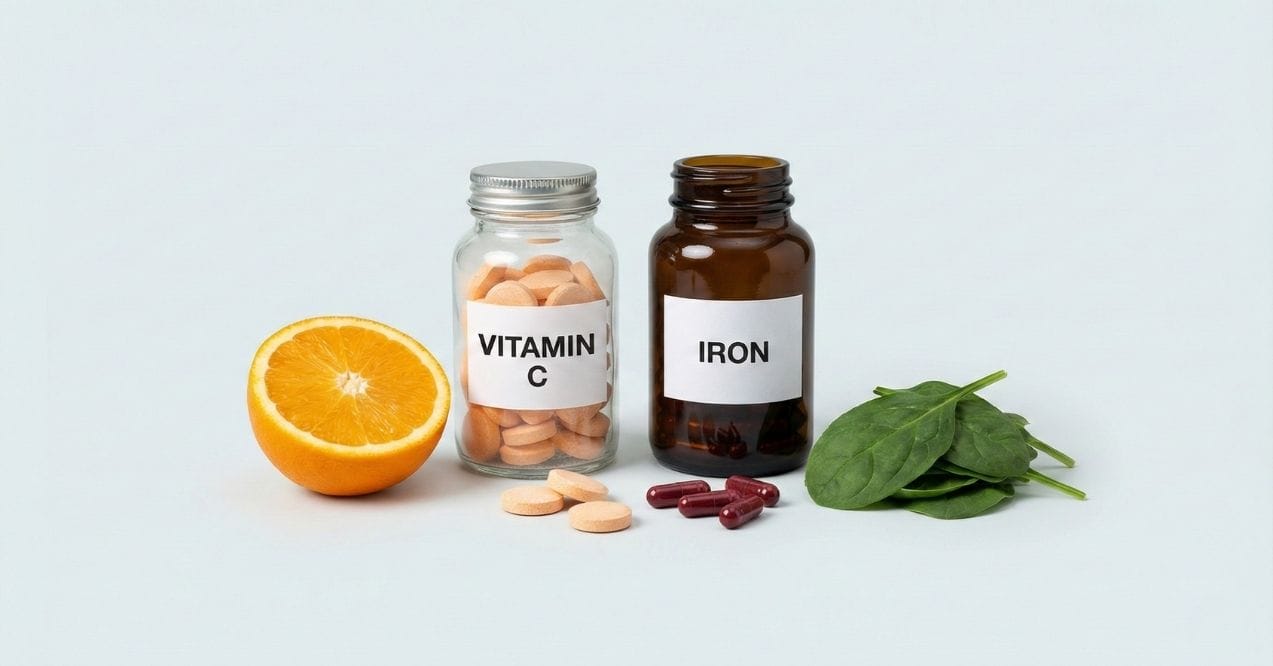
Can I take iron and vitamin C together? This question comes up frequently for anyone focused on getting more from their nutrients. The short answer is yes, but whether you should depends on your situation.
Pairing these two nutrients has been a common recommendation for decades, particularly for those concerned about low iron levels. Understanding when this combination may benefit you requires looking at how your body processes iron, what role vitamin C plays, and what the latest research shows.
Can Iron and Vitamin C Be Taken Together?
Yes, iron and vitamin C can be taken together safely. The practice stems from vitamin C’s potential to improve how your body absorbs certain forms of iron.
While older nutritional guidance strongly encouraged this pairing, recent clinical evidence suggests the benefits may be more nuanced than previously thought.
The key is understanding that not all iron is the same, and the advantages of adding vitamin C depend largely on which type of iron you’re consuming.
How Your Body Absorbs Iron
Your body handles two distinct forms of dietary iron differently. Heme iron, found in animal products, gets absorbed relatively efficiently on its own. Non-heme iron, present in plant foods and most supplements, faces more obstacles during absorption.
The process depends on stomach acidity and various food compounds that can either help or block iron uptake. Factors like phytates in grains and tannins in tea can significantly reduce how much non-heme iron your body actually uses. This makes absorption boosters particularly valuable for those relying on plant-based iron sources.
What Vitamin C Does in Your Gut
Vitamin C (ascorbic acid) works through multiple mechanisms to potentially help iron absorption. First, it increases acidity in your digestive tract, creating an environment where iron remains more soluble. Second, ascorbic acid chemically reduces ferric iron (Fe³⁺) to ferrous iron (Fe²⁺), a form your intestinal cells can more easily transport.
Third, vitamin C forms a chelate with iron, essentially wrapping around the mineral to keep it soluble and available. This protective effect may be particularly relevant for non-heme iron absorption.
What the Research Shows
A 2020 study published in JAMA Network Open examined whether adding vitamin C to iron supplements provided meaningful benefits for people with iron deficiency. The research found that taking iron supplements with vitamin C did not produce clinically significant improvements in hemoglobin or ferritin levels compared to iron alone.
However, studies focusing on dietary iron, particularly from plant sources, show more promising results. The difference appears to be that supplement formulations already make iron more bioavailable, whereas dietary non-heme iron faces more absorption barriers that vitamin C may help overcome.
When Should You Take Iron Pills with Vitamin C?
Taking iron pills with vitamin C makes the most sense in specific situations. If you’re consuming iron-rich plant foods or relying on basic iron supplements without added absorption boosters, vitamin C may provide a meaningful difference.
The context matters significantly: someone eating a spinach salad will likely benefit more from adding vitamin C than someone taking a well-formulated iron supplement already designed for better absorption.
For Plant-Based Iron Sources
Plant-based eaters face unique challenges since vegan iron sources provide exclusively non-heme iron. Research consistently shows that vitamin C can substantially increase non-heme iron absorption from foods like legumes, dark leafy greens, and fortified grains. One study found that adding 100 mg of vitamin C to a meal increased iron absorption by 67%.
This makes vitamin C particularly valuable if you’re following a vegetarian or vegan eating pattern. Practical strategies include squeezing lemon on iron-rich dishes, adding bell peppers to bean meals, or drinking citrus juice with iron-fortified cereals.
For Iron Supplements
Many iron supplement formulas already include vitamin C in their formulation, recognizing the potential synergy. If you’re taking a basic ferrous sulfate or ferrous gluconate supplement without added ascorbic acid, pairing it with vitamin C may offer some advantage, though clinical evidence for this approach remains mixed.
The research cited earlier suggests that for addressing iron deficiency through supplementation, vitamin C provides minimal added benefit beyond what the iron supplement accomplishes alone. This doesn’t mean the combination is harmful, but it may not be as essential as once believed for supplement users.
When looking for a simpler approach, an iron and vitamin C supplement that combines both nutrients in research-based ratios can streamline your routine. PureHealth Research’s Iron supplement includes 18 mg of iron alongside vitamin C, plus complementary nutrients like vitamin B12 and folic acid that help with healthy red blood cell formation.
This formulation eliminates the guesswork of combining separate supplements, providing nutrients in forms your body can readily use. The inclusion of gentle iron bisglycinate may also help minimize the digestive discomfort some people experience with traditional iron supplements, while the vitamin C content potentially helps absorption without requiring additional supplementation.
How to Take Them
To potentially get better iron absorption when combining it with vitamin C, consider these research-based approaches:
Timing: Take your iron supplement with a small glass of orange juice (providing about 75-90 mg of vitamin C) or with a vitamin C supplement of 100-200 mg. On an empty stomach works best if you tolerate it well.
What to avoid: Don’t consume iron with calcium-rich foods, coffee, or tea within two hours before or after, as these can significantly block absorption. Even moderate amounts of these can counteract vitamin C’s potential benefits.
Food combinations: Pair iron-rich meals with vitamin C sources like strawberries, kiwi, tomatoes, or bell peppers for a natural absorption boost.
Should You Take Vitamin C with Iron?

The decision to combine vitamin C with iron depends on your circumstances, dietary patterns, and whether you’re using basic iron supplements or consuming plant-based iron sources. While the pairing is generally safe, understanding when it may offer meaningful advantages helps you make informed choices about your supplement routine.
Potential Benefits
The primary advantage of taking vitamin C with iron lies in potentially improved absorption of non-heme iron, particularly from plant sources. For those who avoid animal products or prefer plant-based eating, this strategy may help improve iron status without dramatically increasing iron intake.
The approach is also remarkably easy to implement, requiring nothing more than thoughtful food pairing or an inexpensive vitamin C supplement. Since both nutrients are water-soluble and generally well-tolerated, the risk of adverse effects remains low for most individuals when taken at appropriate doses.
When It May Not Help
If you’re already taking a well-formulated iron supplement specifically designed to address deficiency, adding extra vitamin C may not provide substantial added benefit based on current research. Similarly, if your diet naturally includes abundant vitamin C from fruits and vegetables consumed throughout the day, your body already has enough ascorbic acid to help iron absorption from meals.
Individual variation in absorption efficiency means some people naturally absorb iron well without needing additional strategies. Blood work can help you and your healthcare provider determine whether your current approach is adequate for keeping iron levels where they should be.
Things to Consider
While generally considered safe, taking high doses of vitamin C with iron isn’t appropriate for everyone. People with hereditary hemochromatosis or other iron overload conditions should avoid strategies that increase iron absorption. Excessive vitamin C (typically above 2,000 mg daily) can cause digestive upset, including nausea and loose stools.
Keep in mind that supplements help but don’t replace a balanced, varied eating pattern rich in whole foods. Individual needs vary considerably, and what works well for one person may not be ideal for another.
How Much Vitamin C to Take with Iron
Determining the right amount of vitamin C to pair with iron involves balancing potential absorption benefits with practical considerations. Research provides some guidance, but the ideal dose may vary based on whether you’re addressing plant-based iron in foods or taking iron supplements.
Research-Based Dosage Range
Studies examining vitamin C’s effects on iron absorption typically use doses between 100-200 mg of ascorbic acid. One intervention found that approximately 164 mg of vitamin C added to an iron-rich meal significantly improved absorption. For supplement users, doses at the lower end of this range appear sufficient to potentially provide benefits without causing digestive discomfort.
Research suggests that vitamin C’s absorption-boosting effects may plateau beyond 200 mg, meaning higher doses don’t necessarily provide proportionally greater benefits. This makes moderate amounts both cost-effective and practical for most people.
Getting Vitamin C from Food
Obtaining vitamin C through whole foods offers the advantage of added nutrients and fiber. A medium orange provides approximately 70 mg of vitamin C, while a cup of chopped red bell pepper delivers about 190 mg. Other excellent sources include strawberries (85 mg per cup), kiwi (64 mg per fruit), and broccoli (81 mg per cup cooked).
Tomatoes, whether fresh or cooked, offer 15-25 mg per serving. Pairing any of these foods with iron-rich meals creates natural synergy. For example, adding sliced strawberries to an iron-fortified breakfast cereal or serving bell pepper strips with hummus combines iron and vitamin C effortlessly.
Supplement vs Food
Vitamin C supplements provide convenience and consistent dosing, particularly useful if your diet lacks vitamin C-rich foods or if you prefer taking iron on an empty stomach away from meals. Quality supplements use ascorbic acid or mineral ascorbates, both well-absorbed forms.
However, whole foods deliver vitamin C alongside other beneficial plant compounds, including flavonoids and carotenoids that may help overall health. Fruits and vegetables also provide fiber that aids digestive function. If you choose supplements, look for products from reputable manufacturers that verify purity and potency through third-party testing.
Conclusion
Can I take iron and vitamin C together? Yes, and for certain individuals, particularly those relying on plant-based iron sources, this combination may meaningfully help absorption. The evidence suggests that while the pairing may not provide dramatic benefits for those taking well-formulated iron supplements, it remains a safe, practical strategy with potential advantages for the right person. Your needs, dietary patterns, and health context should guide your decision. Consider discussing your specific situation with a qualified healthcare professional.
Yes, iron and vitamin C can safely be taken together. This combination may improve absorption of non-heme iron, particularly from plant-based sources, though benefits vary by individual and iron form.
Vitamin C may increase non-heme iron absorption by keeping iron soluble in the digestive tract and reducing it to a more absorbable form. This potentially benefits those relying on plant-based iron.
Yes, you can take iron and vitamin C at night, though taking iron on an empty stomach may improve absorption. Some people experience better tolerance when taking iron with food before bed.
Calcium-rich dairy products, coffee, tea, and whole grains high in phytates can significantly block iron absorption. Avoid consuming these within two hours of taking iron supplements or eating iron-rich meals.
Sign up for our Healthy Living newsletter!
Advertisement. This site offers health, wellness, fitness and nutritional information and is designed for educational purposes only. You should not rely on this information as a substitute for, nor does it replace, professional medical advice, diagnosis, or treatment. If you have any concerns or questions about your health, you should always consult with a physician or other health-care professional. Do not disregard, avoid or delay obtaining medical or health related advice from your health-care professional because of something you may have read on this site. The use of any information provided on this site is solely at your own risk.
Related Articles
GLP-1 and Inflammation: What Current Research Suggests
Written by Donatas Leikas | March 27, 2026

Does Matcha Cause Infertility?
Written by Donatas Leikas | January 26, 2026
Does Soy Sauce Cause Heartburn?
Written by Donatas Leikas | October 10, 2025

Can a Hearing Aid Cause Vertigo?
Written by Vytautas Vaitkevicius | September 30, 2025

Why Do I Always Have Mucus in My Throat?
Written by Donatas Leikas | September 23, 2025

PureHealth Research Will Be Available at 643 The Vitamin Shoppe Stores Nationwide
Written by Donatas Leikas | September 12, 2025