Is Kombucha Good for Weight Loss?
Kombucha is not a magic fat burner. However, using kombucha for weight loss can help when it replaces high-calorie, sugary drinks and supports a healthy gut.



 On This Page:
Kombucha shows up in almost every wellness feed, usually with a promise attached to it. So is kombucha good for weight loss, or is it simply a well-marketed soda replacement? The honest answer sits somewhere in the middle.
This fermented tea will not melt fat on its own, though it may help as part of a wider weight management plan when it replaces sugary drinks. Below, we look at what the research suggests, how a simple drink swap creates real calorie savings, and how to spot the hidden sugar in many commercial bottles.
Does Kombucha Help With Weight Loss?
When people ask, is kombucha good for weight loss, the accurate answer is that it may help indirectly rather than directly. A systematic review of human studies found that the evidence for kombucha’s health effects in people remains limited, with most findings coming from laboratory or animal work rather than large clinical trials.
That does not make the drink useless. It means the realistic benefits come from swapped calories, fermentation compounds, and gut balance rather than from anything acting on fat itself.
For a broader look at the drink, our guide on whether kombucha is good for you covers more ground. The three reasons below are the ones worth your attention.
The Power of the Beverage Swap
This is the most reliable reason, and it is simple arithmetic. A 12-ounce cola carries around 140 calories, while a low-sugar kombucha may sit closer to 30 or 40. Make that swap once a day and you have quietly removed roughly 700 calories from your week without changing a single meal. Nothing about the kombucha is doing the work here; the calorie drop is.
Acetic Acid and Metabolic Support
Fermentation produces acetic acid, the compound behind kombucha’s tangy bite and the same acid that gives apple cider vinegar its sharpness. Research on vinegar intake suggests acetic acid may support normal glucose metabolism and a steadier metabolic response after meals.
Most of this work used vinegar rather than kombucha, and amounts differed from a typical bottle, so treat it as early supporting evidence rather than a settled outcome.
Gut Microbiome Diversity
Unpasteurized kombucha contains live cultures introduced during fermentation, and these may contribute to the bacterial diversity already present in your digestive tract. A more balanced microbiome has been associated with more comfortable digestion and more efficient nutrient absorption.
The connection to body weight is real but modest and still being mapped. If digestive comfort is your main interest, our article on kombucha and bloating goes deeper.
The Hidden Sugar Problem in Store-Bought Bottles
Any discussion of kombucha and weight loss has to address sugar, because fermentation starts with sweetened tea. The SCOBY, or symbiotic culture of bacteria and yeast, consumes much of that sugar as it works, which is why a well-fermented brew tastes tart rather than sweet.
The problem appears afterward. Many brands add fruit juice or cane sugar once fermentation ends to soften the taste, and that one step can turn a light drink into something closer to soda.
Two bottles from the same shelf can differ by 20 grams of sugar, so the word kombucha on the front tells you very little.
How to Read a Kombucha Nutrition Label
Use three checks before buying:
- Sugar per serving. Look for less than 6 grams per 8-ounce serving.
- Servings per container. A 16-ounce bottle often lists two servings, which doubles every number on the panel.
- Ingredient order. Cane sugar or juice concentrate near the top of the list usually signals post-fermentation sweetening.
How Kombucha Compares to Common Beverages
| Beverage Type | Average Calories (per 12 oz) | Average Sugar (per 12 oz) | Verdict for Weight Management |
| Regular cola | 140 | 39 g | Poor choice for a daily habit |
| Sweetened iced tea | 120 | 30 g | Similar burden to soda |
| Orange juice | 165 | 31 g | Nutritious, but calorie dense |
| Regular beer | 150 | 0 g | Calories without satiety |
| Sweetened kombucha | 90 to 120 | 18 to 24 g | Better than soda, still significant |
| Low-sugar kombucha | 30 to 45 | 2 to 6 g | Strong swap for sugary drinks |
| Sparkling water | 0 | 0 g | Best for everyday hydration |
Values are typical ranges and vary by brand, so always confirm against the label.
Practical Tips for Adding Kombucha to Your Routine
Getting value from kombucha tea and weight loss efforts comes down to placement rather than volume. Treat it as a swap for something you already drink, not an extra on top, since adding it to water you were drinking anyway only adds calories.
Start with 4 to 8 ounces a day rather than a full bottle, especially if fizzy or acidic drinks tend to unsettle your stomach. Drinking it with food instead of sipping it all afternoon is also gentler on tooth enamel. The three habits below make the biggest difference.
Managing Afternoon Sweet Cravings
That mid-afternoon pull toward something sweet is often about ritual and stimulation as much as hunger. The tartness and carbonation of kombucha may satisfy that urge with a fraction of the calories of a vending machine option, and the small amount of caffeine and B vitamins may provide a mild lift. Our piece on whether kombucha gives you energy explains what to realistically expect.
Skipping the Liquid Sugar with Powdered Alternatives
Bottled kombucha is not the only route, and it is rarely the most practical one if you are tracking sugar and carbohydrates closely. PureHealth Research Gut Kombucha is an instant kombucha tea powder built for that exact situation, since it skips the sweetened bottle without asking you to give up the fermented tea habit.
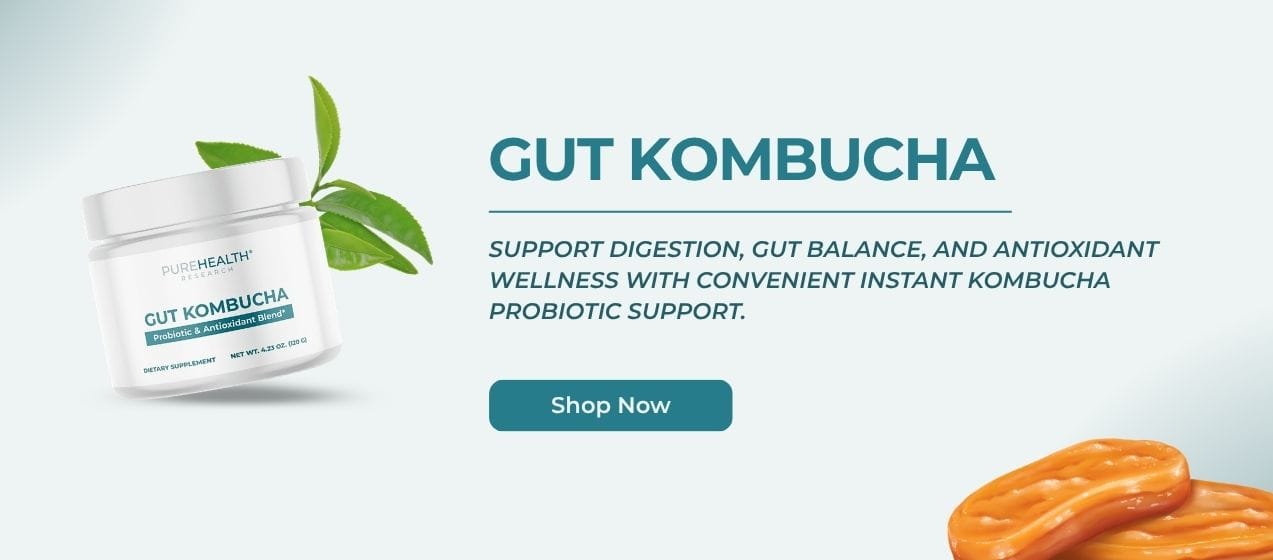
It uses one ingredient, InstaKOMBU™ Oolong Tea Kombucha Powder, a fermented oolong blend that supplies probiotics, organic acids, and antioxidants. It is made to help keep your gut bacteria in balance and support healthy digestion as part of a daily routine.
The practical differences matter more than most shoppers expect:
- No brewing and no fridge. One 4 gram scoop stirred into 8 ounces of cold water, once a day.
- One ingredient, nothing else. The panel lists only the fermented tea powder, with no juice or cane sugar added back in.
- Fits most diets. Vegan friendly, non-GMO, gluten-free, soy-free, and dairy-free.
- Portable. A 30-serving jar travels in a bag. A case of glass bottles does not.
It is made in the USA in an SQF-certified facility and tested by a third-party lab. It fills the same slot in your day as a bottled kombucha, minus the fridge space and the label math.
Pre-Meal Timing for Satiety
Try 4 to 8 ounces about 15 to 20 minutes before eating. Carbonation and fluid volume may create a temporary sense of fullness in the stomach, which some people find helps them eat more slowly and finish satisfied with less. The effect is modest and short-lived, so treat it as a small assist to mindful eating rather than a portion control method by itself.
Conclusion: So, Is Kombucha Good for Weight Loss?
Kombucha earns its place as a gut-friendly stand-in for sugary drinks, not as a shortcut. Its value shows up when it replaces something heavier in your day and when you read the label closely enough to skip the sweetened versions. Pair that with balanced meals and regular activity, and it becomes a useful part of the routine. If sugar is your sticking point, a low-sugar or powdered option is a sensible place to start.
No drink targets fat in one area. Body fat reduces overall through a sustained calorie deficit, adequate protein, and regular movement. Kombucha may support that process only by replacing higher-calorie drinks.
Not in any meaningful way. Green tea compounds and acetic acid may have small metabolic effects in research settings, but the changes are minor and unlikely to influence weight on their own.
Choose unpasteurized, low-sugar varieties with under 6 grams of sugar per 8-ounce serving. Instant powdered versions work well when you want the fermented tea habit without a sweetened bottle.
Timing does not change calorie balance. Kombucha contains a small amount of caffeine, so drinking it late may affect sleep quality, and poor sleep tends to make appetite regulation harder.
Both contain acetic acid, so they overlap. Kombucha is usually more palatable and adds live cultures, while vinegar is more concentrated. Either may fit; neither works without other changes.
Generally no. Hard kombucha typically contains 4 to 7 percent alcohol and more calories than standard versions. Treat it like beer or wine rather than a wellness drink.

Advertisement. This site offers health, wellness, fitness and nutritional information and is designed for educational purposes only. You should not rely on this information as a substitute for, nor does it replace, professional medical advice, diagnosis, or treatment. If you have any concerns or questions about your health, you should always consult with a physician or other health-care professional. Do not disregard, avoid or delay obtaining medical or health related advice from your health-care professional because of something you may have read on this site. The use of any information provided on this site is solely at your own risk.
Related Articles
Does Ashwagandha Make You Lose Weight?
Written by Karolina Rutkute | April 1, 2026
How to Lose Face Fat: 10 Effective Tips
Written by Karolina Rutkute | March 12, 2026

Is Matcha Good for Weight Loss?
Written by Karolina Rutkute | January 19, 2026

Do Men Process Carbs Differently Than Women?
Written by Karolina Rutkute | June 16, 2025

What Are the Natural Alternatives To Ozempic?
Written by Karolina Rutkute | May 12, 2025
What is Metabolic Confusion and Can it Benefit You?
Written by Karolina Rutkute | February 21, 2025