Is Kombucha Actually Good for You?
Kombucha offers potential gut and antioxidant support through its natural probiotics and tea polyphenols. However, high sugar content, trace alcohol, and acidity mean it should be consumed carefully and in moderation.



 On This Page:
Kombucha has moved from niche health shops to the refrigerated aisle of nearly every grocery store, and the claims on the labels have grown right along with sales.
So is kombucha actually good for you? The short answer is yes, it may offer real support, though it is not the cure-all that marketing suggests. People often research foods for bladder health or gut health carefully, then overlook what a trendy fizzy drink does to those same systems.
This guide covers what the science genuinely supports, what the nutrition label hides, and how much fits comfortably into a normal week.
Is Kombucha Healthy? What the Science Actually Supports
Kombucha is fermented sweetened tea, made by adding a SCOBY (symbiotic culture of bacteria and yeast) to black or green tea and letting it sit for one to four weeks. The result is a tangy, lightly carbonated drink containing live cultures, organic acids, and the polyphenols carried over from the tea leaves.
The honest position is that human research remains thin. A systematic review of the available evidence found that most published claims trace back to laboratory or animal work rather than controlled human trials.
That does not make the drink useless. It means the realistic benefits are modest and worth describing accurately.
Gut-Supporting Probiotics and Fermentation
Fermentation produces lactic-acid bacteria and yeasts that may help keep gut bacteria in better balance. The catch is consistency: the exact strains and their counts vary widely between brands, batches, and even bottles from the same batch.
Unlike a labeled probiotic, kombucha gives you no way to know what you are actually getting, which makes results unpredictable from one purchase to the next.
Antioxidant Power from Black and Green Tea
Kombucha’s best-supported benefit comes from its base ingredient. Black and green tea supply polyphenols, plant compounds that act as antioxidants and may help the body limit everyday cell damage.
Fermentation appears to increase polyphenol availability somewhat. Plain brewed tea delivers much of this same value, which is worth weighing if sugar or cost matters to you.
Acetic Acid and Metabolic Support
The sharp, vinegary tang comes from acetic acid, the same organic acid found in apple cider vinegar. Acetic acid has mostly been studied in vinegar research, where it has been examined for its role in carbohydrate metabolism and for natural antimicrobial activity.
Kombucha contains smaller and more variable amounts than vinegar does, so it is not clear whether those findings carry over. Treat this as an open question rather than a settled benefit.
The Gut-Brain Connection
The gut and nervous system communicate constantly through what researchers call the gut-brain axis. Most of the body’s serotonin is produced in the digestive tract, and animal research has examined how gut bacteria influence that process.
Researchers continue to study the relationships among diet, gut bacteria, and nervous-system function. Current evidence does not establish that kombucha improves mood.
Kombucha Health Claims: Science vs. Hype
| Claimed Benefit | What the Science Actually Says | Reader Takeaway |
| Antioxidant support | Well established for tea polyphenols in human research | The most dependable reason to drink it |
| Gut support | Plausible, but strains vary by batch and human trials are limited | May help; results are inconsistent |
| Immune support | Indirect, based on gut and polyphenol research | Reasonable but unproven for kombucha specifically |
| Weight loss | No human evidence for kombucha alone | Useful only as a swap for sugary drinks |
| Slowing malignant cell growth | Cell-culture and animal studies only | Not applicable to people at this stage |
| Liver support | Animal studies, small samples | Interesting, far from confirmed |
| Energy | Tied to tea caffeine rather than fermentation itself | Mild, and it varies by product |
Unpacking the “Kombucha Buzz”: Does It Give You Energy?
Many brands market kombucha as a clean energy drink, and drinkers do often report a light lift. The explanation is simpler than the packaging suggests.
Kombucha starts as tea, so a serving carries some caffeine, though the amount shifts with the tea used, the fermentation time, and the brand. Fermentation itself does not create energy. It creates conditions that leave a few compounds behind.
If you want the full breakdown of what drives that lift, our guide to whether kombucha gives you energy walks through it in detail. The practical point is that the effect is mild and short, closer to a cup of green tea than to a canned energy drink.
B-Vitamins and Cellular Energy
Fermentation can produce small amounts of B vitamins, which play a role in converting food into usable cellular energy. Reported amounts vary considerably depending on the tea, the culture, and how the batch was made.
Kombucha is not a dependable source of these vitamins compared with a varied diet, so treat them as a bonus rather than a reason to drink it.
L-Theanine and Caffeine from Tea
Tea leaves also contribute L-theanine, an amino acid studied alongside caffeine. Research on this pairing at specific measured doses has looked at attention and at the edginess caffeine alone can cause.
Kombucha carries small and variable amounts of both, and those study doses cannot be assumed to apply to any given bottle.
When Kombucha Isn’t Good for You
Every benefit above comes packaged in a liquid that also carries sugar, acid, and trace alcohol. These are the parts competitor articles tend to mention briefly and move past.
The Sugar Trap on the Nutrition Label
Sugar is required to make kombucha; the yeast consumes it during fermentation. The issue is what happens afterward, when many brands add juice, syrup, or cane sugar back in for flavor.
Check the “added sugars” line rather than total sugars, and keep in mind that 4 grams equals roughly one teaspoon. Some bottles hold 20 grams or more.
Acidity and Digestive Upset
Kombucha sits at a pH between roughly 2.5 and 4.2, which is acidic enough to irritate a sensitive stomach or wear at tooth enamel with heavy daily use. Drinking through a straw and rinsing with water afterward reduces enamel contact.
A sudden influx of live cultures and carbonation can also cause gas and bloating, something we cover further in our piece on kombucha and bloating.
Trace Alcohol and Pasteurization
Fermentation produces alcohol as a byproduct. Commercial kombucha marketed as a non-alcoholic beverage is intended to stay below 0.5% ABV, though levels vary and can rise if fermentation continues after bottling.
Raw, unpasteurized kombucha keeps its live cultures, which is why pregnant women and people with weakened immune function are usually advised to skip it. Pasteurization reduces viable microorganisms, including potentially unwanted ones, but it also reduces or eliminates the live cultures.
How to Read a Kombucha Nutrition Label
| What to Look For | Red Flags | Why It Matters |
| Serving size vs. bottle size | 16 oz bottle listed as 2 or more servings | The numbers on the panel are not the whole bottle |
| Added sugars | Compare across products, and check bottle size too | Flavoring sugar is often added after fermentation |
| Alcohol content | Anything at or above 0.5% ABV | If you avoid alcohol, check the manufacturer’s information |
| Caffeine | No figure given | Naturally occurring caffeine is not always declared; ask the manufacturer |
| Raw vs. pasteurized | “Raw” with no storage guidance | Raw keeps cultures; pasteurized keeps shelf stability |
| Ingredient list | Juice concentrate near the top | Concentrates may contribute sugars; read the Nutrition Facts alongside it |
How Much Kombucha Should You Drink a Day?
There is no universally established daily intake for kombucha. The most cited figure comes from a 1995 report noting that roughly 4 ounces per day may not cause adverse effects in healthy people. It was never a recommended intake, and it has not been formally updated since.
Here is the detail almost everyone misses: a standard bottle holds 14 to 16 ounces, which is three to four of those servings. Drinking the whole thing at once delivers a sudden load of yeast, acid, and carbonation, and that is where bloating and stomach upset usually come from.
So can you drink kombucha everyday? There is no confirmed answer on long-term daily use. People who choose to drink it may consider starting with a small serving while accounting for sugar, caffeine, acidity, alcohol, personal tolerance, and any guidance they have been given.
A Convenient Way to Add Kombucha to Your Routine
Bottled kombucha is not the only way to add fermented tea compounds to your routine. PureHealth Research Kombucha tea powder features InstaKOMBU™ Oolong Tea Kombucha Powder in an instant, measured format designed to support healthy digestion and a balanced gut microbiome.
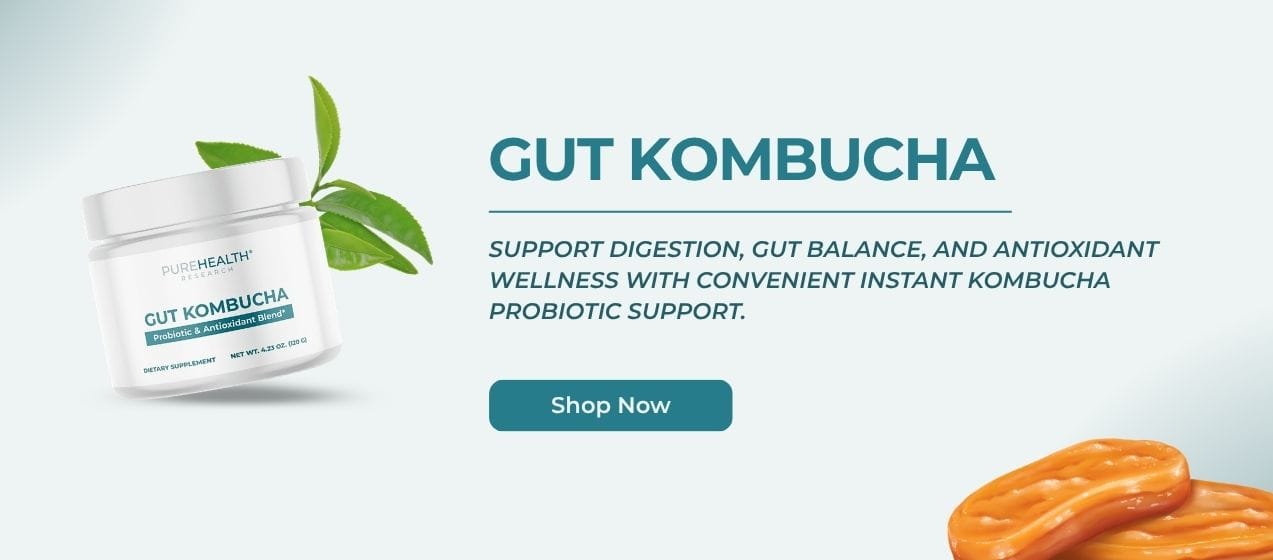
Each scoop also provides kombucha-derived organic acids and antioxidant compounds that help maintain the body’s natural antioxidant defenses. Unlike traditional kombucha, there is no brewing process or refrigerated bottle to manage. Simply mix one scoop with 8 fluid ounces of water or another non-hot beverage.
For people who find the taste, carbonation, or inconsistency of bottled kombucha difficult to fit into a daily habit, the powdered format offers a simple and convenient alternative. It delivers a consistent serving while keeping the focus on digestive balance, beneficial gut flora, and everyday antioxidant support.
Conclusion
Kombucha may be a supportive addition to a balanced diet when you choose a low-sugar option and drink it in moderation. Its antioxidant value is real, its probiotic value is likely but inconsistent, and its bigger claims remain unproven in people. What you eat and drink most days matters far more than any single trendy beverage, and a measured powder offers a simpler way to keep that habit going.
Kombucha may support gut balance through live cultures and supply antioxidants from its tea base. It also works well as a lower-sugar swap for soda, provided you check the added sugar line first.
No established daily intake exists. Many people start with a small serving, roughly a quarter of a standard bottle, and watch how they respond. Large daily servings raise sugar, acid, and caffeine intake.
Kombucha typically carries far less sugar and adds live cultures and tea polyphenols, which soda offers nothing of. Sweetened kombucha brands narrow that gap considerably, so labels still matter.
A supplement lists specific strains and counts, giving you a predictable dose. Kombucha varies by batch and brand, but contributes tea polyphenols and organic acids a capsule generally does not.
Yes, from fermentation. Products marketed as non-alcoholic are intended to stay below 0.5% ABV, but levels vary and can rise after bottling. Home-brewed batches can go higher.
Acidity, carbonation, and a sudden load of live cultures can irritate a sensitive digestive tract. Large servings make this more likely. Smaller amounts taken with food are usually easier to tolerate.

Advertisement. This site offers health, wellness, fitness and nutritional information and is designed for educational purposes only. You should not rely on this information as a substitute for, nor does it replace, professional medical advice, diagnosis, or treatment. If you have any concerns or questions about your health, you should always consult with a physician or other health-care professional. Do not disregard, avoid or delay obtaining medical or health related advice from your health-care professional because of something you may have read on this site. The use of any information provided on this site is solely at your own risk.
Related Articles
Does Kombucha Go Bad or Just Get Stronger?
Written by Karolina Rutkute | August 7, 2026

Fermented Vitamins: Hype or Helpful?
Written by Donatas Leikas | May 16, 2026
Why Does My Abdomen Hurt When I Cough?
Written by Donatas Leikas | May 12, 2026

Does Kombucha Help With Bloating?
Written by Karolina Rutkute | May 10, 2026
Does Magnesium Help With Bloating?
Written by Karolina Rutkute | April 27, 2026

Is Matcha Good for Gut Health?
Written by Karolina Rutkute | January 12, 2026