Does Magnesium Help With Hair Growth?
Does magnesium help hair growth? Find out when intake gaps matter and how food and supplements can make a difference.



 On This Page:
Does magnesium help hair growth? It may, particularly when daily intake falls short. This mineral is involved in several key processes connected to how hair follicles function, including protein production, calcium regulation, and tissue circulation.
That connection is real and worth taking seriously. What gets overstated is the idea that taking magnesium will, on its own, produce noticeably thicker or faster-growing hair. The more practical question is whether your current intake is meeting your body’s needs, and whether a gap in that area might be contributing to changes you’ve already noticed.
Can Magnesium Support Healthy Hair Growth?
Magnesium participates in more than 300 enzyme-driven reactions in the body, several of which relate to the conditions hair follicles need to function well. Whether magnesium helps with hair growth depends substantially on whether intake is meeting the body’s needs to begin with.
When levels are adequate, this mineral may support a broader environment where follicles receive consistent nutritional input. That connection is meaningful, even if the direct evidence for hair-specific outcomes remains limited.
What Magnesium Does in the Body
Magnesium supports protein production, contributes to DNA and RNA synthesis, and plays a role in how cells generate and use energy. Follicle cells divide rapidly and require steady nutritional input to sustain the active growth phase.
Magnesium also helps regulate how calcium moves through body tissues, which contributes to normal circulatory function and overall cellular health.
What the Evidence Really Suggests
A small randomized trial found that magnesium supplementation improved overall quality of life but did not significantly affect hair loss outcomes in participants without a confirmed deficiency. That context matters.
Magnesium may support better conditions for hair health, but the evidence points more strongly toward correcting low intake than toward supplementing beyond what the body actually requires. Framing it as a reliable hair-growth solution goes further than the data supports.
When Magnesium May Matter for Hair Changes

Hair changes, including gradual thinning and increased daily shedding, are sometimes connected to nutritional imbalances. The relationship between magnesium deficiency and hair loss is tied to broader disruptions in protein synthesis, energy production, and normal cellular processes that the body depends on for healthy tissue maintenance.
If you want a broader view of what shapes how hair grows and sheds, this article on factors influencing hair growth offers useful context alongside what magnesium specifically contributes. Magnesium and hair thinning are connected, but that connection is almost always part of a wider nutritional picture rather than a standalone explanation.
Low Intake vs. Bigger Hair Concerns
Clinical deficiency is relatively uncommon. Subclinical inadequacy, where intake is lower than what the body uses efficiently, is far more widespread. Estimates suggest that 10 to 30 percent of people in Western populations may have below-optimal magnesium levels without noticing obvious symptoms.
Reviewing the warning signs of magnesium deficiency can help determine whether persistent shedding sits alongside other signs of low intake, such as fatigue, muscle tension, or disrupted sleep.
Why Hair Thinning Usually Has More Than One Input
Hair thinning rarely has a single cause. Iron, zinc, vitamin D, and adequate protein all affect follicle function, and multiple simultaneous shortfalls tend to have a more pronounced effect than any one deficiency alone.
Hormonal shifts, elevated stress levels, and poor sleep quality also influence the hair cycle meaningfully. Magnesium may contribute to a better overall outcome within that wider context, but it operates as one supporting factor alongside several others.
Food First or Supplement Support?
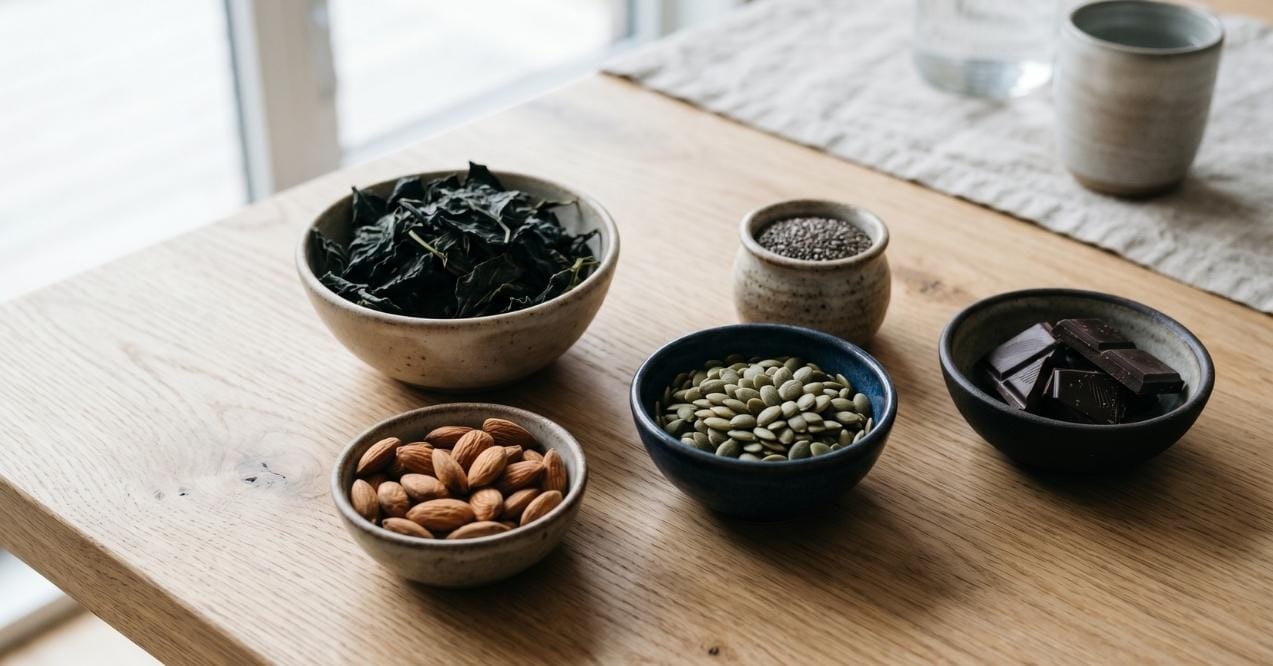
For most people, meeting daily magnesium needs through food is both achievable and preferable. The general target is approximately 320 mg per day for women and 420 mg per day for men.
A diet that regularly includes whole grains, leafy vegetables, legumes, and nuts gets close to that range without significant effort. Supplements are worth considering when diet is inconsistent or when daily circumstances make adequate food-based intake harder to sustain.
Foods That Naturally Provide Magnesium
Several common foods contribute meaningfully to daily magnesium intake:
| Food | Approximate Magnesium per Serving |
| Pumpkin seeds (1 oz) | 156 mg |
| Almonds (1 oz) | 80 mg |
| Brown rice, cooked (1 cup) | 84 mg |
| Spinach, cooked (½ cup) | 78 mg |
| Black beans (½ cup) | 60 mg |
| Avocado (half, medium) | 29 mg |
| Salmon, cooked (3 oz) | 26 mg |
Including two or three of these options across daily meals is a practical, low-effort way to work toward steady intake over time.
When a Supplement May Make Sense
Dietary gaps are common, especially during periods of high stress, travel, or restricted eating patterns. When those gaps become consistent, a supplement can provide reliable daily magnesium support without requiring major dietary changes.
PureHealth Research magnesium supplement offers a straightforward option for those who want to support their daily intake reliably. Rather than positioning magnesium as a hair-specific fix, this supplement is formulated to support daily magnesium intake and overall wellness as part of a balanced routine.
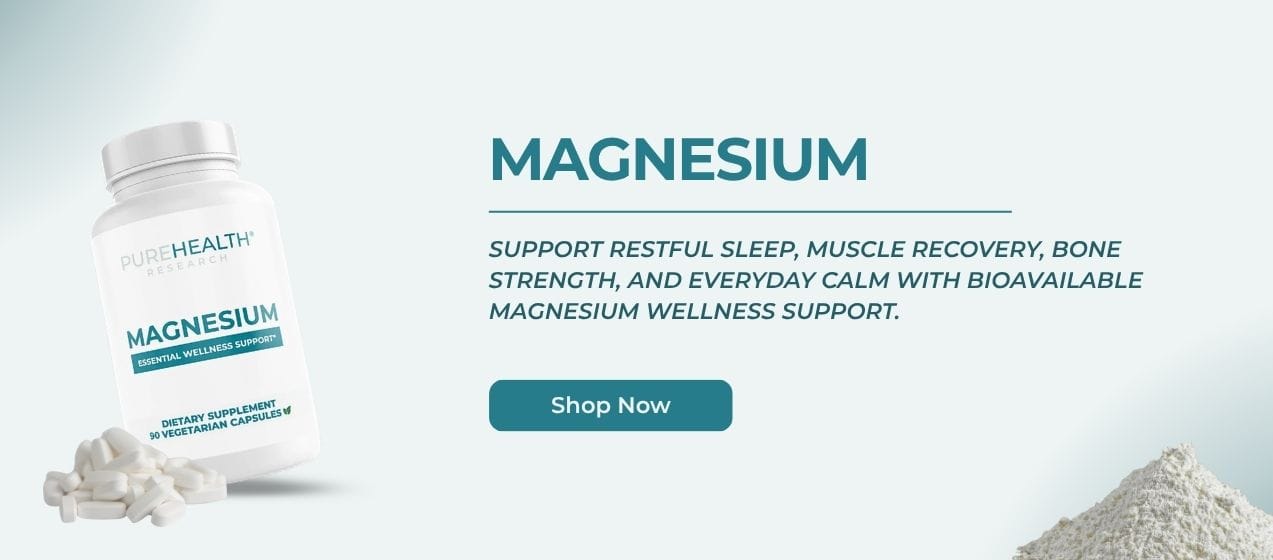
It works best as part of a consistent routine that includes varied nutrition and sound lifestyle habits. For those whose diets are inconsistent, or who go through periods of higher physical or emotional demand, it can help maintain the steady intake the body benefits from each day. Pairing it with a nutrient-rich diet reflects a more realistic and grounded approach than relying on supplementation alone.
Are Certain Forms of Magnesium Better Than Others?
The supplement market includes several magnesium compounds, each with different absorption characteristics. Claims that one form is definitively best for hair growth are largely overstated, since no published research directly compares hair outcomes across magnesium types.
What actually varies is how efficiently each form absorbs and how it interacts with the digestive system. For a closer look at the practical tradeoffs, this comparison of magnesium citrate vs glycinate covers the relevant differences in a useful way.
Why “Best for Hair” Is Usually Overstated
No evidence supports the claim that one magnesium compound produces better hair outcomes than another. Differences between forms relate to absorption rates and gastrointestinal tolerance, not to hair-specific effects.
When a product is marketed as particularly beneficial for hair, that positioning typically reflects commercial framing rather than research. The more grounded question is which form raises magnesium levels reliably without causing digestive discomfort.
The Difference Between Popular and Proven
Magnesium glycinate absorbs well and tends to be gentle on the digestive system, making it a practical choice for daily use. Magnesium citrate is also well-absorbed but may produce a mild laxative effect at higher amounts.
Magnesium L-threonate is studied primarily in the context of brain and memory research rather than hair health. Magnesium oxide is widely available but absorbs less efficiently than the other forms. For consistent daily support, glycinate and citrate are the most commonly used options for good reason.
Can Too Much Magnesium Be a Problem?
Whether too much magnesium causes hair loss is a reasonable question, and current evidence does not suggest that it does. The kidneys manage excess magnesium efficiently under normal conditions, clearing amounts the body cannot use.
The more realistic concern with excessive supplementation is digestive discomfort, including loose stools or nausea, particularly when intake from supplements exceeds 350 mg per day from supplemental sources alone. Those with reduced kidney function or other chronic health concerns should speak with a qualified health professional before starting a magnesium supplement.
What to Focus on If You’re Concerned About Hair Changes
When hair changes become noticeable, reviewing the overall pattern of daily habits is a more grounded starting point than singling out one nutrient. Magnesium for hair growth is most relevant as one part of a broader approach to consistent nutrition, sleep quality, and stress management, not as a primary solution in isolation.
Daily Habits That Support Healthier-Looking Hair
A few practical areas worth reviewing:
- Maintain a varied diet with consistent protein intake alongside magnesium-rich whole foods
- Prioritize sleep quality, since the body uses rest time for tissue maintenance and cellular repair
- Manage sustained stress through movement, breathwork, or other habits that feel sustainable over time
- Stay adequately hydrated to support blood flow and nutrient delivery to the scalp
- Avoid prolonged caloric restriction, which disrupts the hair growth cycle more reliably than most single-nutrient shortfalls
Where Magnesium Fits Into the Bigger Picture
Magnesium is one of several minerals that support the environment in which hair follicles do their work. Adequate intake may reduce some of the underlying conditions associated with increased shedding, and it contributes to the kind of nutritional foundation that overall health depends on.
It works best as part of a consistent, broader approach rather than as an isolated measure on its own.
Conclusion
Does magnesium help hair growth? It may, particularly when intake has been inconsistent or low. This mineral supports several functions that contribute to a healthy scalp environment, and addressing a shortfall can be a meaningful step within a balanced routine. Magnesium works alongside other nutrients, sleep, and stress management rather than in place of them. Treating it as one supportive part of that picture, rather than a primary fix, reflects what the evidence actually shows.
Magnesium supports conditions that hair follicles need, but it does not drive growth independently. If intake is already adequate, adding more offers limited additional benefit. Hair growth depends on multiple nutritional, hormonal, and lifestyle factors working together.
If increased shedding coincides with fatigue, muscle tension, or disrupted sleep, low magnesium intake may be one contributing factor worth discussing with a qualified health professional. Magnesium status can be difficult to evaluate with any single test, and assessment is typically part of a broader clinical picture.
Hair responds slowly to nutritional changes. If low intake was contributing to increased shedding, any visible change may take time, since the hair cycle operates on a gradual timeline.
Yes. Adequate magnesium intake supports protein production, energy generation, and normal cellular processes, all of which contribute to a nutritional environment that the body depends on for healthy tissue function, regardless of what is primarily driving the hair changes.

Advertisement. This site offers health, wellness, fitness and nutritional information and is designed for educational purposes only. You should not rely on this information as a substitute for, nor does it replace, professional medical advice, diagnosis, or treatment. If you have any concerns or questions about your health, you should always consult with a physician or other health-care professional. Do not disregard, avoid or delay obtaining medical or health related advice from your health-care professional because of something you may have read on this site. The use of any information provided on this site is solely at your own risk.
Related Articles
Hydrolyzed Collagen vs Collagen Peptides: Which is the Best?
Written by Donatas Leikas | April 21, 2026

Why Is My Toenail Growing Sideways?
Written by Karolina Rutkute | September 18, 2025
Does Ashwagandha Cause Acne?
Written by Karolina Rutkute | September 9, 2025
Is Marine or Bovine Collagen Better for Hair Growth?
Written by Karolina Rutkute | June 18, 2025
What Five Supplements Can Cause Breakouts?
Written by Karolina Rutkute | May 18, 2025

9 Best Supplements for Glowing Skin
Written by Karolina Rutkute | May 7, 2025