Does Matcha Give Energy or Just the Feeling of It?
Does matcha give energy? It may, through two naturally occurring compounds. Caffeine helps support alertness, while L-theanine is studied for its role in calm focus. Together, they may help promote steady mental clarity as part of your daily routine.


 On This Page:
Matcha’s energy profile comes down to two compounds working in tandem. Caffeine helps support alertness, while L-theanine, an amino acid found naturally in tea plants, is studied for its role in relaxed focus.
The combination may create a different experience from coffee’s faster onset and more noticeable decline for some people. This article covers the science behind how matcha may affect alertness, how it compares to coffee, and practical guidance on making it part of a daily routine.
How Matcha Works in the Body
Matcha affects the body through a combination of natural compounds that work together. Unlike isolated caffeine sources, matcha delivers a full spectrum of plant-based nutrients that may influence how you feel throughout the day. The interplay between these compounds creates a distinctive energy profile.
The Caffeine and L-Theanine Synergy
Matcha contains two key compounds: caffeine and L-theanine. Caffeine stimulates the central nervous system, increasing alertness and reducing fatigue. L-theanine, an amino acid found almost exclusively in tea plants, promotes relaxation without drowsiness.
When consumed together, these compounds may create sustained focus rather than the rapid peak and subsequent crash typical of other caffeine sources. This synergy is central to why matcha gives you energy in a distinctly smooth way.
Matcha and Blood Sugar Stability
Energy levels often fluctuate based on blood sugar patterns. Sugary drinks and processed snacks can cause rapid glucose spikes followed by crashes that leave you feeling depleted.
Matcha, consumed without added sweeteners, contains minimal calories and may help maintain more stable glucose levels. Some research suggests the catechins in matcha could support healthy blood sugar metabolism, contributing to more consistent energy throughout the day.
How Matcha Differs From Coffee’s Energy Surge
Coffee delivers caffeine rapidly, often producing noticeable effects within 15 to 30 minutes. This quick absorption can lead to jitteriness, increased heart rate, and an eventual crash. Matcha’s caffeine, bound within the tea’s fiber and plant compounds, absorbs more gradually. The result is a gentler lift that may last longer without the sharp decline.
| Factor | Matcha | Coffee |
| Caffeine per serving | 30-70 mg | 95-200 mg |
| Onset of effects | 30-45 minutes | 15-30 minutes |
| Duration | 4-6 hours | 2-3 hours |
| Common side effects | Minimal jitters | Jitters, anxiety |
| L-theanine content | High | None |
Does Matcha Give Actual Energy? Science Explained
The question of whether matcha provides “real” energy deserves a clear answer. Caffeine is a well-documented stimulant that genuinely increases alertness and physical energy. Matcha contains this compound, so yes, it does provide actual physiological energy. The difference lies in how that energy feels and how long it lasts.
Reading the Science on Caffeine Content
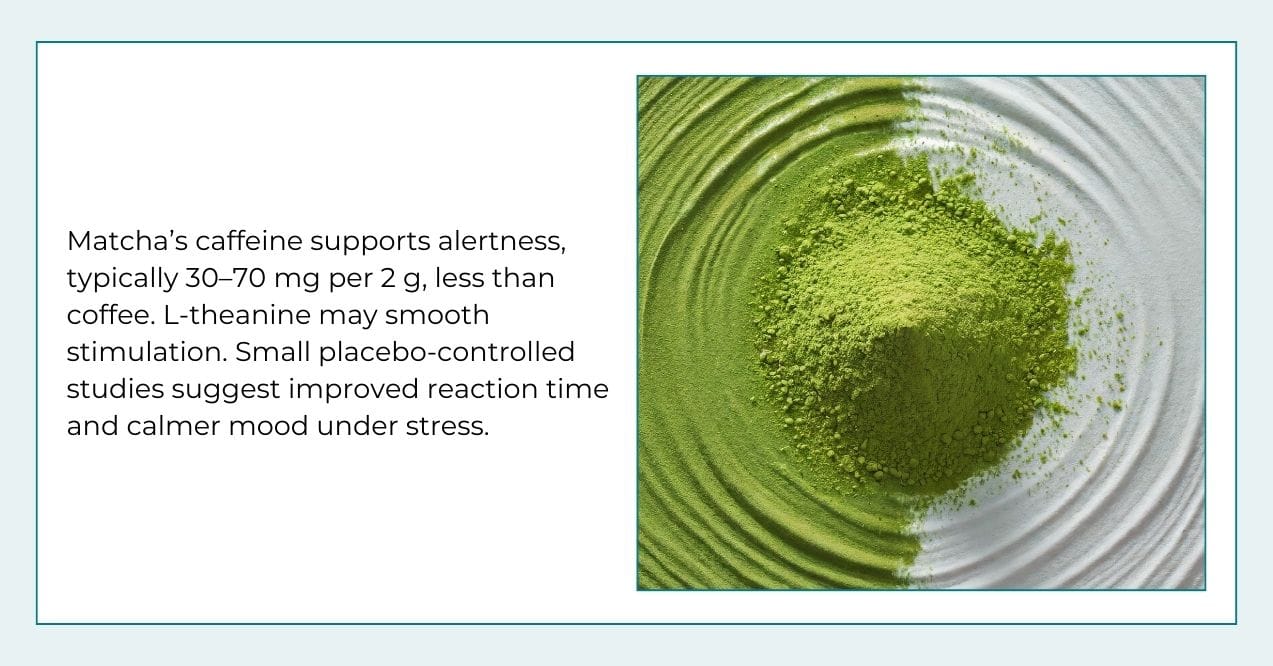
A typical serving of matcha (1 teaspoon or about 2 grams) contains approximately 30 to 70 mg of caffeine. For comparison, an 8-ounce cup of coffee contains 95 to 200 mg.
While matcha has less caffeine overall, its effects may feel more pronounced because L-theanine modifies how the body processes it. This combination means you receive genuine stimulation without overwhelming your nervous system.
The Calming Focus of L-Theanine
L-theanine promotes alpha brain wave activity, which is associated with a state of relaxed alertness. This differs from the beta wave activity triggered by caffeine alone, which can produce anxiety or restlessness. Studies suggest L-theanine may increase levels of calming neurotransmitters like GABA, serotonin, and dopamine. The result is focus without tension, a state some describe as “calm energy.”
What Research Actually Shows
A randomized, placebo-controlled trial in Nutrition Research enrolled 42 healthy adults (ages 25–34) who consumed 2 g of matcha daily for 2 weeks. Researchers then induced mild acute psychological stress (Uchida–Kraepelin test) and evaluated multiple cognitive domains.
Compared with placebo, the matcha group showed faster reaction times on the Stroop test (a standard measure of attention), suggesting matcha may help maintain attentional performance under mild stress, while most other cognitive tests did not differ meaningfully between groups.
Another small randomized, double-blind study involving 39 participants found that consuming 3 grams of matcha daily for 15 days was associated with lower state anxiety scores at one assessment point compared to placebo (results were not consistently significant across all timepoints).
While these studies are promising, sample sizes remain small, and more research is needed to draw definitive conclusions. The existing evidence, however, suggests matcha may support steady mental clarity for some people.
How to Maximize the Energy Benefits of Matcha
Getting the most from matcha involves selecting quality products and preparing them properly. The following guidelines can help you experience consistent results.
Choosing High-Quality Ceremonial Matcha
Ceremonial-grade matcha comes from the youngest tea leaves, which contain higher concentrations of L-theanine and chlorophyll. When shopping for matcha, look for these quality indicators:
- Vibrant, bright green color (dull or yellowish powder suggests oxidation or lower grade)
- Origin in Japan, particularly the Uji or Nishio regions
- Fine, silky texture that feels smooth between your fingers
- No additives, fillers, or added sugars on the ingredient list
These markers help ensure you’re getting matcha that delivers consistent results.
Drinking Matcha Tea for Daily Energy
Preparing matcha tea is straightforward. Start with half to one teaspoon of matcha powder in a cup. Add 2 ounces of hot water (around 175°F, not boiling) and whisk until smooth. Then add 6 to 8 ounces of hot water or your preferred milk. Drinking matcha in the morning supports sustained alertness without disrupting sleep later. Matcha stands out among healthy substitutes for energy drinks because it delivers caffeine alongside calming L-theanine rather than sugar and synthetic stimulants.
Taking Matcha Pills for Consistent Energy Support
For those who prefer convenience over preparation, matcha supplements offer a practical alternative. PureHealth Research Matcha pills deliver a precise dose of ceremonial-grade matcha in each serving, eliminating the need for measuring, whisking, or cleanup.
These capsules combine matcha with complementary ingredients selected to support focus, calm, and mental clarity throughout the day. Each batch undergoes rigorous testing for purity and potency. For busy schedules or travel, capsules provide consistent matcha benefits without the ritual of tea preparation.
They’re an ideal solution for those who want the advantages of matcha powder for energy in a portable, mess-free format.
Matcha as a Substitute for Coffee
Many people turn to matcha when coffee no longer serves them well. Whether due to jitters, digestive issues, or afternoon crashes, the search for alternatives leads many to this green tea powder.
Why People Choose Matcha as a Coffee Alternative
The appeal of using matcha substitute for coffee comes down to how it makes people feel. Coffee’s rapid caffeine delivery can trigger anxiety, especially in those sensitive to stimulants. Matcha’s slower absorption may reduce these effects while still providing meaningful alertness.
Many former coffee drinkers report feeling more consistently energized without the mid-morning crash they previously experienced. The absence of coffee’s acidity also makes matcha gentler on the digestive system.
Will Matcha Keep Me Awake?
Will matcha keep me awake if consumed later in the day? The answer depends on your caffeine sensitivity. Matcha’s caffeine content, while lower than coffee, can still affect sleep if consumed too close to bedtime. Most people tolerate matcha well when consumed before early afternoon.
Those particularly sensitive to caffeine should limit intake to morning hours. Low energy levels in females often stem from hormonal fluctuations, poor sleep, or nutritional gaps, and timing matcha consumption strategically can help maintain alertness during waking hours without compromising rest.
Matcha Side Effects and Who Should Be Cautious
While matcha is generally well-tolerated, some individuals should exercise caution.
Those sensitive to caffeine may experience restlessness, headaches, or sleep disturbances even with matcha’s moderate caffeine content. Starting with a smaller serving (half a teaspoon) allows you to gauge your response. Consuming matcha on an empty stomach can occasionally cause nausea in some people; pairing it with a small snack may help.
Individuals taking certain supplements or who have specific health considerations should consult a healthcare provider before adding matcha to their routine. Pregnant and breastfeeding women are often advised to limit caffeine intake, which includes matcha. To avoid sleep disruption, consume matcha at least 6 hours before bedtime.
Conclusion
Does matcha give energy? Yes, it does. The caffeine in matcha provides real physiological stimulation, while L-theanine promotes calm focus that distinguishes it from coffee’s intensity. This combination creates a smoother, longer-lasting lift that many find preferable to traditional caffeinated beverages. Whether you choose ceremonial-grade tea or convenient capsules, matcha offers a balanced approach to daily alertness. Pairing matcha with other strategies to increase energy levels can further support sustained vitality throughout your day.
Most people experience sustained alertness for 4 to 6 hours. The gradual release of caffeine, moderated by L-theanine, extends the duration compared to coffee.
Matcha typically contains more caffeine and L-theanine than steeped green tea because you consume the whole leaf. This generally results in more noticeable effects.
Morning consumption works best for most people. This timing supports daytime alertness while allowing caffeine to clear your system before sleep.
Matcha may help with midday fatigue if consumed before 2 PM. Later consumption could interfere with sleep for those sensitive to caffeine.

Advertisement. This site offers health, wellness, fitness and nutritional information and is designed for educational purposes only. You should not rely on this information as a substitute for, nor does it replace, professional medical advice, diagnosis, or treatment. If you have any concerns or questions about your health, you should always consult with a physician or other health-care professional. Do not disregard, avoid or delay obtaining medical or health related advice from your health-care professional because of something you may have read on this site. The use of any information provided on this site is solely at your own risk.
Related Articles
Does Kombucha Give You Energy All Day?
Written by Karolina Rutkute | July 6, 2026

Does Matcha Have Caffeine in It?
Written by Karolina Rutkute | May 15, 2026
10 Tips How to Improve Stamina and Get More Energy
Written by Karolina Rutkute | January 31, 2025

How to Increase Your Energy Levels: Expert Advice
Written by Karolina Rutkute | May 26, 2024

11 Warning Signs of Magnesium Deficiency
Written by Karolina Rutkute | May 19, 2024
Metabolic Efficiency 101: What It Is and How to Increase It
Written by Karolina Rutkute | April 24, 2024